Arcade to Slots: How Classic Games Influence Slot Design
Wondering about the arcade slots classic games influence? Retro slots use rolling feature trails and stage progression to copy old cabinet layouts, keeping the action fast while chasing huge multipliers.
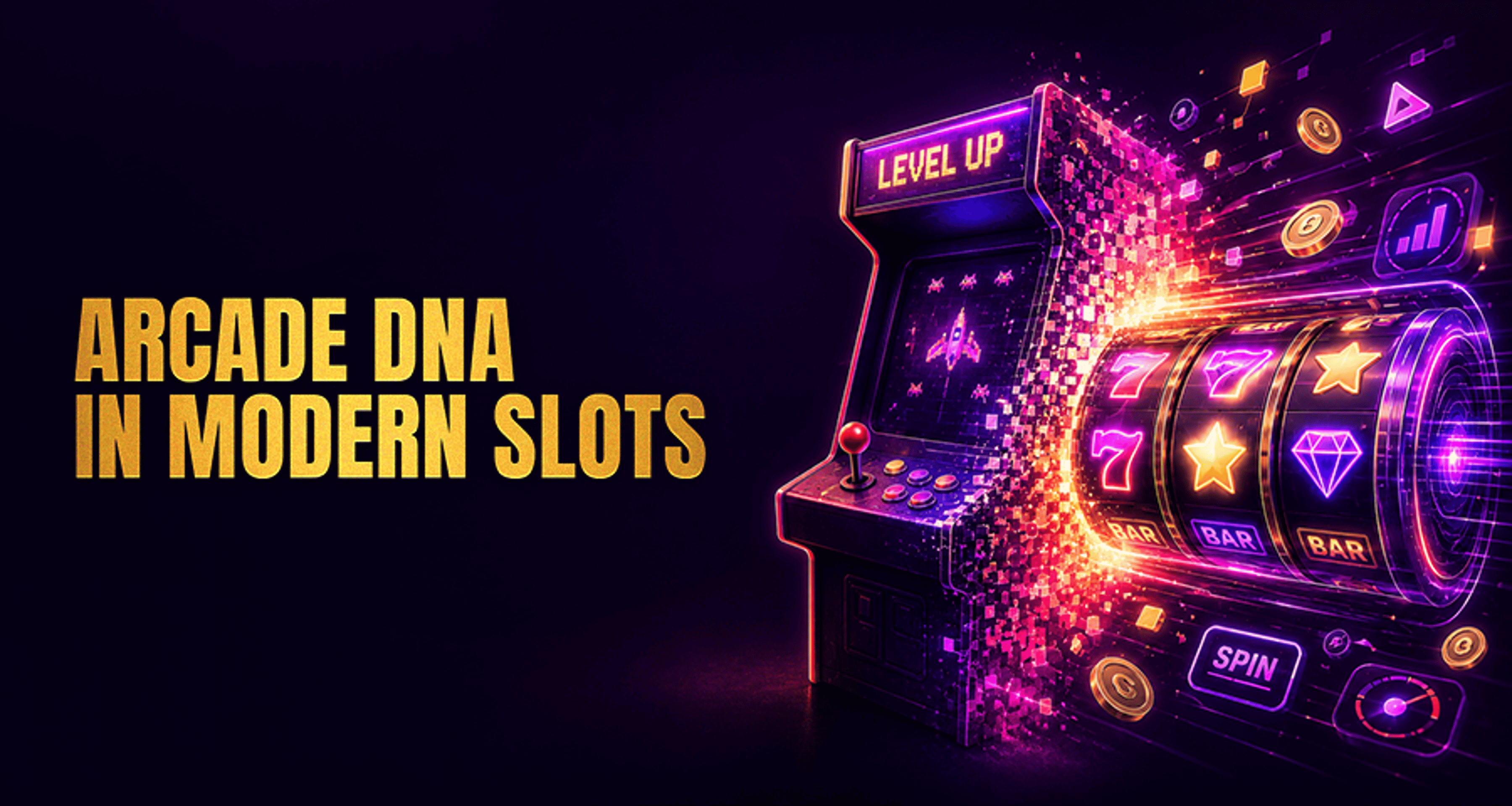
Modern slot games often feel familiar even before the reels start spinning. That feeling usually comes from design language borrowed from arcade-era gaming: bright cabinet-inspired visuals, retro sound effects, score-like progression cues, and bonus sequences that resemble levels or boss encounters.
In that sense, arcade slots classic games influence is less about copying old games directly and more about adapting the entertainment patterns that made arcade titles memorable.
This article looks at how arcade design shaped modern slot presentation, pacing, and theme-building. It also explains an important boundary: arcade games were built around player input and skill, while slot outcomes are still determined by chance.
What “Arcade to Slots” Really Means in Game Design
In this context, “classic games” refers mainly to arcade-era influences rather than traditional fruit-machine slots alone. That includes:
Cabinet-style presentation and screen framing
Pixel art, neon colors, and retro fonts
8-bit or synth-heavy sound design
Score-driven reward loops and escalating feedback
Bonus stages, enemy encounters, or level-like progression
Fast visual pacing inspired by action and side-scrolling games
When developers bring those ideas into slot design, they are usually trying to make the experience feel more dynamic and recognizable. Instead of treating the game as a static set of reels, they build a stronger entertainment identity around it.
Readers who want broader context on slot formats and features can also explore HunnyPlay’s online slots guide, which covers the wider category beyond arcade-inspired themes.
How Classic Arcade Mechanics Show Up in Modern Slots
Arcade mechanics do not transfer into slots as direct player-control systems, but their structure shows up in several design choices.
Bonus rounds that feel like stages
Many modern slots use bonus rounds as mini-events that resemble arcade bonus stages. A base game may trigger a separate screen with a different objective, visual mood, or animated sequence. Even though the outcome remains chance-based, the presentation can feel similar to moving into a new level.
Level-like progression
Some slots create the impression of advancement through unlockable features, changing backdrops, or milestone-based animations. This does not mean the player is “getting better” in the arcade sense. Instead, it gives the session a sense of movement, which mirrors how arcade games used stages and escalating intensity to keep attention.
Combo-style feedback
Arcade games were excellent at immediate reinforcement. Flashing lights, rapid sound cues, and score bursts told players that something exciting had happened.
Slots use a similar language through cascading effects, stacked animations, and repeated audiovisual signals around feature triggers.
That is one reason feature-heavy formats can feel especially energetic. If you want to compare that with a more mechanics-focused format, Cluster Pays Slots Explained is a useful related read.
Boss or battle framing
Some themed slots borrow the language of arcade combat by presenting bonus rounds as boss fights, survival scenes, or showdown sequences. The gameplay outcome is still chance-based, but the framing adds drama and gives the theme a stronger narrative hook.
Why Retro Visuals and Sound Effects Still Work
Retro design remains effective because it is instantly readable. Developers do not need to explain pixel art, glowing neon, or arcade cabinet styling for players to understand the mood. Those signals quickly communicate energy, nostalgia, and fun.
Common visual and UX influences include:
Neon-lit interfaces and dark, high-contrast backgrounds
Cabinet-inspired borders and screen layouts
Side-scrolling or action-scene animation
Retro fonts and pixel-style symbols
8-bit flashes, coin sounds, and synth-driven music
Fast transitions that create a sense of momentum
These choices matter because slot design is not only about reel math or feature structure. It is also about how a game feels moment to moment. Arcade-inspired styling helps a slot stand out in a crowded library by giving it a more distinct personality.
This visual identity also helps explain why some players distinguish between simple traditional slots and more stylized modern titles. For another angle on how formats differ, Megaways vs Classic Slots offers a format-based comparison that complements the design history approach here.
Bonus Rounds, Progression, and Score-Like Feedback Loops
One of the strongest arcade legacies in slot design is the feedback loop. Arcade games kept players engaged with visible scoring, escalating challenge, and clear signals that they were moving forward. Slots adapt that structure through presentation rather than skill progression.
Score-like signals without actual scoring mastery
Modern slots may use counters, meters, unlock animations, or accumulating symbols to mimic the emotional rhythm of score progression. These systems create anticipation and help the game feel active, even when they are not functioning like arcade scoreboards.
Progression as entertainment pacing
Arcade titles were carefully paced to avoid feeling flat. Slot designers borrow that lesson by layering features so the game seems to build toward something: a modifier, a themed event, an upgraded bonus, or a dramatic reveal.
Reinforcement through sound and motion
Classic cabinets used sound as a major reward tool. Slots do the same with rising audio cues, celebratory jingles, and soundtrack shifts during special features. The result is a game flow that feels more event-driven and theatrical.
Some feature families lean heavily on this type of reinforcement. For example, readers curious about sticky-feature style excitement can compare that with Hold and Win slot mechanics, even though the design lineage there differs from pure arcade nostalgia.
Arcade Skill vs Slot Chance: The Key Difference
This is the most important distinction in the entire topic.
Arcade games were built around timing, pattern recognition, reflexes, and player control. A skilled player could improve performance through practice. Slots do not work that way. While an arcade-inspired slot may look fast, competitive, or action-heavy, its outcomes are still based on chance rather than reflexes or learned cabinet skills.
So although developers may borrow:
level framing
battle themes
score-like meters
action visuals
arcade sound design
They are not turning slots into skill-based arcade games. The influence is aesthetic, structural, and experiential—not a transfer of player control over results.
That is why it helps to view arcade-inspired slots as entertainment design hybrids. They borrow the mood and rhythm of classic gaming while remaining part of the broader slot category.
Why Game Studios Keep Returning to Arcade-Inspired Slot Themes
Studios revisit arcade motifs because they solve several creative and commercial design challenges at once.
Familiarity
Arcade references are easy to understand. Even players who never spent time in old game halls recognize pixel graphics, power-up logic, and flashing bonus imagery.
Entertainment value
Arcade design is naturally energetic. It adds movement, sound, and visual payoff that can make a slot session feel more animated.
Nostalgia
Retro gaming aesthetics carry emotional weight. For many players, they suggest fun, simplicity, and recognizable play culture.
Stronger thematic identity
A slot with arcade DNA often has a clearer personality than a generic themed release. Cabinet visuals, synth soundtracks, and level-based framing can give the game a more memorable identity.
Better crossover with modern feature design
Arcade ideas blend well with contemporary slot systems because both rely on anticipation and event-based presentation. That makes the style flexible across many themes, from sci-fi and cyber aesthetics to cartoon action and retro cityscapes.
Classic Slots vs Arcade-Inspired Slots
It is also helpful to separate classic slots from arcade-inspired slots.
Classic slots usually focus on simpler presentation, traditional symbols, and a more straightforward visual style. Arcade-inspired slots, by contrast, often emphasize animation, staged events, and a stronger audiovisual identity drawn from cabinet-era game culture.
That does not automatically make one format better than the other. It simply means they are trying to deliver different entertainment experiences. One leans into simplicity and familiarity; the other leans into action, nostalgia, and thematic immersion.
Final Thoughts
The connection from arcade to slots is really a story about design evolution. Developers borrow from classic arcade games because those older titles mastered feedback, pacing, visual identity, and memorable sound. Modern slots adapt those strengths into bonus rounds, retro presentation, progression cues, and action-oriented themes.
What carries over is the feeling of classic gaming—not the skill-based control. That is the key to understanding why arcade-inspired slots feel so distinctive within the wider slot landscape.
For readers exploring slot content by mechanics, themes, and entertainment style, HunnyPlay’s slot guides can help map the differences between modern feature sets and presentation trends without reducing the conversation to jackpots or winning claims.
FAQ
How do arcade games influence slot design?
Arcade games influence slot design through visuals, sound effects, pacing, bonus-stage framing, and score-like feedback loops. The impact is mainly on presentation and user experience rather than on outcome mechanics.
Are arcade-style slots skill-based?
No. Even if a slot uses arcade visuals or level-style bonus presentation, the results are still based on chance. Arcade skill does not transfer into better slot outcomes.
Why do some slots use retro graphics and 8-bit soundtracks?
Developers use retro graphics and 8-bit-inspired audio because they create nostalgia, instant thematic recognition, and a lively entertainment style that stands out.
What arcade mechanics are most common in slot bonus features?
The most common influences include bonus rounds framed like stages, progression meters, battle-style presentation, combo-like visual feedback, and soundtrack shifts during feature events.
How are classic slots different from arcade-inspired slots?
Classic slots usually keep a simpler and more traditional look, while arcade-inspired slots borrow cabinet-era design cues such as pixel visuals, neon styling, animated progression, and action-heavy audiovisual feedback.