Artificial Intelligence Infrastructure 2026
This guide disaggregates the operation of AI infrastructure, the reason why the energy demand is skyrocketing, and what can be taught to gamblers and tech-savvy users by the systems behind the largest AI platforms today.
What Does Artificial Intelligence Infrastructure Mean?
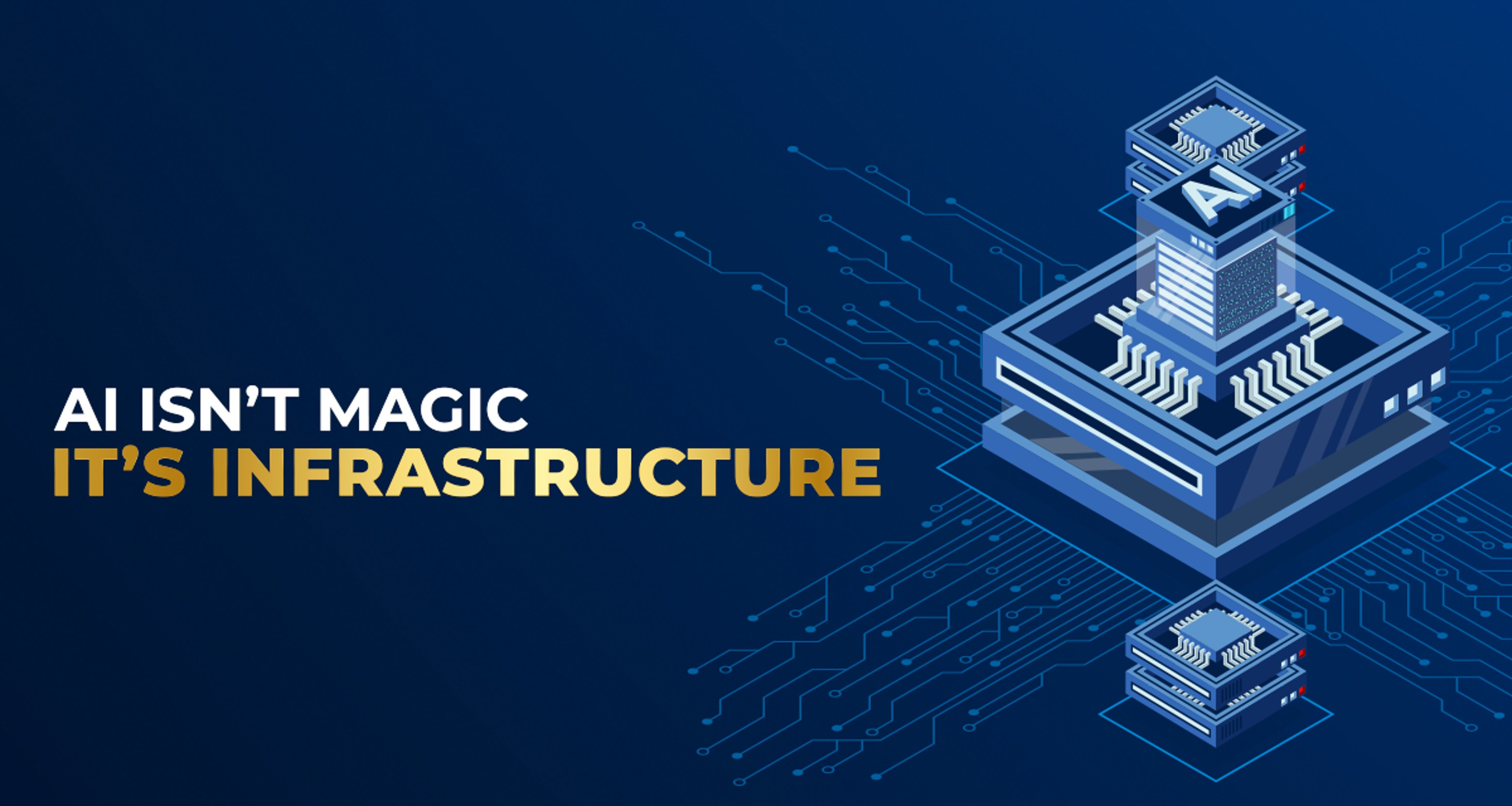
Suppose the casino floor is the artificial infrastructure of artificial intelligence and the games' algorithms, but if there is no server, power, or cooling, the games will not run. The invisible hardware that lets the innovation happen is AI based on clusters of GPUs, hyperscale data centers and HPC systems.
The Reason Infrastructure Is The Real Limiting Factor
Algorithms are developed rapidly, whereas it is more challenging to scale infrastructure. Similar to how casinos can introduce new slot titles overnight and then have difficulties filling physical server rooms, AI growth is energy and hardware limited and expensive. Concisely: it is not brains but muscle that is the bottleneck.
The Energy Equation
The Extent To Which AI Uses A Lot Of Power?
It is consuming a lot of electricity to train a single large AI model, the same amount as servicing a small town. Compare it to casino servers: running 24/7 consumes little energy but in contrast to AI clusters, which require hundreds of megawatts.
AI vs. Casino Servers A Comparative Something to Note.
There are casinos which are entertainment data centers. Each spin, each RTP calculation and each V check need uptime. The same can be said about AI clusters, which run at hyperscale. The digital trust infrastructure is the hidden cost revealed in both industries.
Renewable Energy Integration
The renewable commitments of AWS and Google Cloud wind contracts in Texas display how hyperscale providers are changing. Even casinos have already started trying green server farms - as a reminder that sustainability is now a competitive advantage.
Strategies of Market Leaders and the Competitors
AWS: The global AI workload scaling with GPU clusters.
Google cloud: The Google cloud invests in renewable energy contracts to compensate for compute demand.
Microsoft Azure: Sovereign and compliance-based enterprise HPC.
OpenAI and xAI: Research communities that are defining the limits of generative AI.
Trust signal: These strategies are documented in official press releases and energy contracts, underscoring transparency and authority.
Lessons of High-Energy Industries
Casinos and Internet Based Gambling
Online casinos reflect the infrastructure issue of AI. Their servers support slot bonuses, volatility models, and real-time player information. Regarding uptime, there are no compromises like AI.
Entertainment and Streaming Services
Netflix and YouTube can stream smoothly with the help of massive infrastructure. The workloads of AI loads are even excessive and need redundancy and cooling mechanisms that are not based on entertainment servers.
Energy-Intensive Industries
There is one lesson that is common to oil refineries, casinos, and AI clusters: resilience is a factor. The survival strategies are redundancy, renewable integration and cost optimization.
Comparing energy use and scalability between AI clusters, casinos, and entertainment servers.
Sector | Energy Use (MW) | Uptime Demand | Scalability |
AI Clusters | 50–100+ | 24/7 | Hyperscale |
Casino Servers | 5–10 | 24/7 | Regional |
Streaming | 20–40 | High | Global |
HPC Systems | 60–120 | 24/7 | Enterprise |
Conclusion
Innovation depends on the artificial intelligence infrastructure just as casino servers depend on the infrastructure in gambling. Costs are increasing, sustainability is pressing, and thus, businesses need to make investments in renewable, resilient and scalable systems.