Baccarat Tie Bet Explained: Payout, Odds, and Risk
The baccarat tie bet is easy to notice because the payout looks much bigger than the standard banker or player bets.
The baccarat tie bet is easy to notice because the payout looks much bigger than the standard banker or player bets. That headline number attracts a lot of attention, especially from newer players who assume a larger payout must mean a better opportunity.
In practice, the tie bet works very differently. It can win, but it wins infrequently, and that low hit rate is the main reason it is generally treated as a high-risk wager.
This guide explains the baccarat tie bet in plain language, including how it pays, how often ties happen, and why many players prefer banker or player bets when they want lower volatility.
What Is the Baccarat Tie Bet?
A baccarat tie bet is a wager that the banker hand and the player hand will finish with the exact same total.
If both hands end on the same number, the tie bet wins. If they do not match, the tie bet loses.
That is the full idea, but it is often misunderstood because ties also affect the main baccarat bets differently:
If you bet on banker and the round ends in a tie, your main bet is usually pushed.
If you bet on player and the round ends in a tie, your main bet is usually pushed.
If you bet on tie, only an exact tie result pays.
So the tie bet is not just a backup version of the main game. It is a separate side-style wager that depends on a relatively uncommon outcome.
How the Tie Bet Pays Out
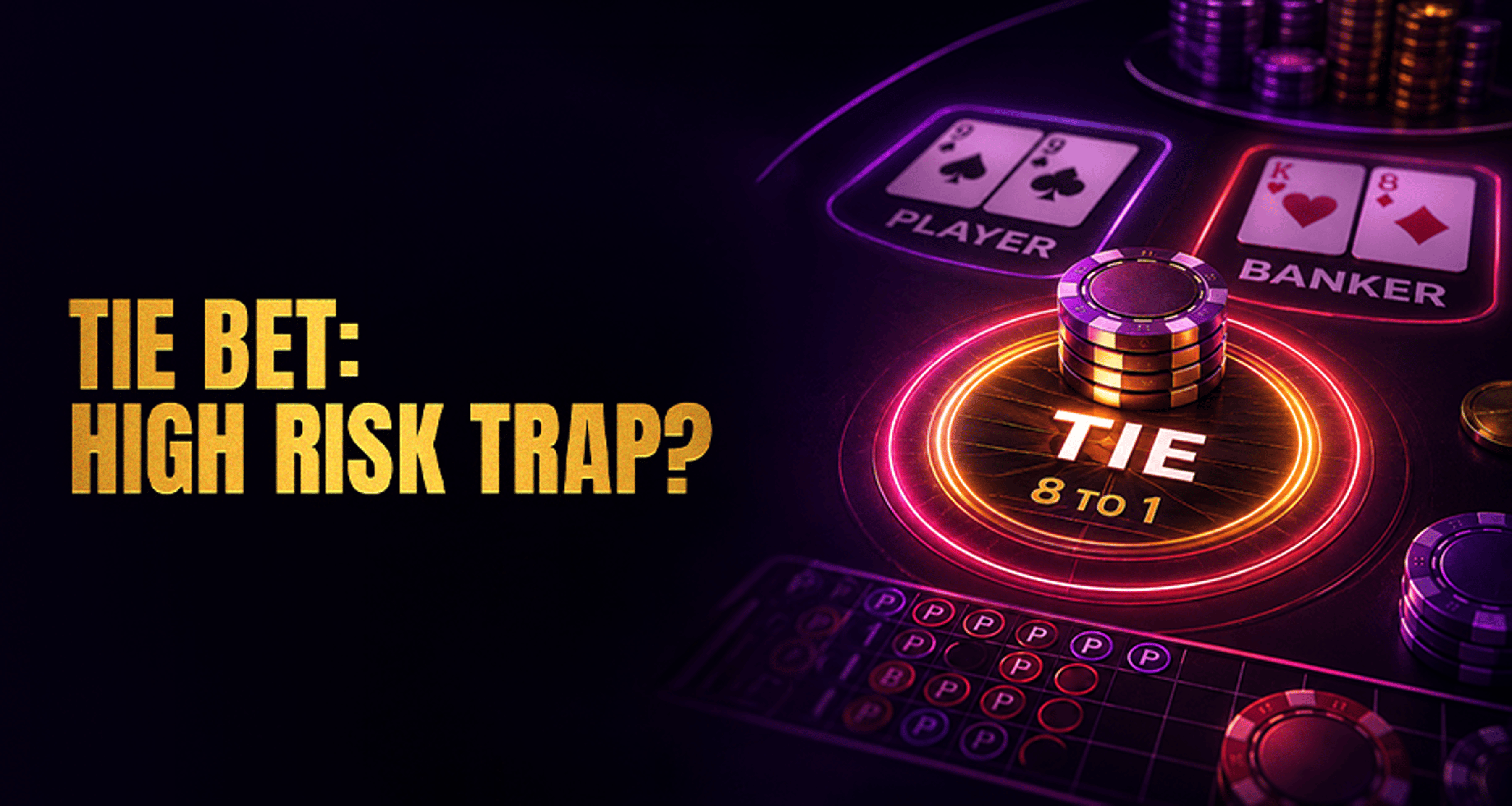
The baccarat tie bet usually offers a much higher payout than banker or player bets, but the exact number depends on casino rules and table settings.
Common tie bet payouts include:
8:1 at many tables
9:1 at some tables
Some casinos or baccarat variants may use different rules, so it is important to check the posted payout on the specific table before betting.
This is where many players get pulled in. An 8:1 or 9:1 payout looks attractive compared with the near even-money structure of banker and player bets.
However, a high payout does not automatically mean a good-value bet. The payout has to be judged against how rarely the outcome occurs. That is the key issue with the tie bet.
What Are the Odds of a Tie in Baccarat?
A tie in baccarat happens much less often than a banker or player win.
In broad terms, ties occur only around one round in ten or less, depending on the baccarat format and exact rules. That means the tie bet has a low hit rate compared with the two main bets.
For a beginner, the simplest takeaway is this:
Banker wins often enough to be a regular base bet
Player wins often enough to be a regular base bet
Tie happens occasionally, not consistently
Because the tie result is relatively rare, you can go through many losing tie bets before seeing one connect. That creates sharper bankroll swings and makes the bet feel more volatile.
If you are comparing baccarat with other table games, it can also help to look at broader risk discussions like Roulette vs. Baccarat: which game is safer, since game structure matters just as much as payout size.
Why the Tie Bet Is Considered High Risk
The tie bet is generally considered high risk for one main reason: the payout is high because the winning outcome is uncommon.
That creates several practical problems:
Low win frequency
You are likely to lose many tie bets before hitting a winner. Even if the occasional payout is large, the losing stretches can be long.
Bigger bankroll swings
Because wins come less often, your session results can swing more sharply. A few missed tie bets in a row is normal, not unusual.
High payout can be misleading
A big posted payout can make the bet look stronger than it really is. Newer players sometimes focus on the prize and ignore how low the actual hit rate is.
Weaker risk profile than standard baccarat bets
The banker and player bets are usually treated as the core baccarat options because they resolve around much more common outcomes. The tie bet sits outside that lower-risk baseline.
This is also why players comparing table games often find baccarat's base wagers more stable than riskier side options discussed in pieces like Blackjack vs. Baccarat: which game wins more.
Tie Bet vs Banker and Player Bets
From a risk perspective, the difference is straightforward.
Bet Type | Typical Payout Style | Win Frequency | Risk Level |
|---|---|---|---|
Banker | Near even money, usually with commission | Relatively frequent | Lower |
Player | Near even money | Relatively frequent | Lower |
Tie | Higher payout, often 8:1 or 9:1 | Infrequent | Higher |
The banker bet is widely viewed as the strongest standard baccarat option from a risk-control standpoint. The player bet is also far less volatile than the tie bet.
The tie bet, by contrast, trades frequency for excitement. You may win less often, wait longer between hits, and absorb more losses along the way.
That does not make it forbidden or pointless. It just means it should be understood as a higher-variance choice, not as a smarter substitute for the main bets.
When Players Still Use the Tie Bet
Even though the tie bet is high risk, some players still place it for entertainment reasons.
Common reasons include:
They enjoy the larger potential payout
They want variety instead of repeating banker or player every round
They are comfortable using a small amount for a speculative side wager
They simply like calling a rarer outcome for fun
That framing matters. Players who use the tie bet responsibly usually treat it as an occasional action bet, not as a reliable long-term strategy.
A practical approach is to keep it separate from your main baccarat decision-making. If someone wants lower risk, banker or player remains the more stable place to start. If someone wants extra excitement and accepts more frequent losses, the tie bet may appeal on a limited entertainment basis.
Should You Avoid the Tie Bet if You Want Lower Risk?
If your goal is lower risk, steadier results, and fewer losing stretches, the tie bet is usually the wrong fit.
That is because:
It wins less often than banker or player
It can produce longer loss streaks
Its high payout does not offset the practical frustration of frequent misses for many players
For most beginner to intermediate baccarat players, the safer way to approach the game is to understand the base wagers first and treat the tie bet cautiously.
In simple terms:
Choose banker or player if you want a more standard, lower-risk baccarat experience
Use tie only sparingly if you understand the volatility and are treating it as entertainment
Final Takeaway
The baccarat tie bet is a wager that the banker and player hands finish on the same total. It often pays much more than the main bets, but that bigger payout comes with a much lower hit rate.
That is why the tie bet is generally seen as a high-risk option. It can be exciting, but it is not usually the better choice for players who want lower volatility, more frequent wins, or a steadier bankroll experience.
If you are deciding whether it is worth using, the clearest answer is this: the tie bet is better understood as a fun, occasional gamble than as a sound core baccarat strategy.
FAQ
What does a tie bet mean in baccarat?
It means you are betting that the banker hand and player hand will end the round with the same total.
How much does a tie bet pay in baccarat?
Many tables pay 8:1 or 9:1, but payout rules vary by casino and baccarat version, so you should always check the table.
What are the odds of winning a tie bet?
A tie happens relatively rarely, roughly around one round in ten or less depending on the rules and game format.
Is the baccarat tie bet risky?
Yes. It is generally considered high risk because it wins infrequently and can create larger bankroll swings than banker or player bets.
Is the tie bet worse than banker or player?
From a risk perspective, it is usually less favorable because banker and player bets hit more often and are generally more stable.
Why do some players still place tie bets?
Mostly for entertainment. The larger payout and rarer outcome can make the bet more exciting, even though it is not usually the better low-risk choice.