Crypto Casino Deposit Networks Explained: How to Choose the Right One?
Choosing a crypto casino deposit network is not just about picking a coin. In many cases, the same asset can be sent across multiple blockchain networks, and the ne
Choosing a crypto casino deposit network is not just about picking a coin. In many cases, the same asset can be sent across multiple blockchain networks, and the network you choose affects fees, speed, wallet compatibility, confirmation times, and the risk of making an expensive mistake.
If you already know you want to deposit with crypto, the practical question is simple: which network fits this specific transfer best? This guide explains how crypto casino deposit networks work, how to compare them, and how to choose the right one before you send funds.
What a crypto casino deposit network actually means
A crypto casino deposit network is the blockchain rail used to move your funds from your wallet or exchange to the casino’s deposit address. In plain language, it is the route your crypto takes.
For example, a casino may accept deposits through networks such as:
Bitcoin
Ethereum
TRON
BNB Smart Chain
Litecoin
Solana
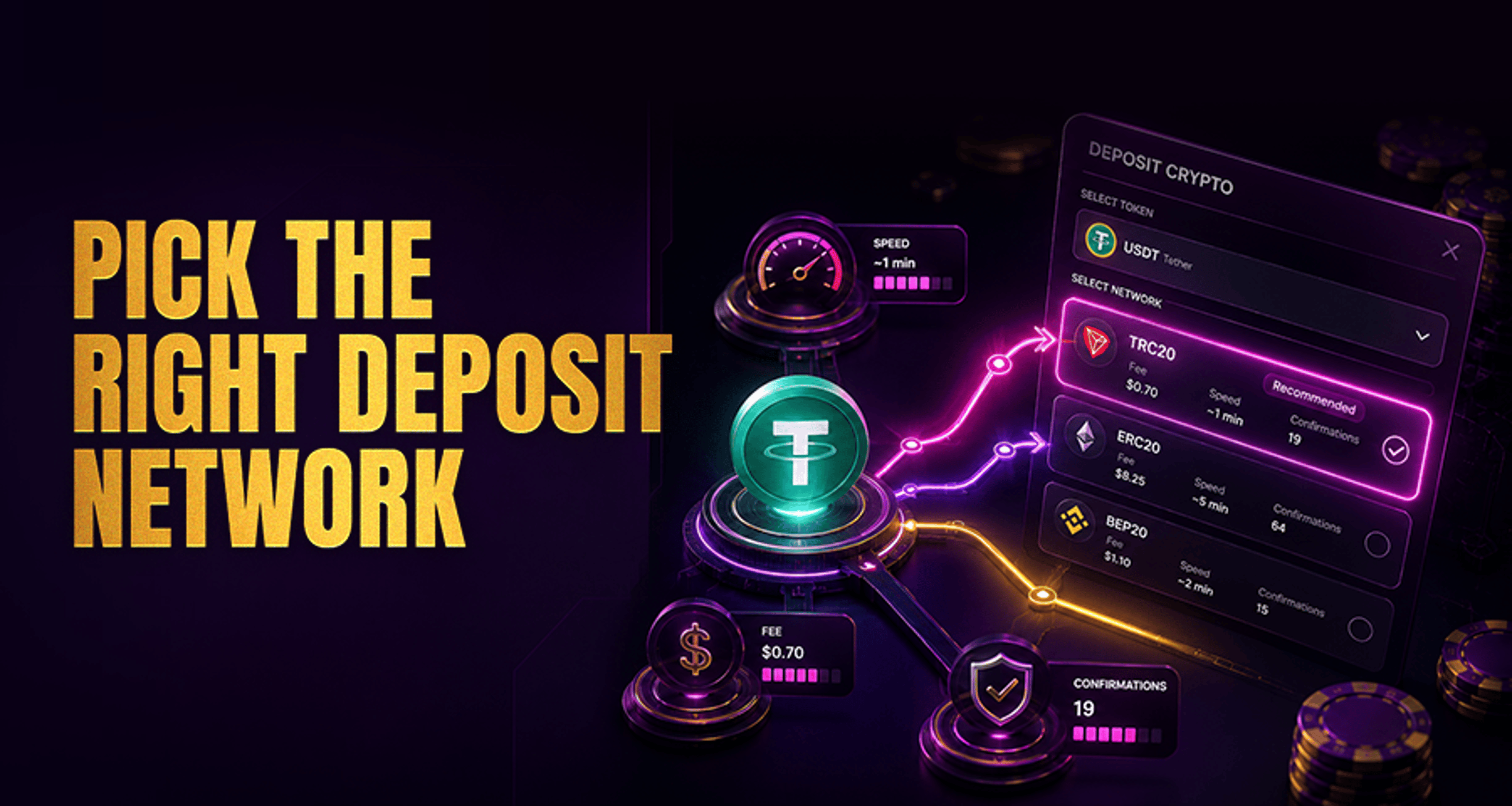
In some cases, the network and the coin are closely tied together, such as BTC on Bitcoin or LTC on Litecoin. In other cases, the same asset may exist on more than one network. A common example is USDT, which may be available on Ethereum, TRON, Solana, or BNB Smart Chain depending on what the casino supports.
That distinction matters because sending the right asset on the wrong network can lead to delays, failed crediting, or lost funds.
Why the same crypto can have multiple deposit network options
Many users assume a coin name alone is enough. It often is not.
Some cryptocurrencies, especially stablecoins, can be issued or bridged across several networks. That means “USDT” or “USDC” is not one universal transfer method. The asset name may be the same, but the underlying network can be different.
For a casino deposit, you must match both:
The asset
The exact supported network
If a casino deposit page shows USDT on TRON, you cannot assume USDT on Ethereum or another chain will work. The casino’s deposit system is usually expecting a specific chain format, confirmation flow, and address type.
This is one reason crypto payment setup matters just as much as the coin itself. If you want a broader comparison of payment rails beyond blockchain deposits, see Best Online Casino Payment Methods Fast Safe 2026.
How to choose the right network for your casino deposit
The best network depends on your deposit size, how quickly you want the funds credited, what your wallet supports, and what the casino actually accepts.
Here is a practical step-by-step framework.
1. Check the casino deposit page first
Start on the casino deposit screen before opening your wallet.
Verify:
Which coins are accepted
Which networks are listed for that coin
Whether the casino shows a memo, tag, or extra reference
Whether there is a minimum deposit requirement
Do not choose the network from memory. Always use the casino’s live deposit instructions for that transaction.
2. Confirm the exact chain name
Network labels are not always beginner-friendly. A casino may list a chain by brand name, ticker, or token standard. Your wallet may use slightly different naming.
For example, the network shown on the casino page might appear differently in your wallet or exchange withdrawal menu. The important thing is that the underlying chain matches exactly.
If the naming feels unclear, stop and confirm before sending.
3. Match the asset and network pair in your wallet
This is the critical check.
Do not only confirm that you are sending USDT, BTC, or another coin. Confirm that you are sending that asset on the same network the casino supports.
A correct deposit usually requires a full match between:
Coin or token
Network
Deposit address format
Any required memo or tag
4. Compare expected fees
Network fees can make a big difference, especially on smaller deposits.
A lower-fee network may preserve more of your bankroll, but only if the casino and your wallet both support it cleanly. If the cheapest route creates more confusion or compatibility risk, it may not be the best option.
If your main concern is how much value actually arrives after costs, it also helps to compare deposit and payout costs more broadly in Casino Payment Methods Compared Speed Safety Fees.
5. Consider confirmation time and congestion
Some networks are known for quicker settlement in normal conditions, while others may slow down during periods of congestion. But fast on paper does not always mean fastest in practice.
Your real wait time may depend on:
Current network activity
The fee settings used by your wallet or exchange
The casino’s required confirmations before crediting funds
Internal processing on the casino side
So instead of assuming one chain is always faster, compare the likely user experience for this exact deposit.
6. Check minimum deposit thresholds
A network that looks cheap can still be a poor fit if the casino has a higher minimum deposit for that asset or chain.
For example, a very small transfer may arrive on-chain but still not qualify for account crediting if it falls below the platform’s minimum. That is why network choice and deposit size should be evaluated together.
If you are comparing thresholds before funding your account, Crypto Casino Transaction Limits Withdraw gives useful context on how limits can shape payment decisions.
7. Test with a small amount if needed
If you are using a new casino, a new wallet, or an unfamiliar network, a small test deposit can reduce error risk.
This is especially useful when:
The asset exists on multiple chains
The wallet uses unclear network labels
A memo or tag may be required
You are moving a larger amount later
A test transfer adds one extra step, but it can prevent a much bigger problem.
Network fees vs deposit speed: what matters most
Most users compare networks by asking two questions: how much will it cost, and how long will it take?
Those are the right questions, but the answer depends on your goal.
When lower fees matter more
Lower fees are usually more important when:
You are making a small deposit
You top up frequently
You want to preserve as much playable balance as possible
In these cases, a network with lower transfer costs may be more practical than one that is slightly faster.
When speed matters more
Faster crediting may matter more when:
You want to join a game quickly
You are making a time-sensitive top-up
You are transferring an amount where the fee difference is relatively minor
Even then, speed should not override compatibility. A fast network is not helpful if you choose the wrong chain or use a setup the casino does not support.
Best network choices for small deposits vs larger transfers
There is no universal best option, but different situations call for different priorities.
Small deposits
For smaller deposits, users often prioritize:
Lower network costs
Simple wallet support
Clear network labels
Low risk of the fee consuming too much of the deposit
Fast top-ups
For quick account funding, users often look for:
Networks with relatively fast transaction processing
Wallets or exchanges that broadcast transactions reliably
Casinos with straightforward confirmation handling
Larger transfers
For larger deposits, many users care more about:
Confidence in the network match
Stable wallet support
Clear tracking and confirmation flow
Reduced chance of user error
Stablecoin deposits
Stablecoins can be practical for users who want less exposure to coin price swings between sending and account crediting. But stablecoins create one of the biggest network-selection traps because the same asset may appear on multiple chains.
When using stablecoins, double-check every field before sending.
Common crypto deposit network mistakes to avoid
Most deposit problems come from a few repeat mistakes.
Sending on the wrong network
This is the biggest one. If the casino supports a coin on one chain and you send it on another, the funds may not be credited automatically.
Ignoring memos or tags
Some assets or deposit systems require extra routing information beyond the address itself. If a memo, tag, or similar reference is shown, do not skip it.
Overlooking minimum deposit rules
A deposit below the minimum threshold may create support issues or fail to credit as expected.
Assuming the cheapest network is always best
The lowest fee option is not always the safest or easiest. If a cheaper chain is less familiar, less clearly labeled, or more error-prone in your wallet setup, it may not be worth the small savings.
Confusing token standard names
Network and token labels can look technical or inconsistent across platforms. Always confirm the chain itself, not just the asset ticker.
How to confirm your casino and wallet are using the same network
Before sending, run through this checklist:
Open the casino deposit page
Select the coin you want to use
Note the exact supported network name
Copy the deposit address carefully
Check whether a memo or tag is required
Open your wallet or exchange withdrawal screen
Select the same asset
Select the exact same network
Review the fee and expected delivery details
Send a small test amount first if anything feels unclear
If even one of those items does not match, pause before sending.
When to use stablecoins for casino deposits
Stablecoins can be useful when you want the transfer value to stay more predictable between the moment you send and the moment the casino credits your account.
They may be a practical choice when:
You already hold stablecoins in your wallet
The casino supports your preferred stablecoin on a network you use confidently
You want to reduce volatility during the deposit process
But again, the network matters just as much as the stablecoin itself. USDT on one chain is not automatically interchangeable with USDT on another.
Crypto deposit networks vs minimum deposit options: what is the difference
These topics are related, but they are not the same.
A deposit network is the blockchain route used to send funds. A minimum deposit is the smallest amount a casino will accept for a given payment method, coin, or network setup.
So when choosing how to fund your account, think in two layers:
Which network is supported and practical for the transfer
Whether your deposit amount fits the casino’s minimum rules
That distinction helps you avoid choosing a technically valid network that still does not suit your deposit size.
Choosing the right setup for your next crypto casino deposit
The right deposit network depends on your wallet, your preferred coin, the casino’s supported chains, your target deposit size, and your tolerance for fees versus speed.
A good rule of thumb is to choose the setup that gives you the clearest match between casino instructions and wallet options, with fee and confirmation tradeoffs you are comfortable with.
Before sending, verify the supported chain, confirm the asset-network pair, review minimum deposit rules, and consider a small test if the setup is new. That approach is usually more useful than chasing the cheapest or fastest network in the abstract.
If you are comparing casinos or payment flows, focus on platforms that fit your preferred coin and network combination rather than forcing a transfer through a route you do not fully trust.
FAQ
What is a deposit network in a crypto casino?
A deposit network is the blockchain used to send crypto from your wallet or exchange to the casino’s deposit address.
How do I know which network to use for a casino deposit?
Check the casino deposit page first, then match that exact asset and network in your wallet before sending.
Can I send USDT on any network to a crypto casino?
No. You should only send USDT on the exact network the casino says it supports for that deposit option.
What happens if I choose the wrong deposit network?
The deposit may not credit correctly, and recovery may be difficult or impossible depending on the situation.
Which crypto network usually has lower fees for casino deposits?
That varies by asset, wallet, and current network conditions. Lower-fee options can be attractive, but compatibility and error risk matter just as much.
Are faster networks always better for casino deposits?
No. A faster network is not automatically better if it is unsupported, confusingly labeled, or more likely to cause a transfer mistake.
Should I test a small crypto deposit first?
Yes, especially if you are using a new casino, wallet, or network combination.
Do crypto casinos support the same coin on multiple networks?
Some do, especially for assets like stablecoins, but support varies. Always verify the exact supported network on the deposit page before sending.