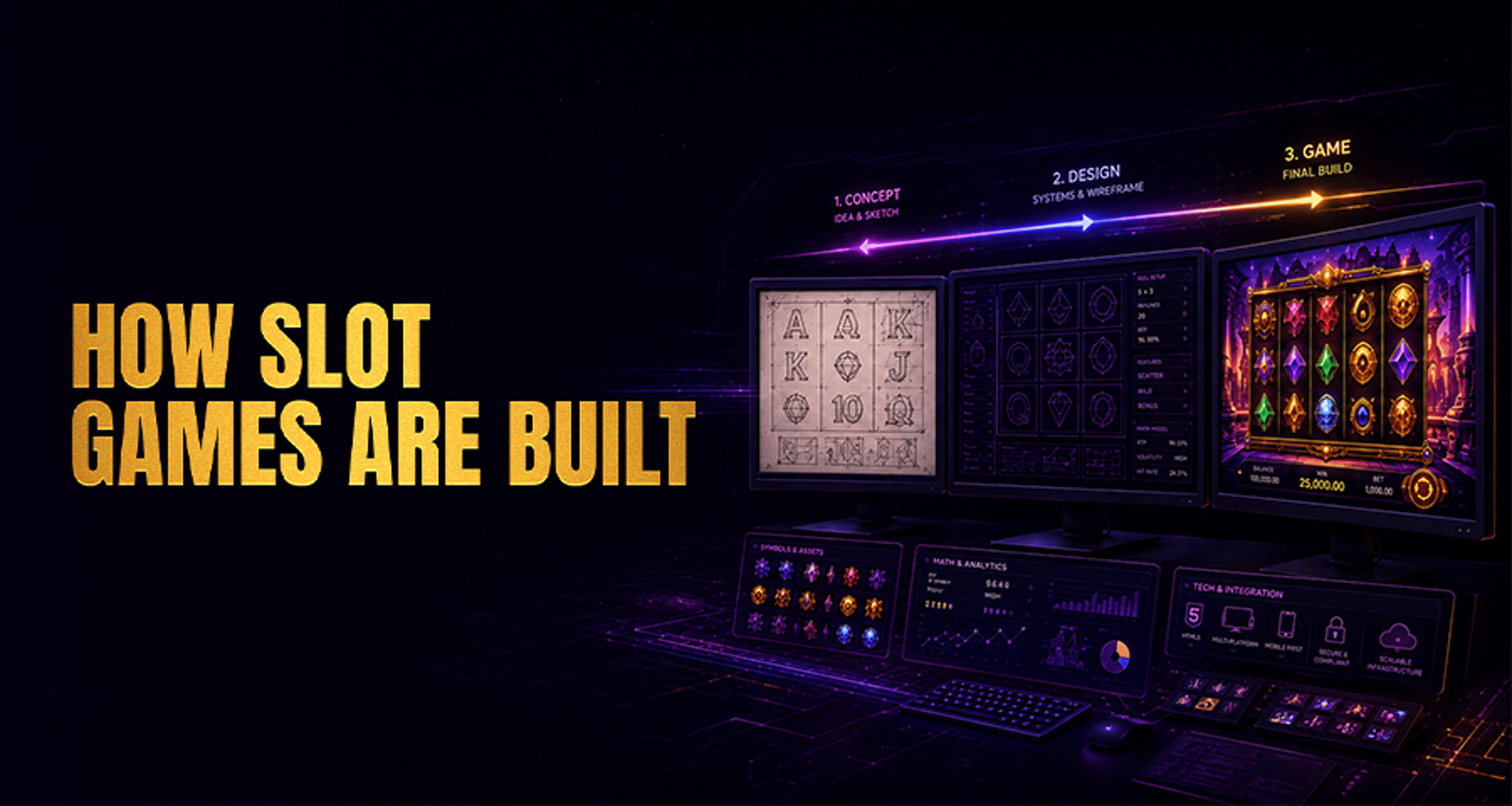
How Top Providers Create a Slot Game?
Discover how top providers create slot game experiences, from concept and math design to testing, launch, and post-release improvements that shape successful casino content.
When people ask how top providers create slot game experiences that stand out, the answer is usually less mysterious than it sounds. Strong slot production is not about one big idea alone. It is a structured process that moves from concept and research to math design, art direction, testing, launch, and post-release review.
For readers interested in the operator side of the industry, this process is useful to understand because it shows what separates a polished release from an average one. The best workflows tend to be consistent, cross-functional, and highly iterative.
Rather than relying on hype, established providers usually build around clear product goals, disciplined production, and careful launch preparation. This guide walks through that process stage by stage.
What Happens Before a Slot Game Gets Built?
Before a slot enters production, providers typically spend time defining why the game should exist at all. This early phase shapes everything that follows.
Market research and concept discovery
A new slot concept usually begins with a product or content opportunity. Providers may look at:
Theme trends already performing in the market
Gaps in their current portfolio
Player preferences across regions or device types
Demand for certain mechanics or bonus structures
Competitor releases and category saturation
This does not mean copying what is already popular. A stronger provider uses research to understand where there is room for a fresh angle, better pacing, or a more polished presentation.
Product planning and positioning
At this stage, the product team helps define the high-level identity of the game. That can include:
Target audience and market fit
Whether the slot is meant to feel simple, feature-rich, fast, or cinematic
The intended place of the game within the provider's wider portfolio
Whether the release is likely to be mobile-first, broad-market, or niche-theme focused
This is where operator-insight framing becomes important. Providers are not just making a game in isolation. They are shaping a content product that must fit business, content, and player-experience goals at the same time.
How Top Providers Turn a Game Idea Into a Slot Concept
Once the opportunity is clear, the provider starts turning that idea into a workable slot design.
The main roles involved in slot production
Several teams usually contribute to the process:
Product defines the commercial purpose, audience fit, and roadmap role
Game design shapes the game loop, mechanics, features, and player flow
Math builds the probability model and payout structure at a high level
Art creates the visual identity, symbols, animation style, and interface look
Sound develops music, audio feedback, and tonal reinforcement
QA checks stability, logic, usability, and pre-launch issues
Integration connects the final game to operator-facing systems and release pipelines
Stronger providers coordinate these roles early instead of treating them as disconnected steps.
Planning themes, mechanics, and feature direction
A slot concept normally starts with a design brief that combines theme, mechanics, and intended player feel.
That brief may outline:
The core theme and visual mood
Reel layout or similar game structure
A base gameplay loop
Planned bonus features
How often the experience should feel quiet versus eventful
Whether the game should lean toward simplicity or layered mechanics
Themes matter because they shape first impressions, but they are rarely enough by themselves. Good providers also think about whether the chosen mechanics actually support the theme.
A treasure-hunt game, for example, may call for progression or reveal-style features, while a fast arcade-style slot may rely more on momentum and visual rhythm.
Volatility and RTP targets at a high level
During concept development, providers also decide the broad profile of the game.
Two common planning areas are:
Volatility: how the game is intended to feel over time in terms of pacing and distribution of outcomes
RTP targets: the planned return profile at a high level, as part of the product setup
At this stage, these are design targets rather than player-facing promises. They help align the math model, feature intensity, and session feel. The goal is to create a game with a coherent identity, not to imply any predictable short-term outcome for players.
How Math Models and Features Are Developed
The math phase is one of the most important parts of slot creation, even though players never see most of it directly.
Building the game model
Once the concept is approved, the math team works with designers to translate creative ideas into a playable system. That usually includes:
Symbol weighting and outcome structure
Bonus feature behavior
Pacing of feature triggers
Balancing between base play and feature play
Aligning the model with the intended volatility profile
This is where the game begins to move from idea to system.
Matching features to player experience goals
Bonus features are rarely added just because they sound exciting on paper. Strong providers think about what each feature is supposed to do in the overall experience.
For example, a feature may be planned to:
Create anticipation
Break up the base rhythm
Reinforce the theme
Provide visual contrast
Make the game feel easier to follow on mobile
The best providers usually avoid overloading the slot with mechanics that fight each other. A cleaner feature set often creates a better final product than a crowded one.
Prototyping and early balancing
Before art is fully polished, providers often create prototypes to test whether the game loop feels right. In this phase, teams ask practical questions:
Does the feature pacing feel too flat or too busy?
Is the core mechanic understandable quickly?
Does the slot feel different enough from existing titles?
Are there friction points in the base game?
Does the theme actually support the mechanic, or are they disconnected?
This is one reason why polished slots rarely emerge in a straight line. Prototyping helps providers adjust early before too much production time is locked in.
How Art, Sound, and Theme Bring the Slot to Life
Once the game concept and math direction are stable enough, the creative production side becomes more visible.
Art direction and visual identity
The art team turns the concept into a recognizable product. That often includes:
Symbol design
Background environments
Motion language and animation style
Bonus scene presentation
Interface layout and button clarity
For top providers, art is not just decoration. It guides readability, mood, and pacing. If a screen is too noisy or too cluttered, the game may look expensive but still feel tiring to use.
Sound design and feedback
Sound is also a functional tool, not just a finishing layer. Audio can help establish:
The emotional tone of the game
Feedback for user actions
Contrast between standard play and feature moments
A more cohesive theme experience
Well-matched sound design can make a slot feel smoother and more responsive, while poor sound design can make even a strong concept feel flat.
Theme execution versus theme overload
Top providers usually know where to stop. A strong theme supports the game, but too much visual or audio intensity can reduce clarity. The strongest releases often feel polished because they balance style with usability.
That matters especially for broader audiences. A slot that is easy to read and follow generally has a better chance of holding attention than one that overwhelms the player with effects.
Why Testing and Iteration Matter Before Launch
Testing is where the provider finds out whether the game works as intended in practice, not just in design documents.
Internal testing across teams
Before release, teams typically review the slot from multiple angles:
Does the game flow feel smooth?
Are mechanics easy to understand?
Are there visual bugs or unclear states?
Does the audio trigger correctly?
Does the experience remain stable across devices and screen sizes?
Game design, QA, product, and integration teams may all feed into this stage.
Iteration based on real friction points
This is where changes often happen. A feature may be too confusing, a bonus round may feel too long, or a mobile screen may be too crowded. Providers may then revise:
Interface layout
Animation timing
Sound cues
Feature explanation screens
Button placement
Game pacing in key moments
Iteration is one of the clearest signs of production maturity. Average providers may push forward with avoidable rough edges. Stronger providers tend to use testing to tighten the game before it reaches operators and players.
Mobile UX, performance, and retention-minded design
Modern slot development is heavily shaped by mobile expectations. Providers increasingly need games to load cleanly, read well on smaller screens, and feel responsive even during feature-heavy moments.
That influences decisions around:
Interface simplicity
Animation weight
Text readability
Tap targets and button placement
How quickly the player understands the game loop
How often the game delivers moments of engagement without becoming cluttered
Retention-minded design in this context does not mean making promises about outcomes. It means building a game that players can understand, navigate, and return to without friction.
What Happens When a Slot Game Goes Live
Launch is not the end of the process. For top providers, it is the start of a new review phase.
Launch readiness checks
Before release, providers typically want confidence that the game is operationally ready. In practical terms, that often means confirming:
The game build is stable
Core flows work as expected
Assets display correctly
Integration requirements are complete
Release materials and metadata are prepared
The game is ready for distribution to partner environments
This is less glamorous than concept design, but it matters. A polished game can still underperform if launch execution is messy.
Integration and distribution
The integration stage helps move the slot from internal build to operator-facing availability. This may involve making sure the title is packaged, connected, and ready to appear properly where it is distributed.
From an operator insight perspective, this is part of what separates a creative idea from a usable content product. Reliability, compatibility, and rollout coordination all matter.
Post-launch monitoring
After release, providers often continue reviewing the game's early behavior and market response. That can include monitoring:
Technical stability
Session friction points
Feature engagement patterns at a high level
Operator feedback
Whether the game is performing in line with its intended product role
If issues appear, providers may make updates, improve presentation, or adjust surrounding release support. Post-launch monitoring helps teams learn not just whether the game launched, but whether it landed well.
What Strong Providers Do Better Than the Rest
It is difficult to make objective claims about who is "best" without specific evidence, but it is possible to explain what stronger providers usually do better.
Clearer workflow discipline
Established providers often have more structured handoffs between product, design, math, art, QA, and integration. That usually leads to fewer mismatches between the original concept and the final game.
Better alignment between theme and mechanics
Average slots may feel like a theme layered onto a standard framework. Better-made slots usually show stronger connection between what the game looks like and how it actually plays.
More iteration before release
Higher-quality providers tend to identify friction earlier and refine more aggressively. That can improve usability, readability, and overall polish.
Stronger mobile and performance awareness
The best-executed releases usually respect how players actually access content today. That means cleaner UX, faster comprehension, and smoother presentation across devices.
Ongoing attention after launch
Top-tier workflows do not treat launch as the finish line. Providers that keep reviewing results, technical performance, and usability signals often build better portfolios over time.
FAQ
How do slot providers create a new slot game?
They usually follow a staged process that includes research, concept planning, math design, art and sound production, prototyping, testing, integration, launch preparation, and post-launch monitoring.
Who is involved in building a slot game?
Common roles include product managers, game designers, math specialists, artists, sound designers, QA teams, and integration teams.
What comes first in slot development: theme or math?
It depends on the provider's workflow, but strong development usually aligns both early. A theme may inspire the game, while math and mechanics determine whether the concept works in practice.
How long does it take to make a slot game?
Timelines vary depending on complexity, feature scope, art depth, and testing needs. Simpler games may move faster, while more layered titles often need longer iteration and launch preparation.
What makes top slot providers different from average ones?
The main differences are usually workflow quality, better alignment between theme and mechanics, stronger testing, more polished mobile UX, and more disciplined post-launch review.
Do providers update slot games after launch?
They can. Post-launch work may include bug fixes, presentation improvements, integration support, or broader performance review depending on the provider and release context.
Final Thoughts
Understanding how top providers create slot game releases helps explain why some titles feel more polished, coherent, and launch-ready than others. The process is rarely just about visual theme or one standout feature. It is a coordinated production cycle shaped by product planning, game design, math, art, sound, QA, integration, and post-launch learning.
For readers exploring the operator side of the market, the most useful next step is to go deeper into related topics such as a slot mechanics guide, a volatility and RTP explainer, a casino software providers overview, a mobile casino UX guide, and how online casino games work.
For broader context, a responsible gambling education hub can also help place game design discussions within a more balanced industry view.