Limping in Poker: Mistake or Winning Strategy?
This guide breaks down what limping really means, when it works, and why it often drains your expected value (EV). By the end, you’ll know exactly when to raise, fold, or occasionally limp with a plan.
What Does Limping in Poker Mean?
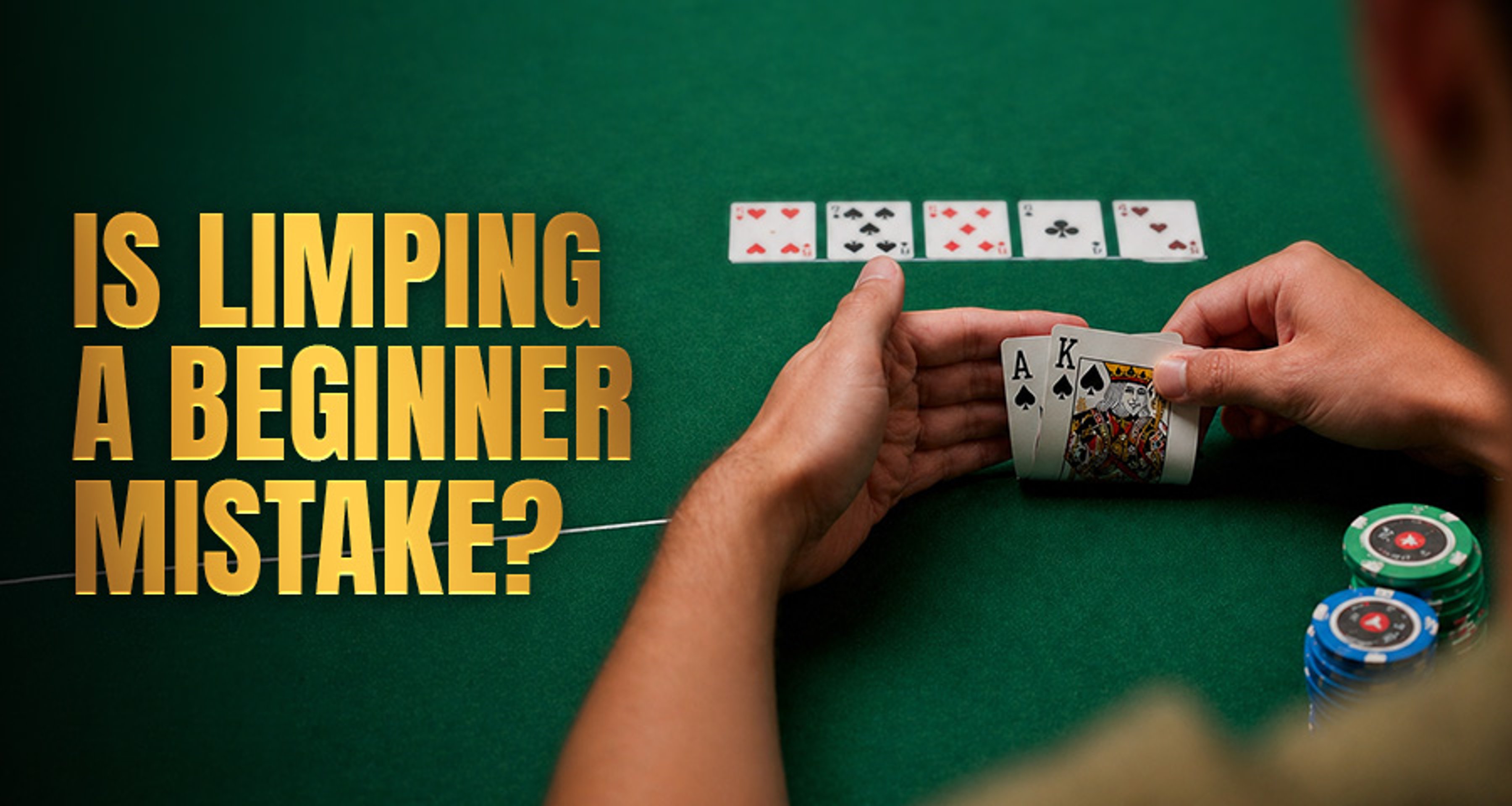
Limping in poker means entering the pot preflop by calling the big blind instead of raising. Why does this matter? Because the decision affects your initiative, fold equity, and long-term profitability in less than 300 characters: limping sacrifices aggression and often lowers EV unless used strategically.
Simple Definition (Easy Example)
You’re in early position holding 8♠ 8♦. Instead of raising to 3 big blinds, you just call 1 big blind.
That’s called an open limp.
You haven’t shown strength. You’ve invited multiple players into the pot. And you’ve given up control before the flop even lands.
Difference Between Limp, Call, and Raise
Action | What It Means | Strategic Impact |
Limp | Call big blind first in | Passive start |
Call | Match a raise | Reactive play |
Raise | Increase bet size | Aggressive control |
Why Beginners Use Limping
New players limp because:
They want to “see a cheap flop”
They fear being re-raised
They don’t understand hand ranges
They overvalue suited connectors or small pairs
In low-stakes games, especially online poker rooms, limping feels safe. But safety doesn’t equal profitability.
Why Limping Is Usually a Losing Strategy
Limping in poker is often unprofitable because it reduces your ability to win pots without a showdown.
Loss of Initiative and Control
When you raise the preflop, you gain initiative.
That allows you to:
Make continuation bets
Apply pressure
Represent strong ranges
Limping removes that leverage.
Weak and Capped Hand Ranges
A limp range is usually perceived as:
Medium strength
Speculative
Rarely premium
Advanced players think in ranges, not hands. If your range looks capped, opponents attack it.
Multiway Pots Reduce Your Edge
Multiway pots:
Lower your equity realization
Increase variance
Reduce bluff success rates
Your top pair becomes less reliable against three opponents than one.
Easy Target for Aggressive Players
Strong players use isolation raises against limpers.
If you limp from middle position and the button raises, you are now:
Out of position
Facing aggression
With a marginal range
Over time, this lowers your win rate.
Expert Insight: Expected Value (EV)
Expected Value measures the average outcome of a decision.
When you limp:
You gain minimal fold equity
You build small pots with strong hands
You face larger pots with weaker holdings
In solver-based Game Theory Optimal (GTO) models, limping is rarely used outside specific blind vs blind spots.
When Limping Can Actually Be Correct
There are controlled scenarios where limping is acceptable.
Exploitative Strategy in Soft Games
In extremely passive live tables:
Players rarely raise
Pots stay small
Deep stacks increase implied odds
Overlimping with small pairs can be profitable if opponents overpay postflop.
Tournament Short-Stack Adjustments
In tournament poker, especially near the bubble:
ICM pressure matters
Stack-to-pot ratio (SPR) changes
Risk management becomes key
Some short-stack strategies involve completing from the small blind instead of raising light.
Blind vs Blind Situations
Solver outputs often show mixed strategies in small blind vs big blind play.
In this spot:
Ranges are widest
Position disadvantage is reduced
Limping can balance your range
This is one of the few structurally sound limping environments.
Advanced Mixed Strategies (GTO)
Game Theory Optimal models sometimes:
Mix raises and limps
Protect weaker ranges
Prevent exploitability
However, these strategies are complex and rarely executed correctly at lower stakes.
How to Exploit Players Who Limp
Instead of limping yourself, profit from those who do.
Isolation Raising Strategy
Raise larger than usual when isolating:
4–5 big blinds + 1 per limper
This forces weaker ranges into tough decisions.
Adjusting Bet Sizing
Against limpers:
Increase preflop sizing
C-bet more frequently
Apply turn pressure
Weak ranges fold often under sustained aggression.
Reading Weak Ranges
Typical limp ranges include:
Small pocket pairs
Suited connectors
Weak aces
Broadways like KJ or QJ
Rarely AA or KK.
Turning Their Mistake Into Profit
The more passive your opponent, the more profitable aggression becomes. Position + initiative + pressure = long-term edge.
Conclusion
Limping in poker is usually a losing move. While there are rare exceptions in tournaments or soft games, the golden rule remains: raise or fold. By understanding when limping is a leak and when it can be used strategically, you’ll sharpen your preflop game and avoid costly mistakes.