Loss Chasing After a Bonus Session: Why It Happens?
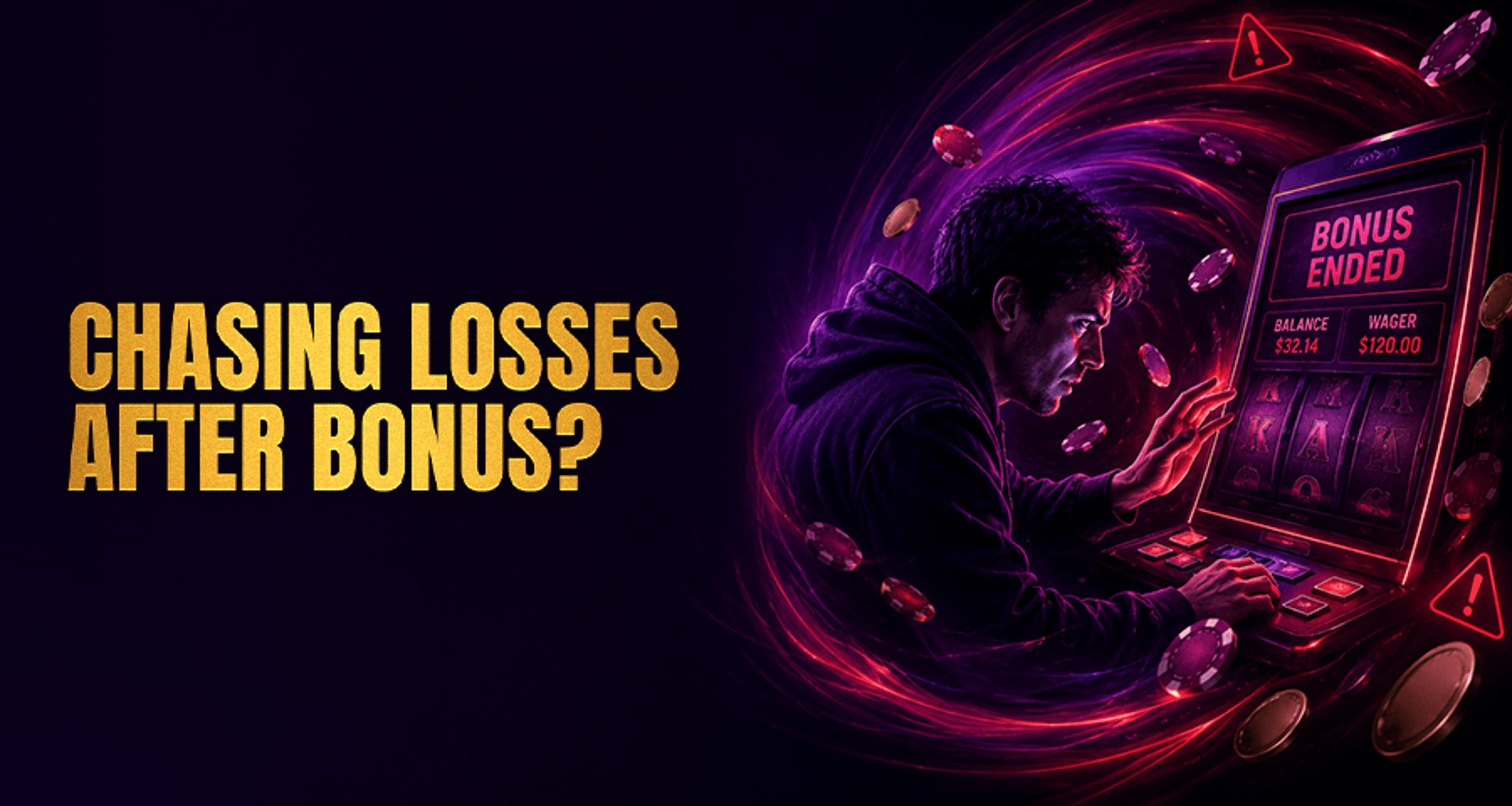
When loss chasing after a bonus session strikes, players fall into the trap of trying to recover funds or complete wagering requirements, letting emotional pressure override strict bankroll limits.
Loss chasing after a bonus session happens when a player keeps gambling after a frustrating bonus run because they feel pressure to recover what they just spent, finish what they started, or avoid “wasting” the bonus. In plain language, it is the urge to keep going after losses because the bonus session made stopping feel harder than it should.
This pattern is different from general tilt because the trigger is often the bonus itself. Wagering requirements, long play sessions, near-cashout moments, and the feeling of using “house money” can all distort how a player judges risk.
A bonus may change the emotional pressure of the session, but it does not change game odds or guarantee that losses can be recovered.
In a HunnyPlay-style premium crypto casino setting, the dark polished presentation, long bonus progress bars, and reward-focused flow can make offers look smooth and high-value at first glance. But the real question is not how exciting the offer looks.
It is whether the structure creates pressure to keep playing after the session has already stopped making sense for your bankroll.
What Loss Chasing After a Bonus Session Actually Looks Like
A common example is simple: you claim a deposit bonus, play longer than planned, fall short of clearing the wagering, and then tell yourself a few more spins or bets might turn the session around. You are no longer playing because the offer still fits your plan. You are playing because walking away now feels like taking a complete loss.
Sometimes the session gets even more difficult when the balance briefly rises and then drops before a cashout becomes possible. That can create a strong “I was almost there” reaction. Instead of treating the session as finished information, the player treats it like unfinished business.
That is what loss chasing after a bonus session often looks like in practice:
extending play beyond the original budget
increasing stake size to try to recover faster
focusing more on clearing the bonus than on the real cost of continuing
feeling irritated at stopping because of how much time was already spent
believing one more round could justify the whole session
Why Bonus Play Makes It Harder To Walk Away
Bonus play adds conditions that can make a losing session feel more emotionally charged than normal cash play. The issue is not that a bonus causes wins or losses by itself. The issue is that it can change how a player interprets the session.
For example, wagering progress can make you feel committed even when the remaining requirement is still large. A balance that cannot yet be withdrawn can feel psychologically “close” to becoming real money, even when the math still does not support continuing. That is why players comparing online casino bonuses should look beyond the headline offer and focus on the conditions attached to it.
Bonus sessions also tend to last longer. The longer you play, the more likely fatigue, frustration, and impatience affect your choices. If a session starts to feel like a mission instead of entertainment or controlled spending, rational evaluation usually gets weaker.
Common Triggers: Wagering Pressure, Near Cashout, And Sunk Cost Thinking
Unmet wagering requirements
This is one of the biggest triggers. A player may see progress toward completion and think it would be a waste to stop now. But partial progress does not create value on its own. If the remaining wagering is still heavy, continuing may simply mean exposing more bankroll to the same odds.
This is especially relevant with offers that look generous up front but carry demanding rollover conditions, which is why articles like High Bonus, High Wager: Is It Worth It? matter when comparing promotions.
Near-cashout frustration
A player gets close to finishing the bonus, close to a withdrawal threshold, or close to ending the session in profit, then falls back. That near-miss feeling can be powerful. It often creates the false sense that recovery is just one short step away, even though each new wager still carries the same risk.
Time sunk into clearing the bonus
If you have already spent an hour or more working through a bonus, stopping can feel emotionally expensive. Players often think, “I have already put too much into this to leave now.” That is sunk cost thinking. The time is already gone, and more play does not automatically make the earlier time worthwhile.
Urge to recover losses before ending
Some players do not want the session to end on a loss, especially after a bonus made the session feel structured or goal-based. That creates a recovery mindset: not “Is this still a good decision?” but “How do I get back to even before I log off?” That shift is where chasing often starts.
Signs The Bonus Is Driving Your Decisions Instead Of Your Plan
A bonus may be driving your decisions if:
you keep playing mainly because you are partway through wagering
you raise your stakes because the session feels stuck
you stop checking the actual terms and focus only on finishing
you feel angry or restless at the idea of ending without clearing the offer
you tell yourself the bonus money is different from your own money
you continue after your planned budget or time limit is already gone
you think about recovering losses first and evaluating the offer second
Once that happens, you are usually no longer judging the promotion rationally. You are reacting to pressure created by the session structure.
How To Evaluate Whether A Bonus Is Worth The Risk
Before claiming any offer, look at the mechanics that could increase pressure later:
Wagering size: How much total play is required before withdrawal is possible?
Session length risk: Will this likely keep you in action much longer than you planned?
Game restrictions: Are the eligible games suitable for your normal bankroll and pace?
Maximum cashout rules: Does the reward justify the time and exposure involved?
Emotional pressure: If progress stalls halfway through, will the structure tempt you to keep forcing it?
A useful comparison is whether you would still choose the same session without the bonus label attached. If the answer is no, the offer may be creating more pressure than value.
This is also where it helps to compare bonus formats. For example, if you are already wary of volatility and forced continuation, reading about whether bonus buy slots are worth the risk can help frame how fast higher-pressure mechanics can change decision-making.
In some cases, the best move is not to optimize the offer but to walk away from it. If a promotion starts creating pressure instead of clarity, it may be smarter to cancel a casino bonus before it costs more.
Safer Habits Before You Claim Your Next Casino Bonus
No habit is foolproof, but a few practical steps can reduce the chance of chasing after a bad bonus session:
Set session limits before you start
Decide your time limit, spending limit, and stop point in advance. Make the rule specific enough that you can follow it without debate in the moment.
Review the terms before claiming
Check wagering requirements, eligible games, withdrawal limits, and expiry windows. If the terms feel confusing or pressure-heavy, that alone may be a reason to skip the offer.
Use a stop point that is independent of bonus progress
Do not base your stopping decision only on how close you are to clearing the bonus. A session should still end when it no longer fits your budget or mindset, even if you are partway through.
Avoid offers that create forced continuation pressure
Some promotions are more likely to keep you playing longer than intended. If an offer looks large but requires extended rollover or creates a high-pressure completion mindset, passing on it can be the safer choice.
Treat bonus value separately from recovery thinking
A bonus does not improve game odds, erase previous losses, or make recovery more likely. It is just a promotion with conditions. If you catch yourself treating it like a path back to even, pause and reassess.
Final Thought
Loss chasing after a bonus session is not just about frustration. It is often the result of a bonus structure making the player feel committed, close, or unable to stop without “wasting” something. That is why the safest way to judge a bonus is not by the headline number, but by the pressure it may create once the session gets difficult.
Before claiming your next offer, review the terms, decide whether the wagering fits your bankroll, and be honest about how likely the structure is to keep you playing past your plan. A good bonus decision starts before the session begins.
FAQ
Why do I want to keep playing after losing during a bonus session?
Because bonus sessions often create a sense of unfinished progress. Wagering requirements, near-cashout moments, and time already spent can make stopping feel more painful than it really is.
Does a casino bonus make it easier to win back losses?
No. A bonus does not change the odds of the games or guarantee that losses can be recovered. It may increase session length and decision pressure, but it does not improve your chances of winning back money.
Can wagering requirements cause loss-chasing behavior?
They can contribute to it. When players feel committed to clearing rollover, they may keep playing after they would otherwise have stopped.
How do I know when a bonus offer is not worth continuing?
If you are continuing mainly because of progress already made, frustration about stopping, or a desire to get back to even, the offer may no longer be worth it for you.
What should I set before starting a bonus session to avoid chasing?
Set a time limit, a bankroll limit, and a clear stop point before you claim the bonus. It also helps to review the terms first and skip offers that seem likely to pressure you into extended play.