No KYC Casino Claims: What Players Should Understand Before Signing Up?
Behind flashy no kyc casino claims players often face hidden terms. While registration is instant, identity checks are frequently triggered by withdrawals, high-value crypto transactions, or routine risk reviews later.
For no kyc casino claims players often see in ads or review pages, the biggest mistake is taking the phrase at face value.
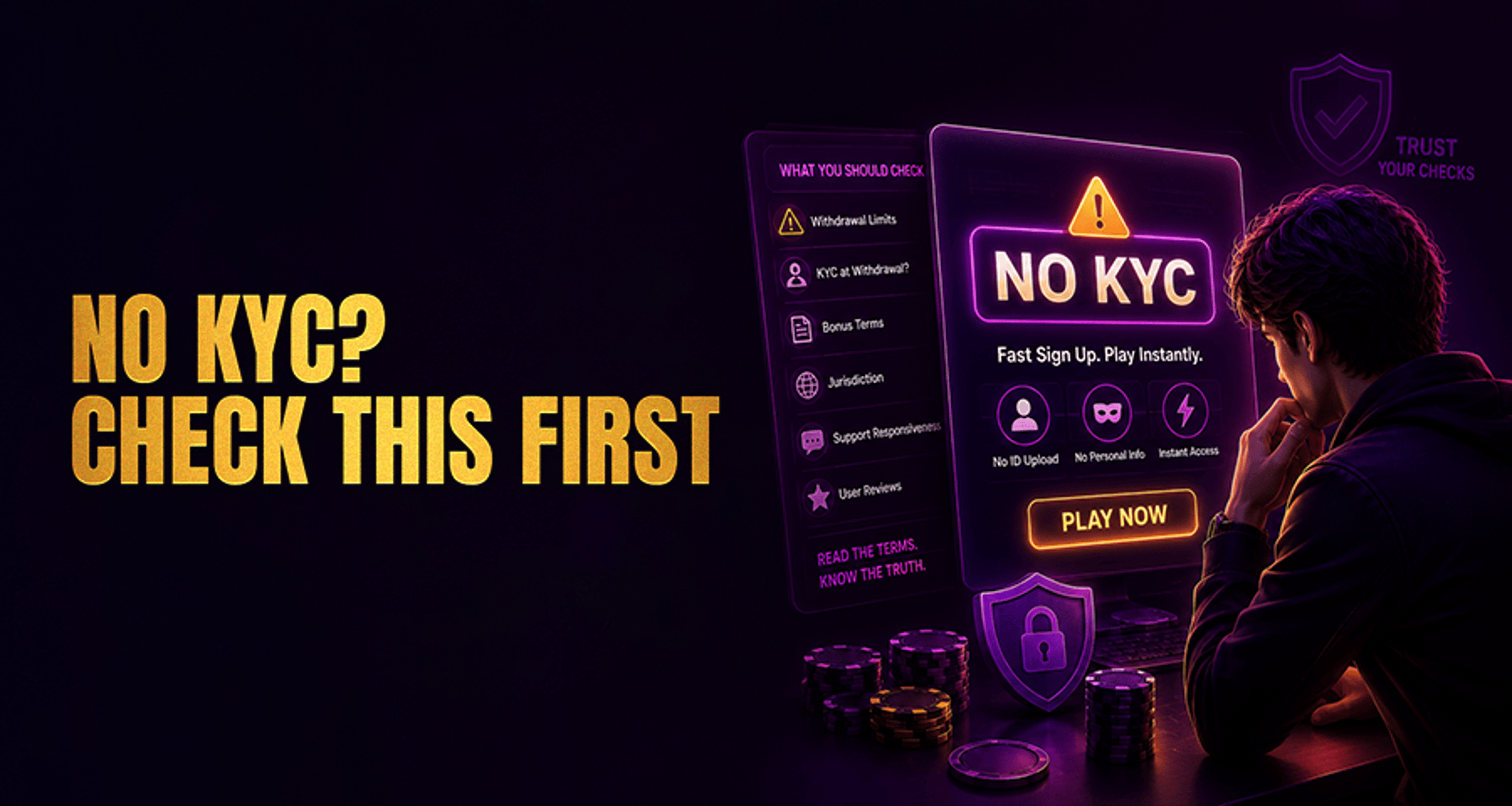
A no KYC casino claim can sound simple: register, play, and avoid identity checks. In practice, it is usually not that absolute.
For many players, “no KYC” often means reduced friction at signup, not a permanent promise that the casino will never ask for verification. A platform may let you create an account and deposit with minimal information, then request documents later if you withdraw, trigger a risk review, use certain payment methods, or run into account-access problems.
That is why the safest approach is to treat the phrase as a marketing claim that needs validation, not as a guarantee. Before signing up, players should review the casino’s terms, withdrawal rules, verification policy, and support responses to understand what may still happen later.
What “No KYC Casino” Claims Usually Mean
In plain language, a no KYC claim usually points to one of these ideas:
signup requires less information than some traditional casinos
document checks may be delayed rather than removed
certain payment flows may involve fewer steps at the start
verification may only happen when specific triggers appear
This is very different from saying a casino will never ask for ID or other supporting details.
A reduced-friction signup process can be real. A full no-verification promise is much harder to rely on. If a site uses “no KYC” in its branding, players should still expect that account review, payment screening, or withdrawal checks may appear later.
This is also where broader trust research matters. If you are assessing whether a platform presents itself clearly and consistently, it helps to compare its public messaging with practical trust indicators such as complaint patterns, policy clarity, and reputation signals. HunnyPlay’s guide to Casino Reputation Score offers a useful framework for that wider review.
Why a Casino May Still Ask for Verification Later
Even when a casino promotes itself as no KYC, verification requests can still happen at common review points.
Withdrawal attempts
A casino may allow deposits and gameplay quickly, then pause a withdrawal until it confirms account details, payment ownership, or transaction history. This is one of the most common moments when players discover that “no KYC” did not mean “no checks under any circumstances.”
Payment-risk reviews
Some payment methods create extra review triggers. If a transaction is flagged for mismatch, reversal risk, or unusual behavior, the casino may ask for more information before processing activity on the account.
AML and fraud checks
Casinos may run anti-fraud or anti-money-laundering controls. That does not mean every player will face the same process, but it does mean some form of review can still happen if account activity looks unusual or crosses internal thresholds.
Bonus abuse checks
If a player claims a promotion, the casino may review account behavior, linked profiles, device patterns, or transaction details to check for bonus abuse or duplicate-account concerns.
Account recovery
Even a platform with light onboarding may need identity-related confirmation if you lose account access, change key settings, or dispute ownership of the account.
Unusual activity
Large betting changes, multiple devices, location inconsistencies, or sudden withdrawal behavior may lead to manual review.
So the key distinction is this: reduced-friction onboarding is not the same as a permanent no-verification experience.
How to Check a No-KYC Claim Before You Sign Up
Before registering, use a simple checklist to test whether the claim holds up.
1. Read the terms and conditions
Look for sections covering:
account verification
identity requests
document submission rights
withdrawal review
bonus restrictions
account suspension or closure triggers
If the terms give the casino broad power to request documents “at any time,” then the no-KYC message should be viewed cautiously.
2. Review the verification or KYC policy
Some sites separate this from the general terms. Check whether the policy clearly explains:
when verification can be requested
what documents may be needed
whether checks depend on payment method or withdrawal size
how long reviews may take
Vague wording is a warning sign. Clear policy language is easier to evaluate.
3. Check withdrawal rules carefully
Many surprises appear here, not on the homepage. Read the withdrawal section for:
review timing
payment-method matching requirements
limits or thresholds
pending-period language
extra checks before release of funds
If a casino advertises no KYC but the withdrawal rules suggest broad document checks, that gap matters.
4. Confirm geo-restrictions and eligibility
A site may market itself aggressively while still restricting players by region or applying different checks depending on location. Make sure the rules are stated clearly before you sign up.
5. Check payment method requirements
Payment choice can affect whether verification is requested. Some methods may involve added ownership checks, source-of-funds questions, or account matching requirements.
This is one reason general account safety matters too. If you plan to use digital assets or alternative payment rails, HunnyPlay’s guide on protecting your crypto gambling account is a helpful companion read.
6. Ask support direct questions
Before registering, ask support:
Can verification be requested later, including at withdrawal?
Are there payment methods that trigger extra review?
Are there thresholds, regions, or promotions that change the process?
What happens if account activity is flagged for manual review?
If support answers clearly and consistently, that is a better signal than vague marketing copy alone.
Questions to Ask About Withdrawals, Limits, and Reviews
If you want to validate the claim properly, focus on practical account moments rather than the ad headline.
Ask:
Can I deposit and play without full verification, but still be checked before withdrawal?
Do withdrawal size, frequency, or payment method affect review requirements?
Can bonus use trigger additional account checks?
If my account is locked or I lose access, what proof may be required?
Does the casino explain how long manual reviews usually take?
Are the verification rules written the same way across the homepage, terms, and help center?
These questions help players spot the difference between light onboarding language and real policy commitments.
Risk Signals That Suggest the Claim Is Overstated
Some no-KYC claims look stronger in ads than they do in the actual rules. Watch for these red flags:
Vague policy wording
If the site says “no verification” in one place but uses broad “we may request documents at our sole discretion” language elsewhere, the claim may be overstated.
Contradictory withdrawal language
If withdrawals are described as simple or fast on marketing pages, but the payment rules leave room for extensive review, players should assume the stricter wording controls.
Missing compliance details
A trustworthy operator should explain at least the basics of account review, restrictions, and security controls. Missing or hard-to-find policy details make evaluation harder.
Unclear responsible gambling policies
A casino that talks heavily about convenience but says little about account protection, player safeguards, or responsible gambling transparency may not be presenting the full picture.
Poor support transparency
If support avoids direct questions about document triggers, withdrawal reviews, or payment-method rules, that is a meaningful warning sign.
Weak security posture
Privacy-conscious players should also think beyond ID checks. Account safety, phishing exposure, and payment security all matter when evaluating trust. HunnyPlay’s article on iGaming cybersecurity risks and how to stay safe adds useful context here.
How This Differs From Licensed vs Unlicensed Casino Research
This topic is not the same as a full licensed-versus-unlicensed comparison.
The main question here is whether a no-KYC claim matches the casino’s real user journey and written rules. That means checking:
whether signup is merely lower friction
whether verification can still appear later
whether withdrawal language contradicts the headline claim
whether support explains the process honestly
Licensed-versus-unlicensed research is broader trust work. It looks at a bigger set of questions around oversight, accountability, and platform credibility. That can still be useful background, but it is a different angle from testing whether a specific no-KYC message is accurate. For that broader comparison context, readers can continue with HunnyPlay’s licensed-vs-unlicensed trust research alongside related guides such as Casino Affiliates Explained: Trust, Rankings, and Real Secrets, which helps unpack how external casino claims and rankings should be evaluated more carefully.
Privacy Expectations: What Players Should Realistically Expect
Players who care about privacy are not wrong to examine no-KYC claims closely. But realistic expectations matter.
A reduced-data signup flow may mean:
fewer details collected at the start
fewer onboarding steps before play
delayed review unless certain triggers occur
It does not automatically mean:
permanent anonymity
guaranteed withdrawals without checks
universal acceptance across all payment methods
zero chance of account review later
The most balanced approach is to assume that any casino handling payments, withdrawals, account disputes, or unusual activity may still request verification at some point.
FAQ
Does no KYC mean a casino will never ask for ID?
Usually, no. In many cases, it means signup is lighter at the beginning, not that identity-related checks are impossible forever.
Why do some casinos request verification only at withdrawal?
Withdrawal is a common review point because casinos may check payment ownership, account consistency, fraud risk, bonus conditions, or unusual activity before releasing funds.
What terms should players read before trusting a no-KYC claim?
Start with the terms and conditions, verification or KYC policy, withdrawal rules, bonus terms, geo-restrictions, and help-center guidance on account reviews.
Are no-KYC claims the same as being unlicensed?
No. They are different issues. A no-KYC claim is about how a casino presents identity-check expectations. Licensing research is a broader review of oversight and trust factors.
Can payment method choice affect whether verification is requested?
Yes, it can. Some payment methods may involve extra ownership checks, matching requirements, or risk reviews.
What are the biggest red flags in a no-KYC casino policy?
Key red flags include vague wording, contradictions between marketing and withdrawal terms, unclear review triggers, weak support answers, and missing policy transparency.
Final Takeaway
The phrase no KYC casino should be treated as a claim to verify, not a promise to accept at face value.
Before registering, review the policy language, check withdrawal conditions, confirm payment-method rules, and ask support direct questions about when verification may still happen. A lower-friction signup can be real, but that is not the same thing as guaranteed no-verification access later.
For players doing broader trust-and-safety research, the best next step is to keep building context through related HunnyPlay guides and compare claim language against reputation, security, and transparency signals before signing up.