Self-Custody Wallet vs Exchange Wallet for Casino Withdrawals
When you request a crypto payout from an online casino, the destination wallet matters more than many players expect. In the context of **self custody wallet vs exchange wallet casino withdrawals**, the real question is
When you request a crypto payout from an online casino, the destination wallet matters more than many players expect. In the context of self custody wallet vs exchange wallet casino withdrawals, the real question is not which wallet is “better” in general. It is which option creates less friction for your specific withdrawal goal.
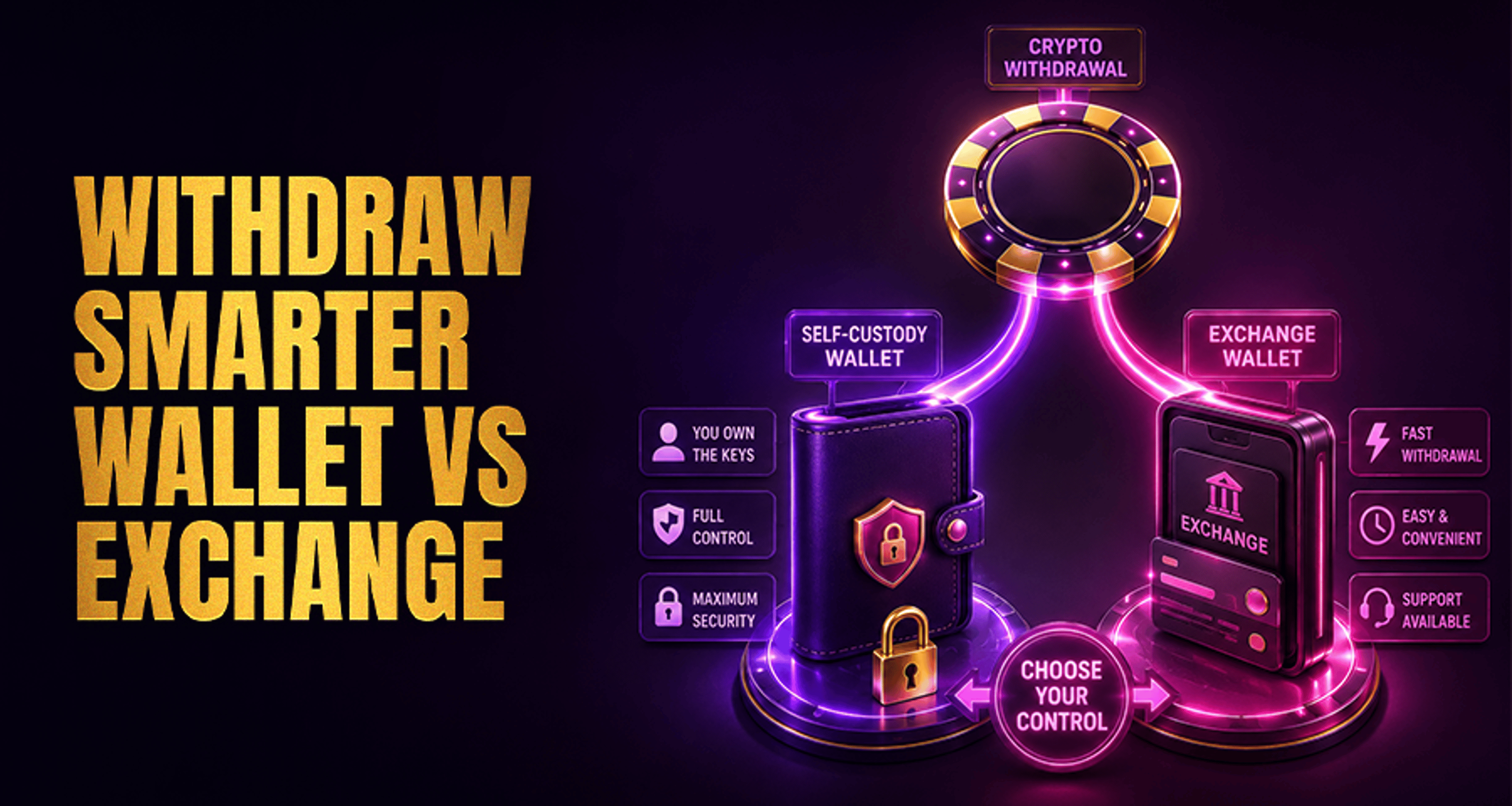
A self-custody wallet gives you direct control over the wallet and its private keys. An exchange wallet is a deposit address provided through a crypto exchange account, where the exchange controls the custody environment and applies its own deposit, account, and transfer policies.
For casino withdrawals, that difference affects how much control you have over the funds, whether your receiving address remains suitable over time, how carefully you need to handle network and token compatibility, and how exposed you are to third-party restrictions.
Self-Custody Wallet vs Exchange Wallet: What’s the Difference for Casino Withdrawals?
For casino payout workflows, the distinction is practical:
Self-custody wallet: You control the wallet access and are responsible for securing it.
Exchange wallet: You receive funds through an exchange account, and the exchange controls how deposits are credited, reviewed, or restricted.
Here is the side-by-side comparison that matters most when withdrawing winnings.
Factor | Self-Custody Wallet | Exchange Wallet |
|---|---|---|
Control of funds | You control access to the wallet | Access depends on the exchange account and its policies |
Ease of setup | May require more initial setup and backup care | Often simple for users who already have an exchange account |
Withdrawal reliability | Often preferred for direct receipt because there is less dependency on exchange deposit rules | Can work, but reliability depends on the exchange correctly accepting and crediting the deposit |
Recovery responsibility | You are responsible for backups, recovery phrase protection, and device security | The exchange manages account-side custody, but you still must secure your login and account access |
Compliance or account-freeze risk | Lower dependency on third-party review at the receiving stage | Higher dependency on account checks, deposit reviews, or internal restrictions |
Coin and network support | Depends on whether your wallet supports the exact asset and chain | Depends on whether the exchange supports that exact asset, chain, and deposit format |
Memo or tag requirements | Usually simpler for standard wallet receipts, depending on asset | Some exchange deposits require memo, tag, or special routing details |
This is why wallet choice should be part of your withdrawal planning, just like limits, fees, and delays discussed in Casino Withdrawal Issues and Why Payouts Get Delayed.
Why Many Players Use Self-Custody Wallets for Casino Payouts
Many users prefer self-custody for direct casino withdrawals because it reduces dependency on a third party at the point where the payout arrives.
The biggest advantage is control. If the casino sends the withdrawal successfully to your self-custody address on the correct network, the funds arrive in a wallet you control. You are not waiting for an exchange to decide whether the deposit format is acceptable, whether the transfer needs review, or whether the account has any temporary limitations.
Self-custody can also be more stable for receiving payouts over time. Exchange deposit procedures can change. A coin may still be supported while a specific network is paused, deposit rules may be updated, or the exchange may apply additional checks to certain inbound transfers. That does not mean exchange wallets are unusable. It means they introduce another layer that can create friction.
This matters for casino withdrawals because players often want a straightforward receipt flow first, then decide later whether to hold, move, or convert the funds. A self-custody wallet supports that approach well.
If you want a broader look at the tradeoff between control and personal responsibility, see Self-Custodial Wallet: Full Control or Risky Move?.
When an Exchange Wallet Can Still Make Sense
An exchange wallet can still be a reasonable choice in some situations.
It may suit users who:
plan to convert the payout soon after receiving it
want quick access to trading pairs or fiat off-ramp options
already understand the exchange’s deposit requirements
have confirmed that the exchange supports the exact coin and network being used by the casino
For example, if a casino allows withdrawal in USDT on a specific chain and your exchange clearly supports USDT deposits on that same chain, sending directly to the exchange may be acceptable for a user who intends to trade or cash out quickly.
But that choice only makes sense if you verify the details first. Some exchanges may flag or restrict certain inbound transfers based on internal policies. In other cases, the deposit may not be credited smoothly if the wrong network is used, the asset variant is unsupported, or a required memo or tag is handled incorrectly.
So the exchange-wallet route can be convenient, but it is less forgiving when details are missed.
Key Risks That Can Delay or Complicate a Crypto Withdrawal
Whether you choose self-custody or exchange custody, the most common problems usually come from mismatches and avoidable errors.
Key risks include:
Wrong network selection: Sending USDT on TRC20 to an address that only supports another chain can create serious recovery problems or permanent loss.
Unsupported token or asset format: A wallet may support a coin name generally, but not every version of that asset on every chain.
Memo or tag mistakes: Some exchange deposits require a memo, tag, or similar identifier. Missing it can delay crediting or complicate recovery.
Unconfirmed wallet access: Withdrawing before confirming you still control the destination wallet, device, or account is a preventable mistake.
Policy friction on exchange accounts: An exchange may review, delay, or restrict certain inbound transfers depending on its internal controls.
These issues often matter more than the wallet label itself. Before withdrawing, verify that the receiving wallet supports the exact coin and the exact network the casino will use.
Fees also matter, especially when casinos offer multiple network options for the same asset. Comparing routes ahead of time can help, and Crypto Casino Withdrawal Fees: How to Save More on Payouts is a useful next read for that.
How to Choose the Right Wallet for Your Withdrawal Goal
The best option depends on what you want from the payout.
Choose a self-custody wallet if your goal is maximum control
A self-custody wallet is often the strongest fit if you want direct receipt, control over the funds after arrival, and less dependency on exchange-side account rules.
Choose an exchange wallet if your goal is the fastest off-ramp path
If you expect to convert, trade, or move into another asset quickly, an exchange wallet may be the more convenient route, provided you fully understand its deposit requirements.
Choose the simplest beginner flow based on what you can verify confidently
For some beginners, an exchange interface feels simpler. For others, a well-set-up self-custody wallet is easier because it avoids deposit rules that can confuse first-time users. The simpler option is the one you can verify correctly before sending.
Choose the lowest third-party dependency if you want fewer external points of failure
If minimizing third-party dependency is your priority, self-custody usually has the edge for direct casino withdrawals because receipt does not rely as heavily on an exchange account remaining unrestricted and configured correctly.
If you are still comparing broader payment routes, Best Online Casino Payment Methods can help you place crypto withdrawals in the wider payout picture.
Checklist Before You Withdraw Crypto From a Casino
Before submitting the withdrawal request, run through this quick checklist:
Confirm the exact coin you are withdrawing
Confirm the exact network the casino will use
Verify that the destination wallet supports that asset on that chain
Copy the receiving address carefully and recheck it
If using an exchange, confirm whether a memo, tag, or special deposit instruction is required
Make sure you still have full access to the destination wallet or exchange account
Review any withdrawal and network fees
Consider sending a small test amount first, if appropriate
Keep wallet backups, recovery details, and account security protected
Conclusion
In the debate over self custody wallet vs exchange wallet casino withdrawals, self-custody is often preferred for players who want more control and fewer dependencies when receiving a payout. Exchange wallets can still be suitable for users who plan to convert funds quickly and who carefully follow deposit requirements.
The safer choice is not universal. It depends on your goal, your comfort with wallet management, and how carefully you verify the asset and network before requesting the withdrawal.
If your priority is minimizing payout friction, focus on the basics first: supported coin, correct chain, confirmed wallet access, and a destination that matches your next step after the funds arrive.
FAQs
Is it better to withdraw casino winnings to a self-custody wallet or an exchange wallet?
It depends on your goal. Self-custody is often preferred for direct control and lower dependency on exchange account policies. An exchange wallet may still work well if you plan to convert or trade quickly and have verified all deposit requirements.
Can I send a casino withdrawal directly to Coinbase, Binance, or another exchange wallet?
Sometimes, yes, but only if the exchange supports the exact coin and network used by the casino and you follow any deposit instructions correctly. It should not be assumed to work in every case.
Why can exchange wallets create issues for casino withdrawals?
Exchange deposits depend on internal platform rules. Friction can happen if the wrong network is used, a token format is unsupported, a memo or tag is missed, or the exchange applies extra review to inbound transfers.
What happens if I choose the wrong network for my crypto withdrawal?
A wrong-network withdrawal can lead to delays, failed crediting, or loss of access to the funds depending on the wallets and asset involved. Always confirm chain compatibility before requesting payout.
Is a self-custody wallet safer for holding casino winnings?
It can provide more direct control, but it also places security and recovery responsibility on you. It is not risk-free. The right choice depends on whether you prefer personal control or platform-managed convenience.
Should I move funds from a self-custody wallet to an exchange after receiving the payout?
That can be a practical approach if you want to receive the withdrawal with more control first and convert later. Just factor in extra transaction steps, fees, and network compatibility before moving the funds.