Capped vs Uncapped Deposit Cashback Explained
Deposit cashback can look simple at first glance, but the structure behind the offer changes how much value a player may actually receive. When comparing capped vs uncapped deposit cashback, the headline percentage
Deposit cashback can look simple at first glance, but the structure behind the offer changes how much value a player may actually receive.
When comparing capped vs uncapped deposit cashback, the headline percentage is only one part of the picture. The real result depends on the cashback rate, the maximum return, the qualifying loss window, and any extra conditions attached to the promotion.
This guide explains how capped and uncapped deposit cashback work, how to compare them, and which type may suit different kinds of players.
What Is Capped Deposit Cashback?
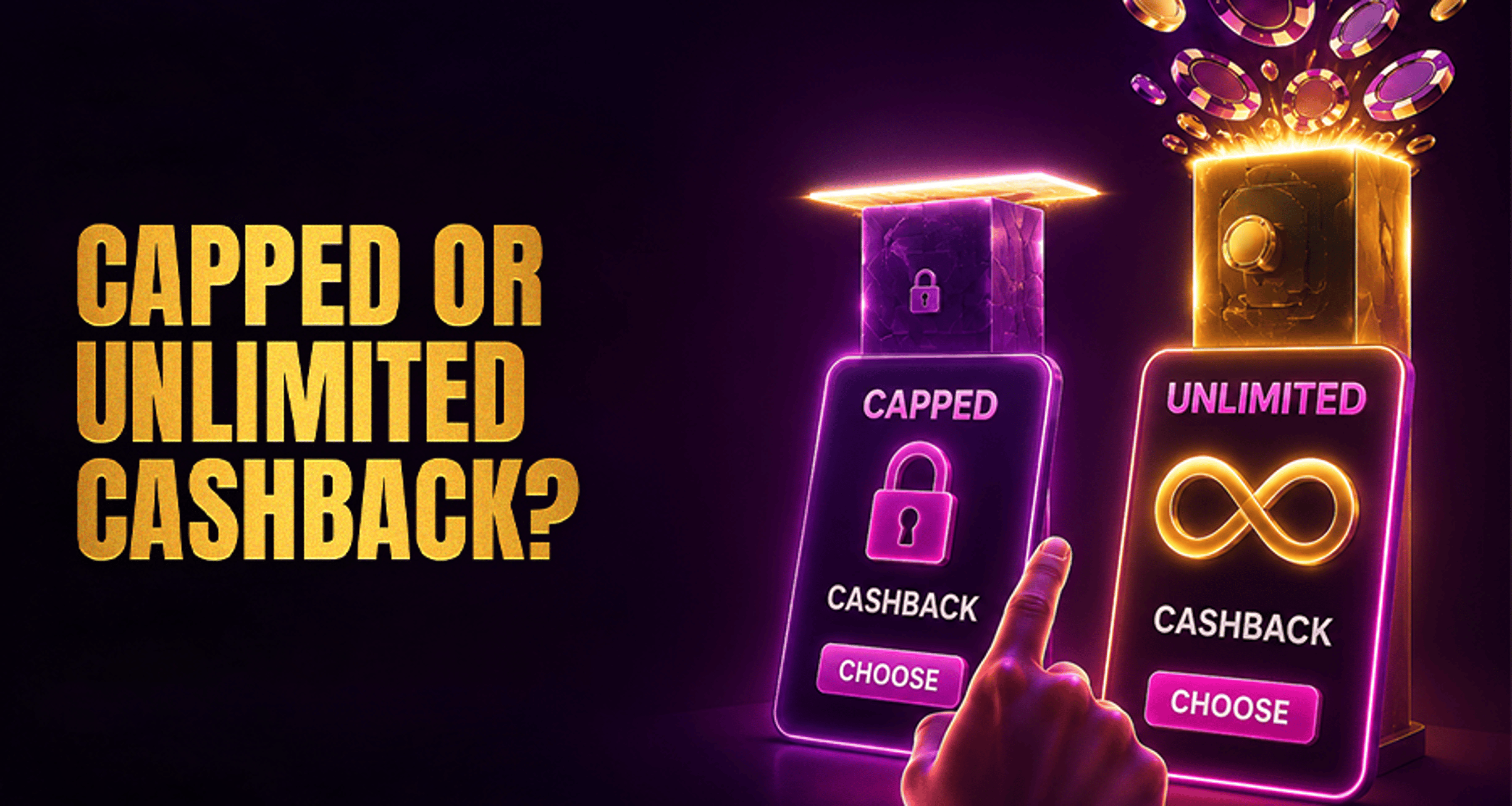
Capped deposit cashback is a promotion that refunds a percentage of eligible net losses up to a fixed maximum amount.
For example, an offer may give 20% deposit cashback up to $50. In that case, the cashback percentage applies only until the return reaches the cap. Even if losses continue rising, the cashback payout stops at the stated maximum.
This means a capped cashback offer usually has two main parts:
the cashback percentage
the maximum cashback limit
Both matter equally. A high percentage can still produce limited value if the cap is low.
What Is Uncapped Deposit Cashback?
Uncapped deposit cashback refunds a percentage of eligible losses without a stated maximum cashback limit.
If an offer gives 10% cashback with no cap, the refund keeps scaling with the player’s qualifying loss amount instead of stopping at a preset ceiling. On paper, that creates more upside for players with larger losses or bigger deposit patterns.
However, uncapped does not mean unrestricted. An uncapped cashback promotion may still include:
wagering requirements
game contribution weighting
deposit or player eligibility rules
limited claim periods
short loss calculation windows
So while there may be no payout ceiling, the real value can still be shaped heavily by the full terms. That is why understanding broader casino bonus types explained in this guide can help when comparing cashback with other bonus models.
Capped vs Uncapped Deposit Cashback: Key Differences
Here is the core comparison between capped and uncapped structures.
Factor | Capped Deposit Cashback | Uncapped Deposit Cashback |
|---|---|---|
Payout limit | Stops at a fixed maximum | No stated max cashback limit |
Predictability | Easier to estimate maximum value | More variable based on actual losses |
Upside | Limited once cap is reached | Higher potential upside |
Best fit | Lower- or mid-loss players in many cases | Mid- or high-loss players if terms are fair |
Common caution | Attractive percentage may hide a low cap | No cap does not remove wagering or eligibility restrictions |
The biggest difference in capped vs uncapped deposit cashback is not just whether a limit exists. It is how that limit changes the effective value of the advertised percentage.
How Cashback Caps Change the Real Value of an Offer
A cashback percentage only tells part of the story. The cap determines how far that percentage can actually work.
Simple cap formula
You can estimate a capped cashback return with this basic approach:
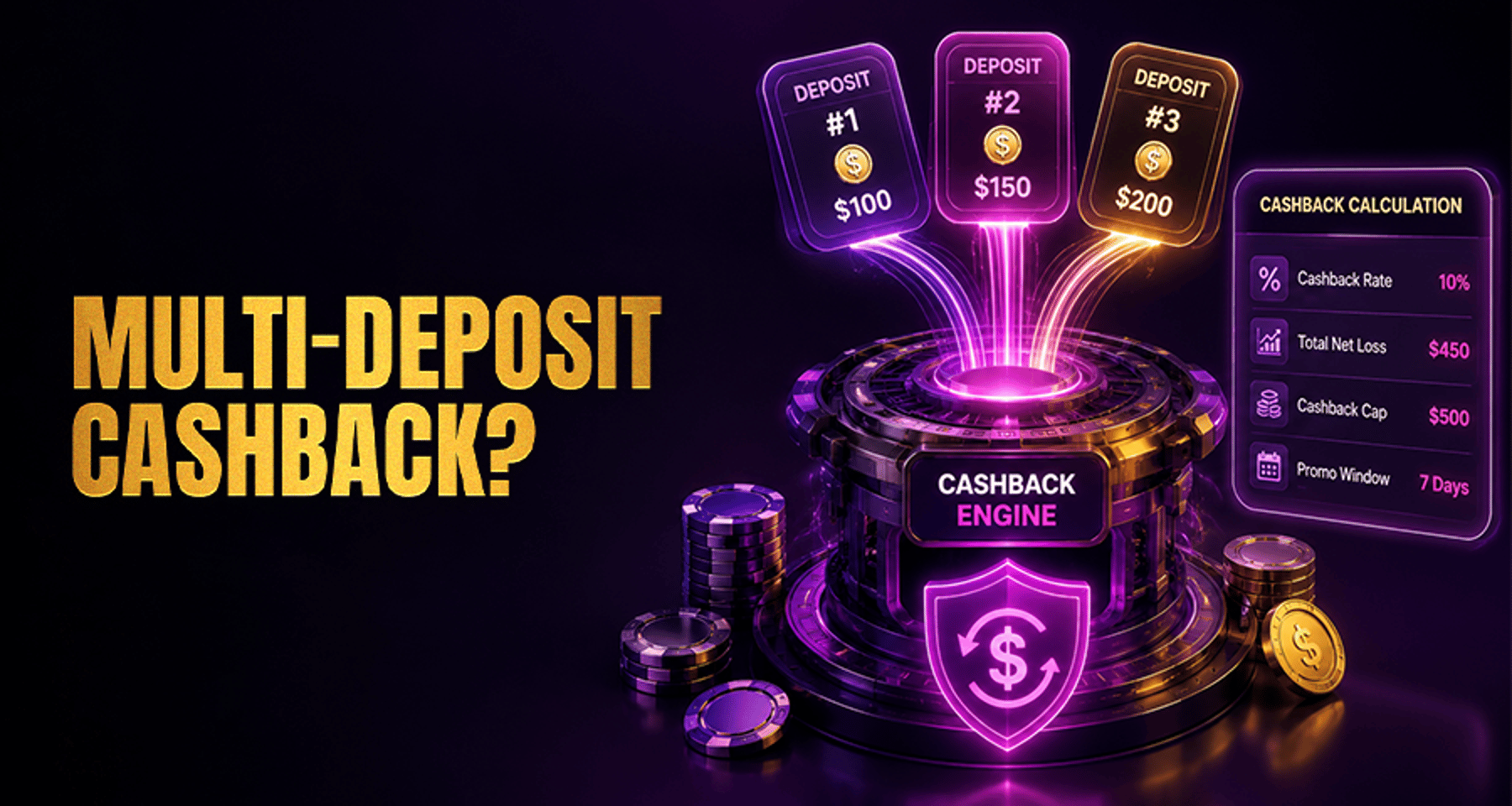
Cashback = cashback percentage x eligible net loss, up to the maximum cashback limit
That means the offer delivers full percentage value only until the cap is reached.
For example:
Offer A: 20% cashback up to $50
Offer B: 10% cashback uncapped
At first glance, Offer A looks stronger because 20% is higher than 10%. But if a player’s eligible loss amount is large enough, the cap may reduce the practical difference or even make the uncapped offer more valuable.
This is similar to how players evaluate whether online casino bonuses are worth it: the headline number matters less than the real usable value after the conditions are applied.
Example Scenarios: Low-Loss vs High-Loss Players
Simple examples make the capped vs uncapped difference much clearer.
Example 1: Lower-loss player
Assume two cashback offers:
Capped offer: 20% cashback up to $50
Uncapped offer: 10% cashback with no max limit
If Player A records $100 in eligible net losses:
Capped offer: 20% of $100 = $20
Uncapped offer: 10% of $100 = $10
In this case, the capped offer gives more value because the player does not get close to the cap.
Example 2: Mid-loss player
If Player B records $250 in eligible net losses:
Capped offer: 20% of $250 = $50
Uncapped offer: 10% of $250 = $25
Here, the capped offer still wins, but it has now reached its maximum return.
Example 3: Higher-loss player
If Player C records $800 in eligible net losses:
Capped offer: 20% of $800 = $50 because the cap stops further returns
Uncapped offer: 10% of $800 = $80
Now the uncapped offer produces the larger cashback amount.
These examples show why uncapped cashback is not automatically better, but why it may become better once losses rise beyond the capped offer’s useful range.
What Terms Matter Beyond the Cashback Cap?
The cap is important, but it is not the only term that affects value. Before choosing an offer, check the rules that shape how cashback is calculated and whether the returned funds are easy to use.
1. Wagering requirements
If cashback comes with playthrough rules, the headline return may not equal immediate usable value. A lower cashback amount with easier terms may be more practical than a higher amount with heavy rollover.
This is especially important when comparing cashback with offers built around low-playthrough structures, such as those discussed in this 0x wagering requirement guide.
2. Loss window
Some deposit cashback offers only count losses within a short period, such as 24 hours, a weekend, or a single promotional cycle. A no-cap structure may still feel restrictive if the qualifying window is narrow.
3. Eligible games and weighting
Not all games may count equally. Slots may contribute fully, while table games or live games may count less or not at all. That changes the real value of both capped and uncapped offers.
4. Eligibility rules
Cashback may be limited to certain deposit methods, player segments, account histories, or minimum deposit thresholds.
5. Cashback form
Some offers pay cashback as bonus funds rather than withdrawable cash. That can reduce the practical benefit, especially if additional wagering applies.
Which Type of Deposit Cashback Is Better for Different Players?
The better option depends on player profile, loss size, and terms.
Low-deposit or lower-loss players
A capped cashback offer may be better if:
the percentage is clearly higher
the cap is still well above the player’s likely loss range
the terms are simple and easy to clear
In that situation, the cap may never matter in practice.
Mid-deposit players
Mid-range players should compare both structures carefully. This is often where the decision becomes less obvious. A capped offer with a strong percentage may still outperform an uncapped offer, but only if the cap is not reached too quickly.
High-deposit or higher-loss players
An uncapped cashback offer may be more attractive when:
the cashback percentage remains competitive
the loss window fits the player’s activity
wagering and game restrictions are reasonable
the capped alternative reaches its limit too early
Still, higher theoretical return does not automatically mean better value. Restrictive terms can weaken the benefit.
Can a Capped Cashback Offer Still Be Better Than an Uncapped One?
Yes. A capped cashback offer can still be better if it has:
a meaningfully higher percentage
a cap that comfortably covers the player’s likely loss level
easier wagering rules
better eligible game coverage
simpler claim or release conditions
By contrast, an uncapped offer can sound stronger while delivering less practical value if the percentage is low or the terms are restrictive. If the rules look too awkward, it may even be smarter to cancel a casino bonus and avoid bad value rather than commit to conditions that do not fit your play.
Final Thoughts on Capped vs Uncapped Deposit Cashback
When comparing capped vs uncapped deposit cashback, do not stop at the headline label. A capped offer limits upside, but it may still be the better deal for smaller or medium loss amounts. An uncapped offer offers more room for larger returns, but it can still come with important restrictions.
The best way to compare deposit cashback offers is to review:
cashback percentage
maximum cashback limit
wagering requirements
loss calculation window
eligible games and weighting
whether cashback is paid as cash or bonus funds
Before claiming any promotion, always read the full bonus terms carefully. That is the clearest way to judge whether a deposit cashback offer matches your play style and whether the advertised value is likely to hold up in practice.
FAQ
What does capped deposit cashback mean?
Capped deposit cashback means the offer refunds a percentage of eligible losses up to a fixed maximum amount. Once that limit is reached, no additional cashback is paid.
What does uncapped deposit cashback mean?
Uncapped deposit cashback means the offer refunds a percentage of eligible losses without a stated maximum cashback ceiling. Even so, other terms may still apply.
Is uncapped cashback always better than capped cashback?
No. Uncapped cashback can offer more upside, but a capped offer may still deliver better value if it has a higher percentage, better terms, or a cap that already covers the player’s likely loss range.
How do cashback limits affect the total bonus value?
A cashback limit sets the maximum return a player can receive. Once a capped offer hits that maximum, the effective value stops growing even if eligible losses continue increasing.
Can a capped cashback offer still be better than an uncapped one?
Yes. A capped offer can be better if the cashback rate is stronger and the cap is high enough for the player’s expected activity.
What bonus terms should I check before claiming deposit cashback?
Check the cashback percentage, maximum return, wagering requirements, eligible games, game weighting, qualification period, and whether the cashback is paid as withdrawable cash or bonus funds.