Central Bank Digital Currency (CBDC): How It Works & Impact
In this article, we’ll break down what a Central Bank Digital Currency is, how it works, its benefits, risks, and why it matters for the future of money.
What is a Central Bank Digital Currency (CBDC)?
Simple definition of CBDC
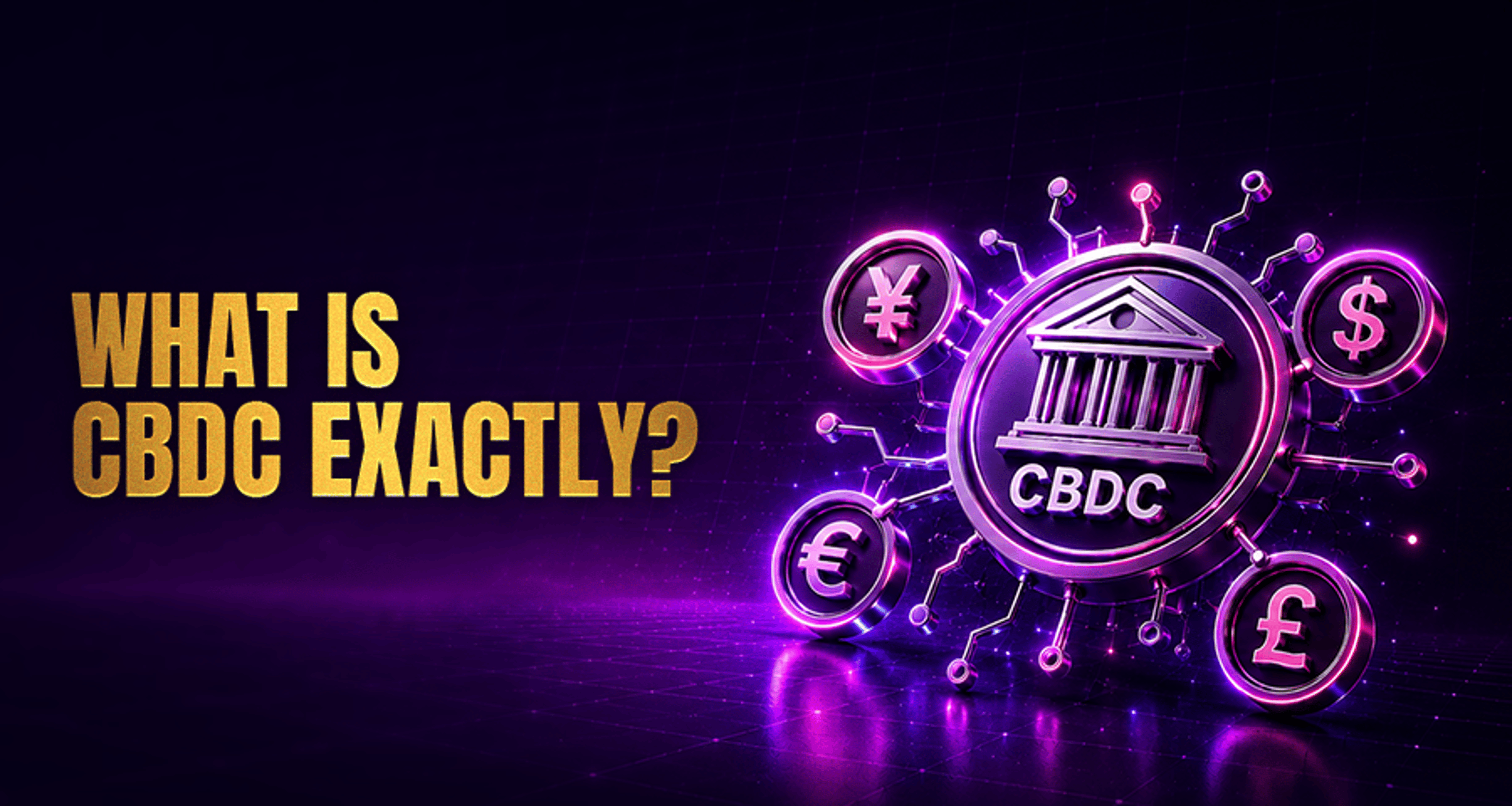
A Central Bank Digital Currency (CBDC) is a digital version of a nation’s fiat currency, issued and regulated directly by its central bank. Unlike cryptocurrencies, CBDCs are backed by governments and designed to function as legal tender.
How CBDC differs from traditional money
Traditional money exists in physical form or as bank deposits. CBDCs, however, are purely digital, stored in secure wallets, and can be transferred instantly without relying on intermediaries.
Why governments are introducing CBDCs
Governments are exploring CBDCs to modernize payment systems, reduce reliance on cash, improve financial inclusion, and compete with cryptocurrencies and stablecoins.
How CBDCs Work in the Real World
Two-tier banking system explained
Most CBDCs operate on a two-tier model: central banks issue the currency, while commercial banks and payment providers distribute it to consumers.
Role of central banks vs commercial banks
Central banks maintain control over issuance and monetary policy, while commercial banks handle customer-facing services like wallets and transactions.
Digital wallets and payment infrastructure
CBDCs require secure digital wallets that allow users to store, send, and receive funds. These wallets can be integrated into mobile apps, making CBDCs accessible to everyday users.
CBDC vs Cryptocurrency (Bitcoin & Ethereum)
Key differences in control and decentralization
CBDCs are centralized and government-controlled, while cryptocurrencies like Bitcoin and Ethereum are decentralized and operate on open blockchains.
CBDC vs Bitcoin in value stability
CBDCs are pegged to fiat currencies, ensuring stability. Bitcoin and Ethereum, on the other hand, are volatile assets with fluctuating values.
Why crypto still exists in a CBDC world
Cryptocurrencies offer privacy, decentralization, and investment opportunities. CBDCs may coexist with crypto but serve different purposes—CBDCs for payments, crypto for speculation and decentralized finance.
Advantages of CBDCs
Faster payments and settlement systems
CBDCs enable instant transactions, reducing settlement times from days to seconds.
Financial inclusion for unbanked users
CBDCs can provide access to digital money for populations without traditional banking services.
Reduced transaction costs globally
Cross-border payments and remittances become cheaper and more efficient with CBDCs.
Risks and Concerns of CBDCs
Privacy and surveillance concerns
CBDCs raise fears of government monitoring, as transactions can be tracked more easily than cash.
Cybersecurity risks in digital money systems
Digital currencies are vulnerable to hacking, requiring strong cybersecurity frameworks.
Impact on traditional banks
CBDCs could reduce reliance on commercial banks, potentially destabilizing the banking sector if adoption is rapid.
Global CBDC Development (Real-World Examples)
Country | CBDC Name | Status |
China | Digital Yuan | Active pilot |
India | Digital Rupee | Expanding |
Nigeria | eNaira | Launched |
Bahamas | Sand Dollar | Fully operational |
Europe | Digital Euro | In development |
Current CBDC initiatives worldwide (mobile-optimized for readability).
CBDC Impact on Crypto and Online Payments
Will CBDCs replace Bitcoin and stablecoins?
CBDCs are unlikely to replace crypto entirely. Instead, they may reduce demand for stablecoins by offering a government-backed alternative.
Effect on crypto casinos and digital gambling payments
Online casinos could adopt CBDCs for faster, safer deposits and withdrawals. This would reduce volatility risks compared to crypto payments.
Future of cross-border transactions
CBDCs could revolutionize international payments, making them cheaper and more transparent compared to current systems.
Conclusion
CBDCs represent a major shift in the future of money. They promise faster payments, financial inclusion, and reduced costs but also raise concerns about privacy and banking stability. As governments continue to experiment, gambling players and crypto users should stay informed about how CBDCs will reshape digital payments.