Deposit Cashback Maximum Refund: How Caps Affect Value?
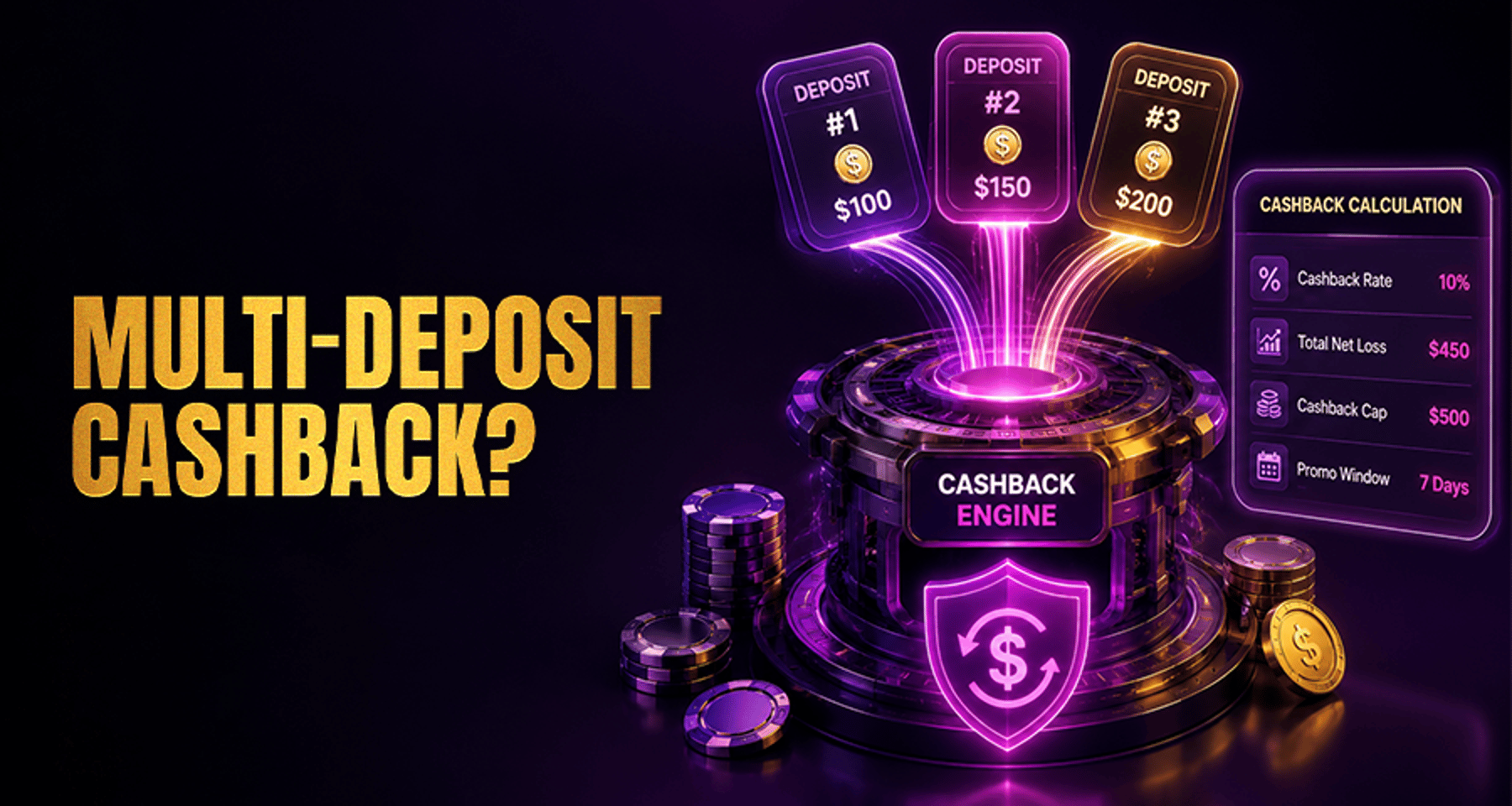
A deposit cashback offer can look generous at first glance: deposit, play, lose, and get a percentage back. But the phrase that often decides whether the deal is actually useful is **maximum refund**.
A deposit cashback offer can look generous at first glance: deposit, play, lose, and get a percentage back. But the phrase that often decides whether the deal is actually useful is maximum refund.
That cap determines the most you can get back, even if your losses and the advertised cashback percentage suggest a bigger payout. For anyone comparing offers, that matters because the value of a cashback deal can flatten fast once the cap is reached.
If you are comparing online casino bonuses, this is one of the easiest bonus mechanics to misread. A high headline percentage does not automatically mean high real value.
What does “maximum refund” mean in a deposit cashback offer?
In plain language, maximum refund is the highest cashback amount an offer will pay out.
Deposit cashback is usually based on eligible losses, not the deposit itself. That means the basic value calculation is:
cashback value = eligible loss x cashback rate, capped at the maximum refund
So if an offer gives 20% cashback up to $50, you do not get unlimited 20% back. You only receive 20% of eligible losses until the refund reaches $50. After that, the cap blocks any extra value.
That is why the cap should always be read together with:
the cashback percentage
the loss period or qualifying window
which games count
whether the refund is paid as cash or bonus
whether wagering or playthrough applies
How cashback caps reduce the value of bigger deposits
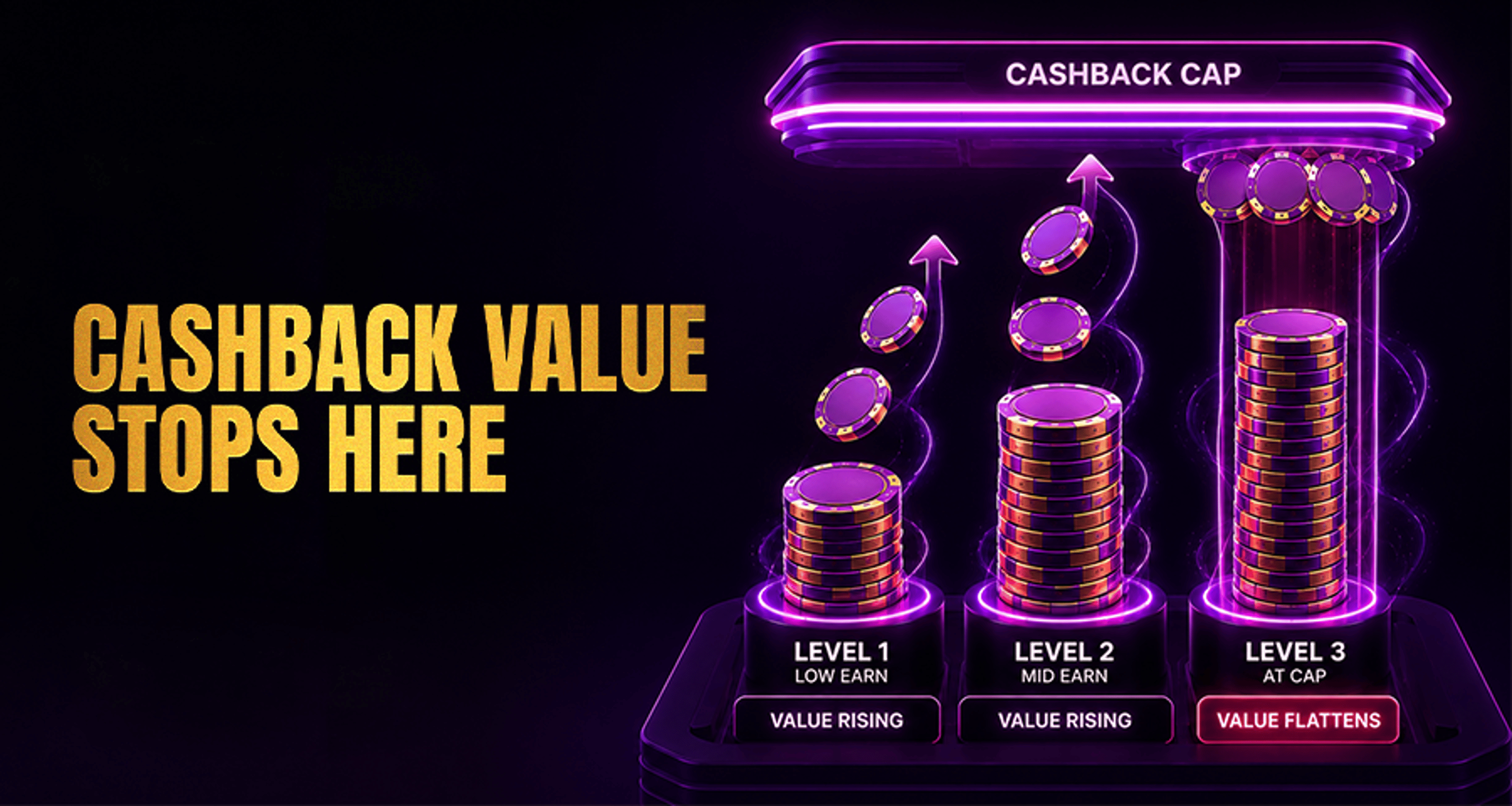
A capped offer often works well at smaller loss levels, then loses efficiency as deposits and losses grow.
Here is the key idea:
Before the cap is reached, each extra eligible loss increases cashback
After the cap is reached, extra eligible loss adds nothing
That means a player making a larger deposit does not always get better value from the offer. The advertised percentage only matters up to the point where the cap is hit.
For readers reviewing broader casino bonus types, this is one reason cashback and deposit bonuses should not be compared by headline numbers alone.
When does a deposit cashback offer hit its refund limit?
You can estimate the break-even point with a simple formula:
loss needed to reach the cap = maximum refund / cashback rate
For example:
10% cashback, max refund $20 → cap reached at $200 eligible loss
20% cashback, max refund $50 → cap reached at $250 eligible loss
25% cashback, max refund $100 → cap reached at $400 eligible loss
Once eligible losses go above that threshold, the cashback amount stays the same.
This is the practical point where increasing your deposit may stop improving the promotion’s value. If your likely eligible loss is already above the threshold, the extra deposit may increase risk without increasing cashback.
Deposit cashback cap examples: low, medium, and high deposit scenarios
To see how this works, assume an offer gives 20% cashback up to $50.
Low scenario
Deposit: $50
n- Eligible loss: $30
Cashback rate: 20%
Calculated cashback: $6
Max refund: $50
Actual cashback: $6
The cap does not matter here because the calculated cashback is far below the limit.
Medium scenario
Deposit: $200
Eligible loss: $150
Cashback rate: 20%
Calculated cashback: $30
Max refund: $50
Actual cashback: $30
The offer still scales normally because the player has not reached the cap.
High scenario
Deposit: $500
Eligible loss: $400
Cashback rate: 20%
Calculated cashback: $80
Max refund: $50
Actual cashback: $50
This is where the cap changes everything. The headline rate suggests $80 back, but the maximum refund cuts that down to $50.
What this means in practice
In this example, the cap is reached once eligible losses hit $250:
$50 / 20% = $250
After that point:
$250 loss → $50 cashback
$300 loss → still $50 cashback
$400 loss → still $50 cashback
$600 loss → still $50 cashback
That is the flattening effect shoppers need to spot.
How deposit size, loss amount, and cashback percentage interact with the cap
These offers are easiest to understand when you separate three moving parts:
1. Deposit size
A bigger deposit can create room for bigger losses, but it does not guarantee more cashback.
2. Eligible loss amount
This is usually the real driver of cashback value. If only a portion of your losses qualifies, your effective refund may be lower than expected.
3. Cashback percentage
A higher percentage helps only until the maximum refund is reached. After that, the cap controls the outcome.
So if two offers look like this:
Offer A: 30% cashback up to $30
Offer B: 15% cashback up to $100
Offer A may look stronger at first because the percentage is higher. But for larger eligible losses, Offer B could be more valuable because the ceiling is much higher.
This is also why it helps to compare cashback with other reward structures such as rakeback, where the return logic may scale differently.
How to compare cashback percentage vs maximum refund
When reviewing a cashback promotion, do not stop at the percentage. Use this checklist:
Maximum refund: What is the absolute most you can receive?
Cashback percentage: What share of eligible losses is refunded?
Qualifying period: Are losses counted daily, weekly, or over a first-deposit window?
Eligible games: Do slots, table games, or live casino games count equally?
Minimum deposit or minimum loss: Is there a threshold before cashback applies?
Payout form: Is the refund paid as withdrawable cash or as bonus funds?
Wagering or playthrough: Do you need to clear extra terms before using or withdrawing it?
A capped cashback offer with no extra playthrough can sometimes beat a higher-looking offer with restrictive bonus conditions. If wagering terms are part of the deal, understanding pages like 0x wagering requirement can help you judge the real payout quality.
Other terms that matter besides the refund cap
The cap is important, but it is not the only term that shapes value.
Qualifying period
A 24-hour loss window and a 7-day loss window can produce very different results, even with the same cap.
Eligible games
Some offers exclude certain games or count them at different contribution rates. That can reduce effective cashback.
Wagering or playthrough requirements
If the cashback is paid as bonus credit, extra wagering may reduce its practical value.
Minimum thresholds
A minimum deposit or minimum loss requirement can make the offer less useful for very small budgets.
Payout form
Cashback paid as cash is different from cashback paid as sticky bonus or restricted bonus funds.
If an offer feels less attractive after checking these details, it may be smarter to skip it or cancel a casino bonus rather than force value where the terms do not fit your play style.
Who benefits most from capped deposit cashback offers?
Capped offers are often better for low-stakes or moderate-stakes players than for high-stakes players.
Why?
Because lower-loss players are less likely to run into the maximum refund ceiling. They can often capture the full advertised percentage on their eligible losses.
High-stakes players are more likely to hit the cap quickly. Once that happens, the offer stops scaling, so the marginal value of additional deposit or play becomes weak.
A capped offer may be a decent fit if:
your expected eligible losses are below the cap threshold
the qualifying games match what you already play
the refund is paid in a useful form
the wagering terms are light or absent
It may be a poor fit if:
your likely losses are well above the cap threshold
the headline percentage is high but the max refund is small
the game restrictions sharply limit what counts
the refund is locked behind heavy bonus conditions
How to tell when a capped cashback offer is actually worth it
A quick way to judge the offer is to ask two questions:
At my likely loss level, what cashback would I really receive?
At what point does the cap stop the offer from getting any better?
If the answer shows that the cap is reached early, the promotion may be more of a small-budget safety cushion than a meaningful high-value bonus.
That does not make it useless. It just means you should compare it based on real refund potential, not the headline percentage alone.
Conclusion
The maximum refund in a deposit cashback offer is the ceiling that limits how much value the deal can deliver. The core formula is simple:
cashback value = eligible loss x cashback rate, capped at the maximum refund
That one cap can completely change whether an offer is attractive for your deposit size. Small and mid-range players may get solid value, while larger depositors can hit the limit fast and see no added upside.
Before choosing a cashback deal, compare the cap, percentage, qualifying period, eligible games, minimum thresholds, and payout terms together. That gives you a much clearer view of whether the offer fits your budget and play style.
FAQ
What is the maximum refund on a deposit cashback bonus?
It is the highest cashback amount the offer will pay, even if your eligible losses and the advertised percentage would otherwise produce a larger refund.
Is a higher cashback percentage always better if the maximum refund is low?
No. A higher percentage can still produce less real value if the maximum refund is small and the cap is reached quickly.
How do I know when a cashback cap makes a bonus less valuable?
Use this formula: maximum refund / cashback rate = eligible loss needed to hit the cap. After that point, more eligible loss does not increase cashback.
Does the refund cap apply to my deposit or to my losses?
Usually, it applies to cashback calculated from eligible losses, not directly to the deposit itself.
Are capped cashback offers better for small-budget players?
Often, yes. Small-budget players are less likely to hit the cap, so they may receive the full benefit of the advertised cashback rate more often than high-stakes players.