How Live Casino Streaming Delay Affects Your Bets?
Live casino games are built around real-time action, so even a small delay can feel frustrating when you are trying to place a bet before the window closes.
Live casino games are built around real-time action, so even a small delay can feel frustrating when you are trying to place a bet before the window closes.
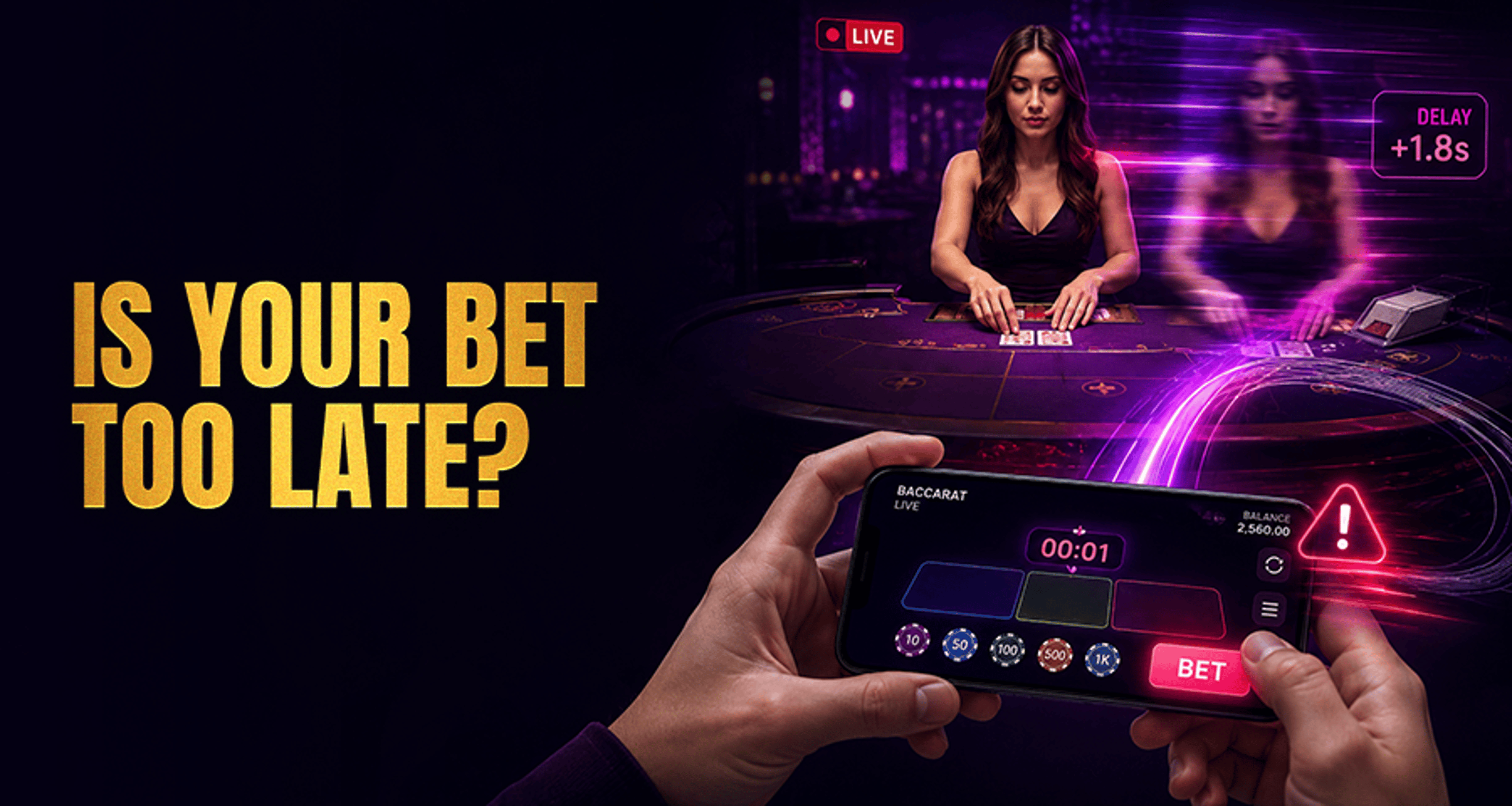
If you have ever tapped a chip, hit confirm, and then seen a rejected message, the issue is often not the game result itself but the timing gap between the live video you see and the backend system that controls bet acceptance.
This is why understanding how live casino streaming delay affects bets matters. A delay does not automatically mean something is wrong or unfair, but it can change how confident you feel during fast decision moments. It can also affect whether a bet reaches the system before the table locks.
What live casino streaming delay actually means
Live casino streaming delay is the short gap between what is happening at the real table and when that action appears on your screen. In plain language, the dealer may already have moved to the next step, while your device is still showing a slightly earlier moment in the round.
That gap is often called latency. In live casino play, latency can come from several normal sources, including:
Your internet connection speed and stability
Wi‑Fi congestion or background traffic on your network
Device performance
Browser or app efficiency
The game provider's streaming setup
Distance between your location and the server handling the stream
For players, the important point is simple: the video is what you watch, but it is not always the final authority on whether betting is still open.
Why stream latency can affect your betting timing
When people search for whether live casino streaming delay affects bets, they usually want to know one thing: can lag cause a missed betting chance? The answer is yes, at least from a player experience standpoint.
If your stream is behind by even a second or two, you may think there is still time to act when the betting window has already closed in the backend system. That can lead to:
Late bet attempts
Rejected bets
Confusion about why the interface changed suddenly
A feeling that the table moved faster than the screen suggested
This can be especially noticeable in games where timing feels tight. Players who want a broader view of live table pacing and format differences may also find it useful to read Live Casino Game Shows: Trends, Top Titles, and Player Insights, since game-show tables often make delay feel more obvious.
The difference between video delay and bet cutoff time
This is the most important distinction in the entire topic.
Video delay
Video delay is what you see on screen. It affects your perception of the round and how much time you think you have left.
Bet cutoff time
Bet cutoff time is the actual system rule that determines when bets stop being accepted. This timing is controlled by the operator or game provider, not only by the image on your display.
In practice, that means:
The betting window can close based on backend timing even if the stream still looks open
A dealer gesture or wheel movement on your screen may already be old by the time you see it
Your button press still has to travel through your device, network, and platform before the bet is accepted
So if a bet is rejected, it does not always mean the game behaved strangely. It may simply mean the system had already passed the cutoff point before your action arrived.
How delay shows up in roulette, blackjack, baccarat, and live game shows
Streaming delay does not feel the same in every live casino format.
Roulette
Roulette often makes delay feel obvious because players watch for the last seconds before no more bets. If your stream is lagging, you may still see the dealer at the end of the betting phase while the system has already locked the table.
Blackjack
In live blackjack, delay can affect decision confidence more than last-second chip placement. If the interface feels out of sync, players may feel rushed when making hit, stand, split, or double decisions. Even a minor delay can make the round feel less smooth.
Baccarat
Baccarat is usually simpler from a decision standpoint, but delay can still create confusion around when the betting window opens and closes, especially for players who wait until the final moment to choose banker, player, or tie.
Live game shows
Live game shows can make desync feel more dramatic because the pace is visual, fast, and highly animated. If your device lags, you may feel disconnected from the action or unsure whether you are reacting in time. That is one reason some players compare table formats and presenter styles through guides like The Unwritten Rules of Live Casino Play: Smart, Play Respectfully, which helps set better expectations for real-time play behavior.
Common reasons your live casino bet feels late or gets rejected
A rejected or late-feeling bet usually comes from timing friction rather than a single dramatic problem. Common causes include:
Slow or unstable internet: Packet loss, weak signal strength, or inconsistent speed can delay both video and input response.
Overloaded Wi‑Fi: Multiple devices streaming, downloading, or gaming on the same network can add lag.
Background traffic on your device: Updates, cloud sync, or other apps can compete for bandwidth and processing power.
Outdated browser or app: Older software may handle video streams and interface updates less efficiently.
Temporary table or provider congestion: Some tables simply perform less smoothly at busy times.
Mobile device limitations: On some phones, heat, memory pressure, or battery-saving settings can increase delay.
Sometimes players also notice a strange moment where the outcome seems visible before the betting interface fully updates. That can feel like desync, but it is often just a mismatch between the video feed and interface refresh timing.
How to reduce live casino lag before placing bets
You cannot remove latency completely, but you can reduce the chance that it disrupts your play.
Use a stable internet connection
A strong, consistent connection matters more than headline speed. If your signal fluctuates, your stream and input timing can both suffer.
Avoid overloaded Wi‑Fi
If possible, move closer to the router, limit other heavy network activity, or switch to a less crowded connection. If your household network is busy, live casino timing can feel noticeably worse.
Close background apps and downloads
Streaming video while your device is syncing files, updating apps, or running media in the background can create avoidable lag.
Keep your app or browser updated
Current versions usually handle video playback, interface timing, and compatibility better than outdated ones.
Test mobile and desktop if one feels worse
Some players notice more delay on mobile, while others get smoother results through a desktop browser. Trying both can help you find the more stable setup for your connection.
Switch tables or providers if delay is persistent
If one table repeatedly feels out of sync, move on. A different table or provider may offer a smoother stream. For players interested in how platform quality and evolving live features shape the experience, AI Live Casino: Future of Live Dealers offers useful context.
When streaming delay is normal vs when it is a red flag
Some amount of live stream delay is normal. A short gap between the studio action and your screen does not automatically mean the game is unreliable.
Normal delay usually looks like:
Minor timing lag with otherwise stable controls
Occasional small sync differences during busy periods
Rare rejected bets when placed very late in the window
A red flag is more about consistency and severity. It may be worth leaving the table if you notice:
Repeated heavy lag over multiple rounds
Frequent freezing or buffering
Constant mismatch between visible action and interface state
Delays that make normal play difficult even when your connection is fine
In those cases, the issue may be less about your setup and more about the table or provider performance. Players comparing what shapes trust and perception in real-time gambling may also want to explore How Streaming Influencers Affect Gambling Choices, especially around expectations versus actual play conditions.
Does streaming delay mean live casino games are unfair?
Not by itself.
Streaming delay can absolutely affect player experience, timing confidence, and the comfort of making quick decisions. But a delay alone does not prove manipulation or guarantee that the player is being singled out for a disadvantage.
The more practical way to look at it is this: delay affects how well your on-screen view matches the true betting timeline. That mismatch can cause frustration, but bet acceptance still depends on operator and game timing rules rather than only what appears on your display.
FAQ
Can streaming delay make me lose a live casino bet?
It can cause you to miss the betting window or have a late bet rejected if your action reaches the system after the cutoff time.
Why was my bet rejected even though betting looked open on screen?
Because the visible stream and the backend betting timer are not always perfectly aligned. The system may already have closed betting even if your screen looked a moment behind.
Is live casino delay the same on mobile and desktop?
Not always. Device performance, app optimization, browser efficiency, and network behavior can all make one setup feel smoother than another.
Does Wi‑Fi make live casino stream lag worse?
It can. Weak signal strength, network congestion, and multiple active devices can all increase delay.
Can I reduce live casino latency during gameplay?
Yes, often at least partially. A stable connection, updated software, fewer background tasks, and switching tables when needed can all help.
Is stream delay more noticeable in some live casino games than others?
Yes. It tends to feel more noticeable in fast-paced games or formats with tight betting windows, such as roulette and many live game shows.
Final thoughts
Understanding how live casino streaming delay affects bets helps you separate normal latency from real usability problems. The key issue is not just what you see on screen, but whether your action reaches the betting system before the table cutoff.
If live tables regularly feel out of sync, focus on connection quality, device performance, and table stability before assuming anything more serious. And if you want a smoother experience overall, it makes sense to explore reliable live casino platforms and educational content that set clearer expectations around timing, stream quality, and real-time play.