Low Multiplier vs High Multiplier: Risk Control in Crash
Deciding on low multiplier high multiplier risk setups changes how variance hits your bankroll. Low targets offer high win frequency, while high multipliers demand micro-stakes to survive deep drawdowns.
Choosing between a low cash-out target and a high cash-out target is one of the biggest decisions in crash play. The real issue is not which approach looks more exciting, but how each one affects bankroll pressure, losing streaks, and your ability to stay in control during a session.
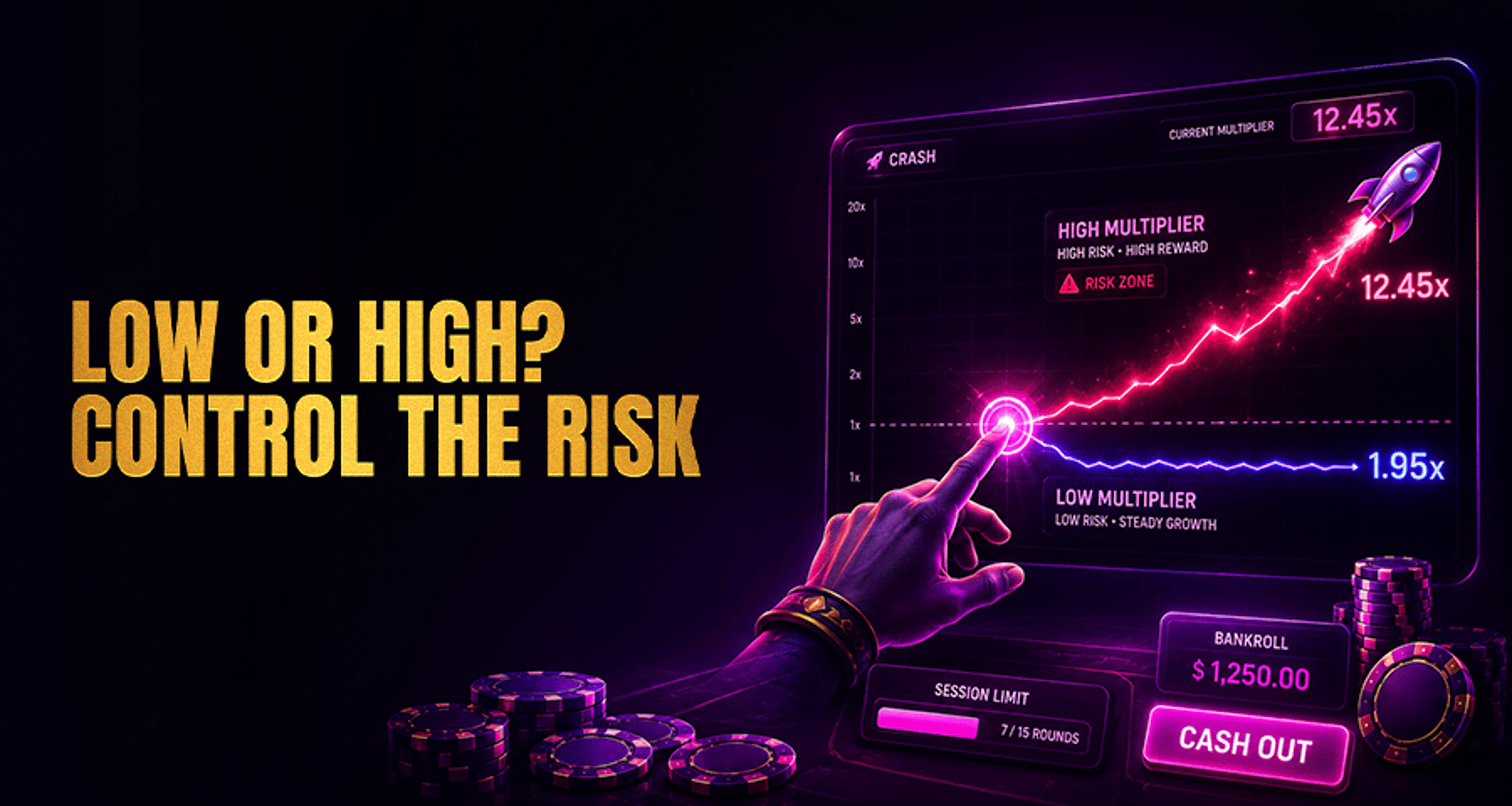
In simple terms, low multiplier vs high multiplier risk comes down to frequency versus volatility. A lower target usually means cashing out earlier for smaller returns, while a higher target means staying in longer and accepting a lower hit rate in exchange for bigger potential payouts. Neither approach guarantees better results. What changes is the shape of the risk.
This guide breaks down how multiplier choice affects variance, recovery difficulty, emotional discipline, and session planning so you can choose a style that fits your bankroll and risk tolerance.
Low Multiplier vs High Multiplier: What Changes in Crash Play
In crash games, a low multiplier usually means an early cash-out target such as 1.2x, 1.5x, or 2x. A high multiplier often means stretching toward targets like 5x, 10x, or higher.
That difference changes the entire session dynamic:
Low multiplier targets tend to hit more often, but each win is smaller.
High multiplier targets tend to hit less often, but each successful round pays more.
Lower targets can reduce the emotional pressure of long dry spells.
Higher targets can create sharper bankroll swings and tougher recovery patterns.
This is why multiplier choice matters more as a risk-control tool than as a style preference. A player who understands that tradeoff is already making better decisions than someone simply chasing the biggest number on screen.
If you want broader context on how multiplier mechanics are framed across casino content, you can compare that with Multiplier Slots Unlock Bigger Wins With Explosive Features, but crash play should be evaluated through session control rather than showcase-style multiplier appeal.
How Multiplier Targets Affect Risk, Variance, and Bankroll Pressure
The main difference between low and high multiplier targets is how often you expect to win relative to how painful the losing runs can feel.
Hit Frequency
A lower target generally gives you more frequent successful cash-outs. That does not make it risk-free, but it can create a steadier rhythm. A higher target usually means longer stretches without a hit.
Variance
Variance is the size and speed of bankroll swings. Lower targets often produce a smoother ride. Higher targets increase volatility because misses can stack up before a single win lands.
Drawdown Severity
A drawdown is the drop from your bankroll peak to a lower point. With high targets, drawdowns may become deeper because recovery depends on landing less frequent outcomes. With low targets, the drop may feel more manageable, though repeated small losses can still add up.
Recovery Difficulty
When you miss several high-target rounds in a row, players often feel tempted to increase stake size to recover faster. That is where risk can spiral. Lower targets can reduce this pressure because the recovery path may feel less extreme, even if profits per win are smaller.
Session Longevity
Players who use lower multiplier goals often preserve more rounds within the same bankroll because they are not relying on rare spikes to stay afloat. High-target play can shorten sessions if the misses arrive early and repeatedly.
When a Low Multiplier Approach Makes More Sense
A low multiplier approach may fit players who care more about control than excitement.
It often makes more sense when:
You have a smaller bankroll for the session.
You want to reduce the stress of long losing streaks.
You prefer a steadier pace over larger swings.
You are trying to avoid emotional overreaction after a few bad rounds.
Your goal is extending session time rather than stretching for standout payouts.
For a conservative player, early cash-out targets can support better discipline because the plan is easier to follow. The lower ceiling may feel less thrilling, but the structure can help prevent reckless adjustments mid-session.
When a High Multiplier Approach May Fit Your Risk Tolerance
A high multiplier approach may appeal to players who are comfortable with volatility and can accept more rounds ending without a cash-out.
It may fit better when:
You understand that hit frequency is likely to be lower.
You are prepared for more severe bankroll swings.
You are using a controlled stake size that leaves room for missed attempts.
You can stick to session rules without doubling down after losses.
You are intentionally accepting shorter, more volatile sessions.
This style is not automatically better value just because the target is larger. The main attraction is payout size, but that comes with increased variance and stronger emotional pressure. If discipline slips, high-target play becomes much harder to manage.
How to Set Stake Size and Session Limits Around Your Multiplier Choice
The multiplier target should never be chosen in isolation. It needs to match your stake size and session rules.
1. Reduce Stake Size as Multiplier Targets Rise
If you aim for higher multipliers, keeping the same stake size usually increases bankroll stress too quickly. A smaller stake can give you more room to absorb missed rounds without forcing bad decisions.
2. Set a Real Stop-Loss
A stop-loss should be an amount you are willing to lose before the session begins. Once it is reached, the session ends. This matters even more for high-target play, where drawdowns can accelerate.
3. Use a Modest Win Goal
A win goal helps protect sessions from turning into endless chasing. If you reach your target, stepping away can be smarter than increasing risk because the session feels positive.
4. Match the Strategy to Your Bankroll Size
A conservative bankroll usually aligns better with lower cash-out targets. A larger bankroll does not remove risk, but it may give more flexibility if you want to test a balanced or higher-risk approach.
5. Plan for Tilt Before It Starts
Tilt often shows up when players move from controlled cash-outs to aggressive multiplier chasing after frustration. Setting rules in advance can help you avoid turning a manageable session into a rushed recovery attempt.
Players comparing risk styles across casino games may also find it useful to explore how different game identities are presented in pieces like Gates Of Olympus Series Explained or Sweet Bonanza Series Evolution Of A Slot Icon, but crash decisions should stay focused on multiplier target discipline and bankroll control.
Scenario-Based Recommendations by Risk Tolerance
Conservative Player
A conservative player usually benefits from lower multiplier targets, smaller stakes, and strict stop-loss rules. The goal is to reduce volatility, limit emotional swings, and keep the session manageable.
Balanced Player
A balanced player may prefer moderate targets rather than the extremes. This can offer a middle ground between frequent cash-outs and meaningful upside, while still keeping variance within a more controlled range.
Aggressive Player
An aggressive player may choose higher multiplier targets, but only if they accept lower hit frequency, stronger drawdowns, and the possibility of shorter sessions. This style requires the strongest discipline because the temptation to chase losses can build quickly.
Common Mistakes Players Make When Chasing Higher Multipliers
The biggest problems usually come from behavior, not just target selection.
Common mistakes include:
Raising stake size after several misses.
Switching from a low-target plan to a high-target plan out of frustration.
Ignoring stop-loss rules because one big hit feels overdue.
Treating higher multipliers as if they automatically offer smarter opportunities.
Confusing crash strategy with slot-style multiplier hype seen in topics like Fruit Party Series Cluster Pays Done Right.
These mistakes increase risk because they break the structure that bankroll management depends on.
Low Multiplier vs High Multiplier Risk: Which Is Better?
There is no universal best choice. The better option is the one your bankroll, emotional discipline, and session limits can actually support.
Low multiplier targets usually suit players who want more control, more frequent hits, and longer sessions.
High multiplier targets usually suit players who accept lower hit frequency, larger swings, and tougher recovery stretches.
Moderate targets may work best for players who want balance without leaning too far into either extreme.
The smartest approach is not chasing the highest possible number. It is choosing a multiplier target that fits your session plan and helps you stay consistent under pressure.
If you are exploring crash-style games on HunnyPlay, treat multiplier choice as part of a responsible bankroll plan. Game selection, stake sizing, and session limits matter far more than chasing extreme multipliers.
FAQ
Is a low multiplier strategy safer in crash games?
A low multiplier approach is often easier to control because cash-out targets are closer and sessions may feel less volatile. Still, it does not remove risk, and losses can still build over time.
Do high multipliers always mean better value in crash?
No. Higher multipliers offer bigger potential payouts, but they also tend to come with lower hit frequency and more severe bankroll swings.
How do I choose between low and high multipliers for my bankroll?
Start with your session bankroll, stake size, and tolerance for losing streaks. If repeated misses would quickly pressure your bankroll or decision-making, a lower target may be more suitable.
Can low multiplier cash-outs reduce losing streak pressure?
They can reduce emotional pressure for some players because successful cash-outs may come more often. That can make it easier to stick to a plan and avoid tilt.
What is the main risk of aiming for very high multipliers in crash?
The main risk is that lower hit frequency can lead to deeper drawdowns, tougher recovery, and a stronger temptation to chase losses by changing stake size or abandoning session rules.