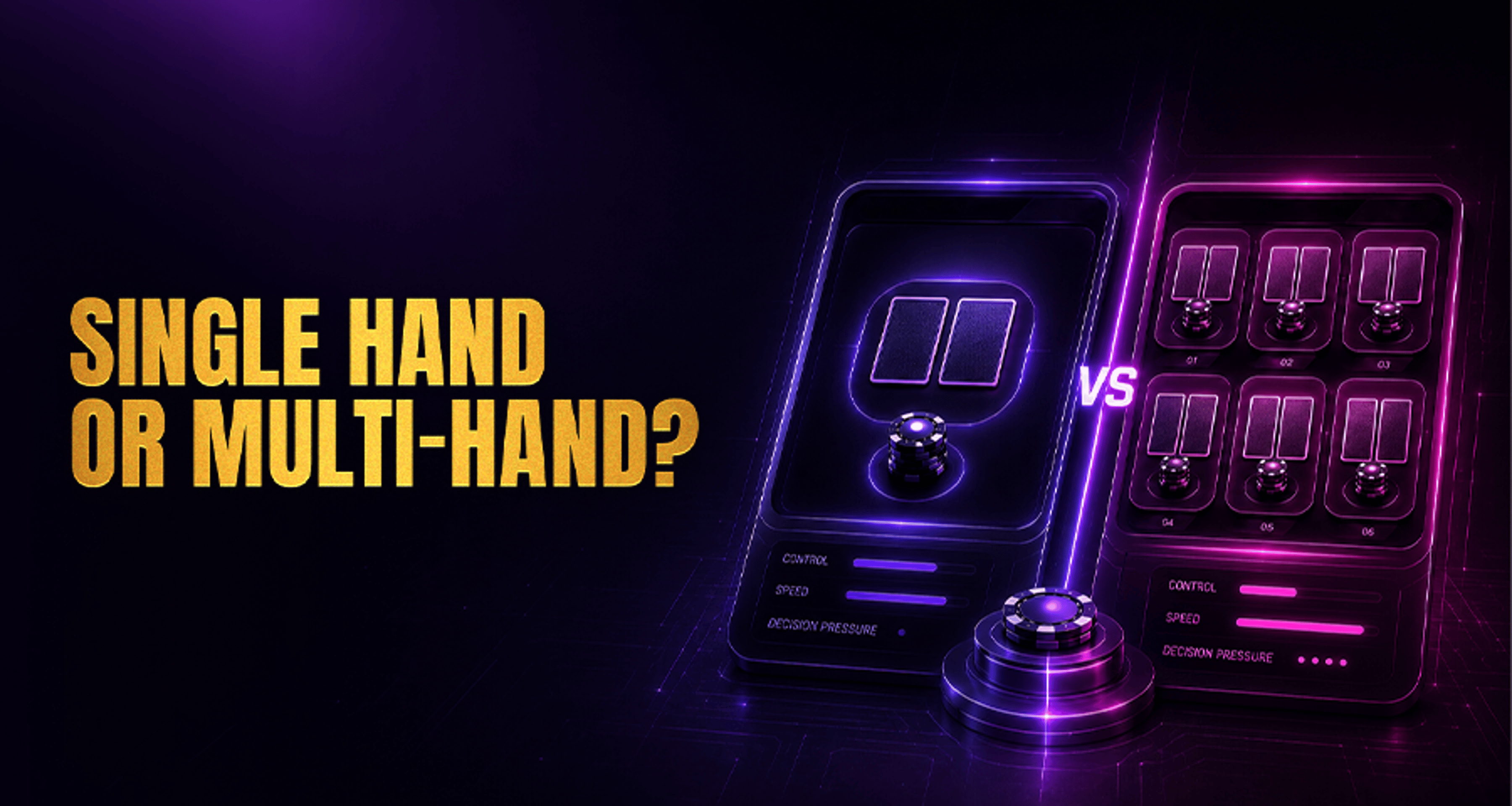
Single Hand vs Multiple Hands: Which Is Better?
Choosing between single-hand and multiple-hand play is really about choosing a session style. One option usually feels slower and easier to track. The other often feels faster, busier, and more demanding. That is why there is no universal answer to which one is better.
The more useful question is: which format fits your bankroll, focus level, and preferred pace? Like other game-format comparisons such as Blackjack Vs Baccarat, the right choice depends on the kind of experience you want, not on a built-in advantage.
What Is Single-Hand vs Multiple-Hand Play?
In practical terms:
Single-hand play means you play one hand in each round.
Multiple-hand play means you play more than one hand during the same round.
That simple change affects the entire session. Single-hand play usually creates a more measured rhythm because there is only one result to follow at a time. Multiple-hand play usually creates a more active rhythm because several hands may be moving at once.
Neither option is automatically smarter. The difference is really about control, pace, and how much action you want in front of you.
How the Two Options Change Your Session Pace
Pace is one of the biggest differences between these formats.
Single-hand play usually feels steadier
With one hand at a time, it is often easier to:
Track what is happening round by round
Keep spending more visible
Avoid getting swept up in momentum
Maintain a calmer session rhythm
This is one reason many cautious players prefer it.
Multiple-hand play usually feels faster
When several hands are active in the same round, the experience often feels more intense. More outcomes are arriving in a shorter stretch, which can make the session feel more energetic and more engaging.
That may suit players who want:
More involvement each round
Less downtime between outcomes
A busier pace
A stronger sense of activity
The tradeoff is that faster pacing can make the session harder to monitor carefully.
Which Option Puts More Pressure on Your Bankroll?
This is one of the most practical parts of the comparison.
Single-hand play usually keeps exposure easier to manage
With one hand in play at a time, it is simpler to see how much money is active in each round. That can make it easier to stay within a planned budget and reduce the chance of spending faster than expected.
For players who want tighter control, this can be a meaningful advantage.
Multiple hands can move more total money over time
Playing more than one hand does not mean better outcomes. It usually means that more of your bankroll may be in motion across the session.
That can happen because:
More than one hand is active in the same round
The session may move faster overall
Repeated rounds can add up more quickly
So if your goal is slower bankroll burn speed, hand count matters. More action often means more exposure, even when the game itself has not changed.
How Each Option Affects Perceived Volatility
Hand count also shapes how the session feels emotionally.
Single-hand play often feels more straightforward
Because there is one outcome at a time, many players find the session easier to process. Swings can feel more manageable simply because the action is less crowded.
Multiple-hand play can feel more intense
When several results arrive together, the session may feel more dramatic. Even without getting technical, it is easy to see why multiple outcomes in the same round can create a stronger feeling of volatility.
For some players, that extra intensity is part of the appeal. For others, it makes the session less comfortable.
Is Single-Hand Play Better for Beginners?
For many beginners, single-hand play is often the easier starting point.
Why beginners and cautious players often prefer it
Single-hand sessions usually offer:
Lower cognitive load
Clearer bankroll awareness
A slower, easier-to-follow pace
Less pressure to track several outcomes at once
If you are still learning how quickly a session can speed up, this format often gives you more room to stay in control.
When Multiple-Hand Play May Feel More Appealing
Multiple-hand play may be more appealing to players who want a more active session.
It may suit:
Faster-action seekers
Players who enjoy a busier rhythm
Readers comfortable handling several outcomes at once
Players who want more engagement each round
The key point is that more hands change the structure of the session, not the certainty of the results.
Simple Comparison Table
Factor | Single-Hand Play | Multiple-Hand Play |
|---|---|---|
Session pace | Slower and steadier | Faster and busier |
Bankroll exposure | Easier to track | Can build faster over time |
Total money in motion | Lower at a given moment | Often higher across a session |
Cognitive load | Lower | Higher |
Perceived volatility | More straightforward | Often feels more intense |
Beginner fit | Often better | Often better once comfortable |
Engagement level | Simpler and calmer | More active and involved |
How to Choose Based on Your Style and Limits
The better option depends on what matters most to you.
Single-hand play may fit better if you want:
Slower pacing
Tighter budget control
Simpler focus
A calmer session structure
Multiple-hand play may fit better if you want:
More action in less time
Greater involvement each round
A quicker rhythm
A more active session feel
Quick decision checklist
Ask yourself:
Do I want a slower and easier-to-track session?
Am I trying to keep bankroll burn speed lower?
Am I comfortable following several hands at once?
Would faster action make me lose track of spending?
Do I want a calmer session or a busier one?
Those answers usually tell you more than any broad claim about which format is better.
Responsible-Play Note
Whatever format you choose, keep pace in mind. More hands can mean more total money moving through a session over time, and that can be easy to underestimate when the action feels fast.
If the session starts to feel rushed, tiring, or harder to manage than expected, slowing down is often the better move. The better format is the one that helps you stay comfortable and within your limits.
FAQ
Is single-hand or multiple-hand play better for beginners?
Single-hand play is often better for beginners because it is easier to follow, slower in pace, and simpler for bankroll awareness.
Does playing multiple hands drain a bankroll faster?
It can, because more total money may be in motion during each round and across the session.
Is multiple-hand play more risky than single-hand play?
It can create more bankroll pressure and more cognitive load, especially if the quicker pace makes spending harder to track.
Why do some players prefer single-hand sessions?
Many prefer the steadier rhythm, simpler focus, and clearer sense of control.
Does playing more hands increase winning chances?
No. More hands mainly change pace, exposure, and engagement level. They do not guarantee better outcomes.
How should players choose between single-hand and multiple-hand play?
They should choose based on pace preference, bankroll discipline, focus level, and how much action they are comfortable handling at once.
Single Hand vs Multiple Hands: Which Is Better for You?
The best answer is simple: the better format is the one that matches your pace, budget, and comfort level.
If you want a calmer and easier-to-manage session, single-hand play is often the better fit. If you want more action and are comfortable with the added speed and exposure, multiple-hand play may feel more appealing.
Neither option is universally better. The right choice is the one that helps you stay aware, comfortable, and in control.
If you want to keep exploring format-driven comparisons, Blackjack Vs Baccarat is a relevant next read for thinking about how different game structures shape player experience.