The “Drop Limit” Strategy: How Many Balls Should You Play?
Using a drop limit strategy many balls framework won't alter game odds, but it sets a strict ball-count cap beforehand to help you control volatility, manage your session pace, and protect your bankroll.
If you have been searching for the drop limit strategy many balls question, the short answer is simple: the “drop limit” is not about improving your odds. It is a way to decide how many balls you will play in a session before you start.
In ball-based casino games, that choice matters because the number of balls changes your pace, your exposure to variance, and how quickly your bankroll can move up or down. It can also affect how calm or impulsive you feel while playing.
A good drop limit strategy helps you set expectations before the first ball drops. It does not change game fairness, and it does not guarantee a better result.
What the “Drop Limit” strategy actually means
In this context, The “Drop Limit” means a pre-set limit on the number of balls you plan to play during a round, session, or test run. Think of it as a ball-count cap.
For example, a player might decide:
“I will play 10 balls and then stop.”
“I will split my session into 3 sets of 15 balls.”
“I will only use a low ball count until I understand the game’s pace.”
That is different from other session controls:
Bankroll size = the total amount of money you are willing to use
Bet size = how much each ball costs
Stop-loss = the point where you stop after losing a set amount
Drop limit = the number of balls you allow yourself to play
This distinction is important. Two players can have the same bankroll and same bet size, but if one plays 10 balls and the other plays 100, the overall session can feel completely different.
If you want a broader reminder that casino outcomes stay chance-driven, it helps to compare this mindset with explainers like Casino Mines Strategy: how it really works, where setup decisions shape risk but do not create guaranteed wins.
How ball count changes risk, pace, and session control
The number of balls you choose mainly affects exposure, not probability in your favor.
Volatility exposure
More balls usually mean more total outcomes in one session. That can make swings feel larger over time because you are giving variance more chances to show up. A shorter session with fewer balls may feel easier to contain, even though individual outcomes are still random.
Bankroll burn rate
Your bankroll burn rate depends on two things working together:
cost per ball
total number of balls played
Even with a small bet size, a high ball count can drain a budget faster than expected. On the other hand, a lower ball count can slow spending and make the session easier to monitor.
Session length and pace
A higher ball count can create a faster, more immersive session. Some players enjoy that pace. Others find it too easy to lose track of time or keep adding more balls than planned.
A lower ball count often creates more breathing room. It gives you time to notice how much you are spending and whether the session still feels fun.
Emotional decision-making
This is one of the biggest reasons to use a drop limit strategy at all. When players do not define a ball count in advance, it becomes easier to:
keep going after a losing streak
add extra balls out of frustration
confuse “more action” with “better chances”
That is also why articles that push shortcut thinking can be misleading. A more realistic view is closer to pieces like the truth about “hacking” Plinko, which separate myths from what session controls actually do.
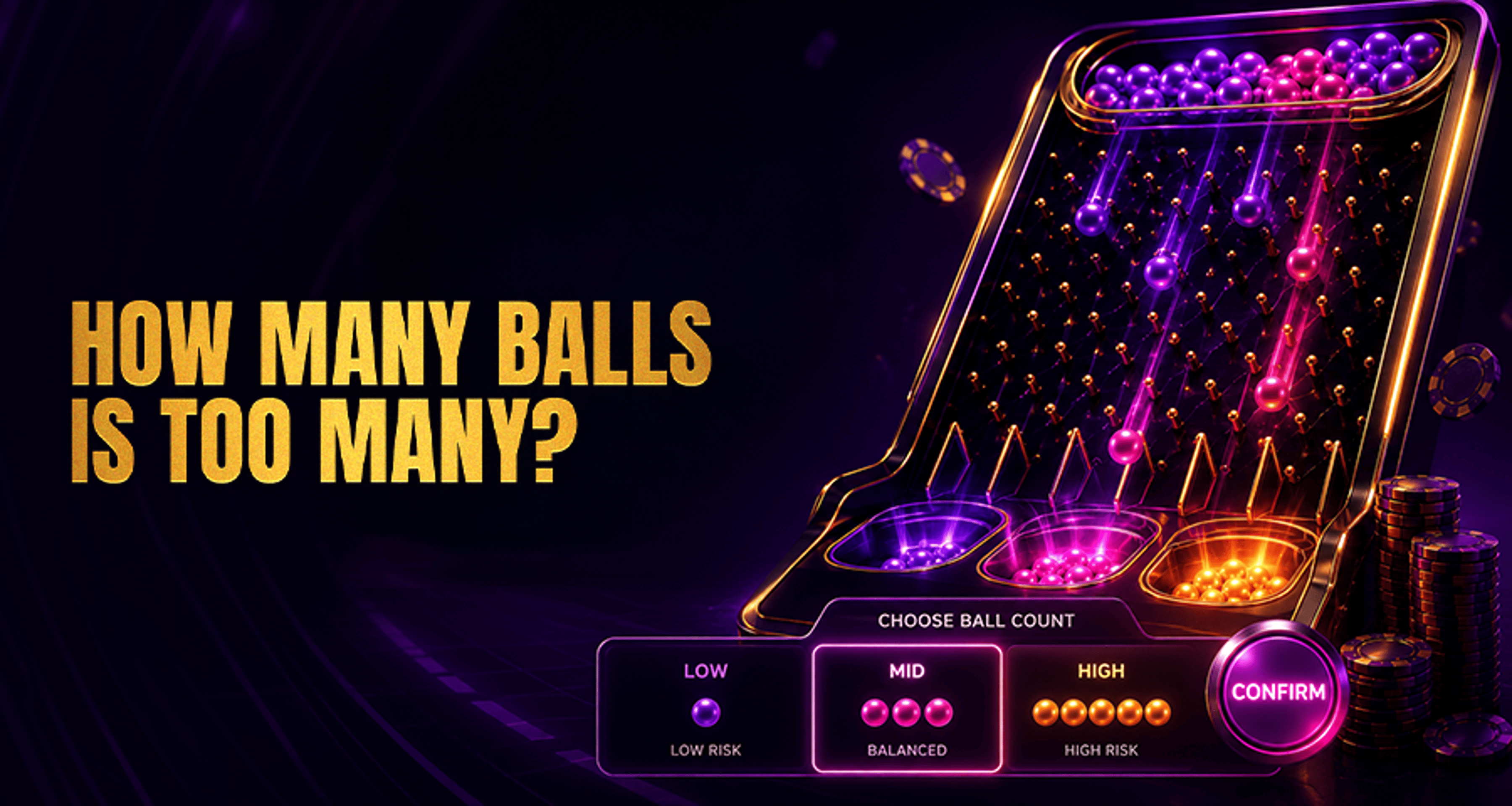
Fewer balls vs more balls: key tradeoffs
There is no universally correct number. The better choice depends on your budget, comfort with swings, and entertainment goals.
Low ball-count approach
A low ball-count approach might mean a short session with a small fixed number of balls.
This may suit players who:
want tighter spending control
are learning the game
prefer slower pacing
do not enjoy long streaks of emotional ups and downs
Typical tradeoffs:
lower total exposure in one sitting
easier to stick to a budget
shorter entertainment time
can feel less exciting for players who want more action
Medium ball-count approach
A medium ball-count approach aims for balance. It gives enough activity to feel engaging without turning the session into a marathon.
This may suit players who:
have a defined entertainment budget
want a fuller session without extreme pacing
are comfortable reviewing results after a set block of play
Typical tradeoffs:
more session time than a low count
more room for variance to show up
still manageable for many casual players
can become expensive if paired with oversized bets
High ball-count approach
A high ball-count approach means committing to a long or fast session with many outcomes.
This may suit players who:
have a clearly limited entertainment budget set aside
understand that more balls increase session exposure
are comfortable with quicker swings and longer play
Typical tradeoffs:
faster bankroll depletion if costs stack up
more emotional pressure during downswings
greater chance of fatigue or impulsive decisions
longer time in play, which some players value for entertainment
The important point is that more balls do not mean better odds. They only change how quickly results accumulate and how much variance you experience across the session.
How to choose the right number of balls for your bankroll
A practical drop limit strategy starts before the session, not during it.
1. Set your total session budget
Decide how much you are comfortable spending for entertainment. This amount should be affordable to lose in full.
2. Confirm your cost per ball
Your ball count only makes sense when paired with the stake level. A low-cost ball and a high-cost ball create very different session exposure.
3. Decide what kind of session you want
Ask yourself:
Do I want a short test session?
Do I want a moderate session with some pacing?
Am I mainly here for a longer entertainment session?
4. Match ball count to your risk comfort
A simple way to think about it:
Lower count: better for tighter control and less emotional pressure
Medium count: better for balance
Higher count: better for longer play, but with more exposure and more discipline required
5. Lock the number in before you start
This is the core of the strategy. If you only decide ball count in the moment, it is much easier to keep extending the session.
6. Review after the session, not during a swing
If your chosen count felt too short, too intense, or too expensive, adjust it next time. Avoid rewriting your plan in the middle of a loss streak.
This same idea shows up in other gambling formats too: structure helps with decision-making, whether you are reading about pari mutuel betting systems or comparing different casino game rhythms.
A simple checklist before you start
Use this quick checklist before choosing your ball count:
What is my full session budget?
How much does each ball cost?
Do I want a short, medium, or long session?
How comfortable am I with quick swings?
Will this ball count still feel reasonable if results go badly early?
Am I choosing this for entertainment, not because I think more balls will force a win?
If you can answer those clearly, your drop limit is probably in a healthy range for your goals.
Common mistakes when using a drop limit strategy
Confusing ball count with better odds
This is the most common mistake. Ball count changes how much you play, not whether the game suddenly becomes favorable.
Ignoring the link between ball count and stake size
A “safe” number of balls at one stake can become expensive at another. Always calculate both together.
Expanding the limit after losses
Once players start adding “just a few more” balls, the original plan stops doing its job.
Choosing a count based on excitement alone
Fast sessions can be entertaining, but they can also produce fatigue and rushed decisions.
Copying someone else’s setup without context
A ball count that suits another player may not fit your bankroll, patience, or risk tolerance.
When to adjust your plan — and when not to chase losses
You can adjust your drop limit strategy over time, but the best moment to do it is between sessions, not during them.
It makes sense to change your plan if:
your entertainment budget has changed
your preferred session length has changed
you learned that your previous count felt too stressful or too short
It does not make sense to increase your ball count because you are trying to recover losses. That turns a session control tool into a chasing habit, which is exactly what the strategy is supposed to prevent.
A responsible approach keeps the focus on entertainment, budgeting, and self-control.
Final thoughts
The best answer to how many balls should you play is: enough to match your budget and comfort level, but not so many that you lose control of the session.
A drop limit strategy works best when you treat it as a planning tool:
set your ball count in advance
match it to your budget and stake size
understand that outcomes remain chance-driven
review the plan after the session, not emotionally during it
If you enjoy breaking down how casino mechanics and strategy claims really work, explore more HunnyPlay gameplay explainers across the Gambling Hub for a clear, entertainment-first perspective.
FAQ
What is a drop limit strategy in casino games?
A drop limit strategy is a pre-set limit on how many balls you will play in a session. It helps control pace, spending, and decision-making, but it does not improve the underlying odds.
Does playing more balls increase your chances of winning?
No. Playing more balls does not guarantee better results or improved odds. It only increases the number of outcomes in your session and changes how variance feels over time.
How many balls should beginners play?
Beginners often benefit from a lower ball count because it is easier to track spending, understand session pace, and avoid impulsive adjustments.
Should your ball count depend on your bankroll?
Yes. Ball count should be chosen together with your bankroll and cost per ball. Even a moderate count can become too expensive if the per-ball stake is too high.
Is a drop limit the same as a stop-loss?
No. A drop limit controls the number of balls you plan to play, while a stop-loss is a money-based rule that tells you when to stop after reaching a loss threshold.