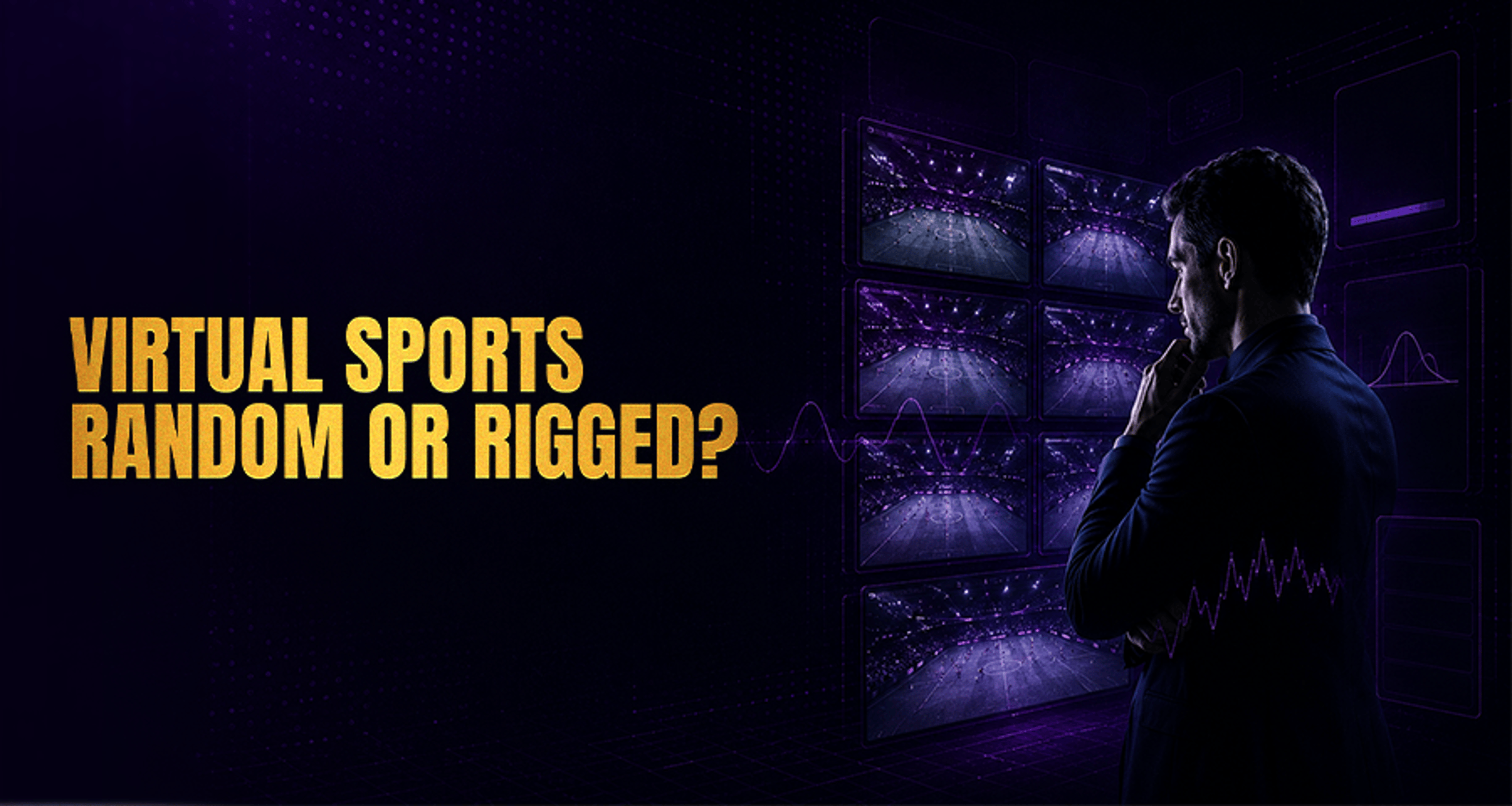
Why Virtual Sports Feel Predictable: Random or Rigged?
Virtual sports feel predictable random to many players, but fast event cycles, repeated visuals, and natural pattern-seeking often create that impression more than actual evidence.
Behind the animated matches and racing graphics is a system powered by random number generators (RNG). The same technology that decides slot results is also responsible for determining virtual sports betting. So why do these games sometimes feel so predictable?
What Virtual Sports Really Are
Virtual sports are basically computer-generated events where results are calculated instantly by software instead of real athletes.
The format usually looks like a normal sporting event. You might see a short football match, a horse race, or even a greyhound competition. The difference is that everything happens inside a simulation.Common virtual sports include:
Virtual football leagues
Virtual horse racing
Virtual greyhound races
Virtual basketball tournament
The entire result is determined in seconds by an algorithm. Once the system generates the outcome, the animation simply shows what has already been decided.
So even though it looks like a real match unfolding, the result was actually locked in before the replay began.
Why Players Think Virtual Sports Are Predictable
Despite the random nature of the system, players often believe there are patterns hiding in the results. There are a few reasons why this happens.
The Brain Loves Patterns
Humans are extremely good at spotting patterns. Sometimes a little too good.If one team wins five matches in a row, the mind immediately assumes something is happening behind the scenes. Maybe the team is “hot,” or maybe the algorithm favors it.
But randomness naturally creates streaks.Flip a coin enough times and you’ll eventually see five or six heads in a row. The same thing happens in virtual sports results. The difference is that when money is involved, those streaks feel much more meaningful.
Fast Game Cycles Make Patterns Look Real
Virtual sports run very quickly. A full season of results might appear within an hour. That speed changes how players perceive results.
In real sports, seeing a team dominate several games might take weeks. In virtual leagues, the same thing can happen in minutes. The rapid sequence makes patterns feel obvious, even when they’re just normal probability.
Odds Create Expectations
Betting odds also play a role in how players interpret outcomes.
If a team has very low odds, players expect it to win almost every time. When it loses, especially multiple times in a row, it feels suspicious.
But probability doesn’t work that way. Even strong favorites lose occasionally. When randomness lines up the wrong way, several losses can happen close together. It looks unusual, but statistically it’s completely normal.
How RNG Decides Virtual Sports Results
At the core of every virtual sports platform is an RNG system.
This software continuously produces random numbers. When a betting round closes, the system selects a number that corresponds to a particular outcome.
That number determines things like:
Which team wins
How many goals are scored
How the race finishes
Once the outcome exists, the game engine creates the visual replay. The animation simply illustrates the result.
This is why virtual sports feel like a broadcast, even though the result was calculated instantly.
Is There a Strategy for Virtual Sports?
Because results are random, predicting winners consistently isn’t really possible. That said, players can still approach virtual sports more intelligently. A few practical habits help:
Keep betting stakes small
Avoid doubling bets after losses
Treat streaks as coincidence rather than signals
Most experienced players focus more on bankroll control than trying to outsmart the system.
The Real Problem: Chasing Patterns
The biggest mistake people make with virtual sports is chasing trends that aren’t actually there.
For example, a player might believe a team is “due” for a win after several losses. That idea makes sense emotionally, but RNG systems don’t remember previous results.
Each round starts from scratch. Once players understand this, the game becomes easier to enjoy without constantly trying to decode imaginary patterns.
Final Thoughts
Virtual sports often feel predictable because the human brain naturally looks for order in random events. Streaks happen. Favorites lose. Underdogs occasionally dominate. But none of these outcomes mean the system is following a hidden pattern. Behind the scenes, RNG software simply generates results within the probabilities defined by the odds.
Understanding this doesn’t guarantee winning bets, but it does help players approach virtual sports with more realistic expectations. And in the long run, that’s a much healthier way to play.