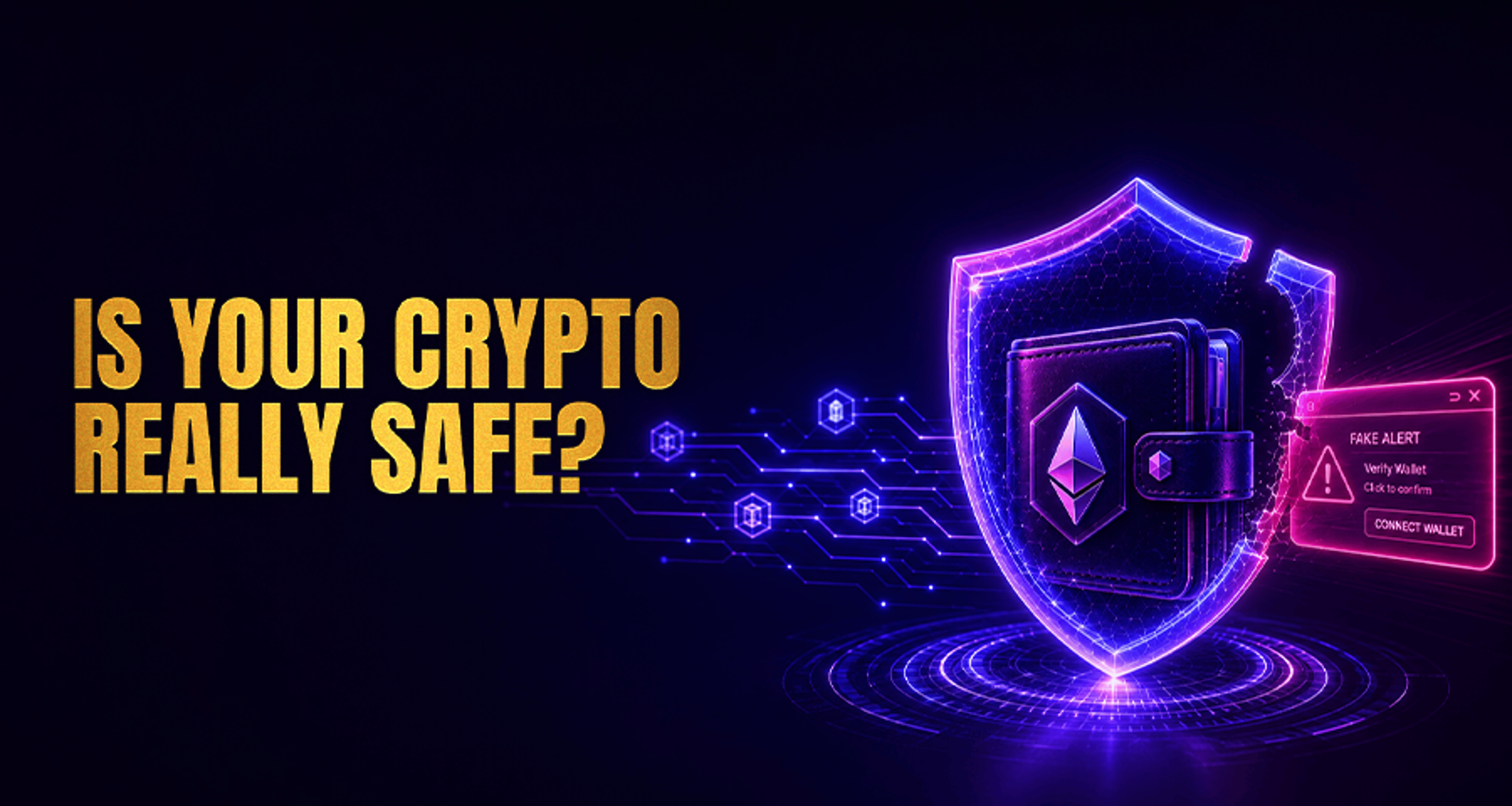
Blockchain Security: Is Your Crypto Really Safe?
In 2026, crypto adoption is booming, but so are scams. Understanding blockchain security is no longer optional—it’s survival. This guide reveals real risks, expert strategies, and how to secure your wallet like a pro.
Is Blockchain Really Safe? The Truth Most Guides Ignore
What Blockchain Protects Well
Immutability: Once data is recorded, it cannot be altered.
Transparency: Transactions are visible to all participants.
Where Blockchain Fails (User Risk)
Human error in managing private keys
Scams, phishing, and fake apps
-> Tech is secure, users are not.
The Biggest Blockchain Security Risks in 2026
Exchange Failures (Case: FTX Collapse)
Even major exchanges can fail. The FTX collapse showed that billions can vanish overnight when custodial platforms mismanage funds.
Phishing & Social Engineering Attacks
Attackers exploit human psychology—fake emails, cloned websites, and impersonation remain top threats.
Fake Apps & Wallet Clones
Malicious apps mimic legitimate wallets, tricking users into entering seed phrases.
Smart Contract Exploits
Bugs in decentralized applications (DeFi) can drain millions instantly. In 2025, over $3B was lost to smart contract vulnerabilities.
Wallet Security Explained (Where Most People Fail)
Hot Wallet vs Cold Storage
Hot Wallets: Connected to the internet, convenient but vulnerable.
Cold Storage: Offline hardware wallets, far safer.
Why Private Key Cryptography Matters
Your private key is your ultimate proof of ownership. Lose it, and your crypto is gone.
Custodial vs Self-Custody
Custodial: Like a casino holding your chips.
Self-Custody: Like holding your own cash—safer if managed correctly.
How to Secure Your Crypto Like a Pro (Step-by-Step)
Enable Two-Factor Authentication Everywhere
Adds an extra layer beyond passwords.
Use Hardware Wallets (Ledger, Trezor)
Keep your keys offline.
Store Seed Phrases Offline
Write them down, never store digitally.
Avoid Public Wi-Fi & Suspicious Links
Hackers exploit insecure networks.
Pro Checklist:
2FA enabled
Hardware wallet in use
Seed phrase offline
No public Wi-Fi transactions
Common Crypto Risks (2026) Table
Risk Type | Example | Impact |
Exchange Failure | FTX collapse | Billions lost |
Phishing | Fake emails | Wallet drained |
Fake Apps | Wallet clones | Seed stolen |
Smart Contract Exploit | DeFi bug | Funds drained |
Human Error | Lost keys | Permanent loss |
Conclusion
Blockchain technology is strong, but user mistakes make crypto vulnerable. By applying expert crypto security tips, you can protect your assets in 2026 and beyond. Stay vigilant, secure your wallet, and treat your crypto like chips in a high-stakes casino—guard them carefully