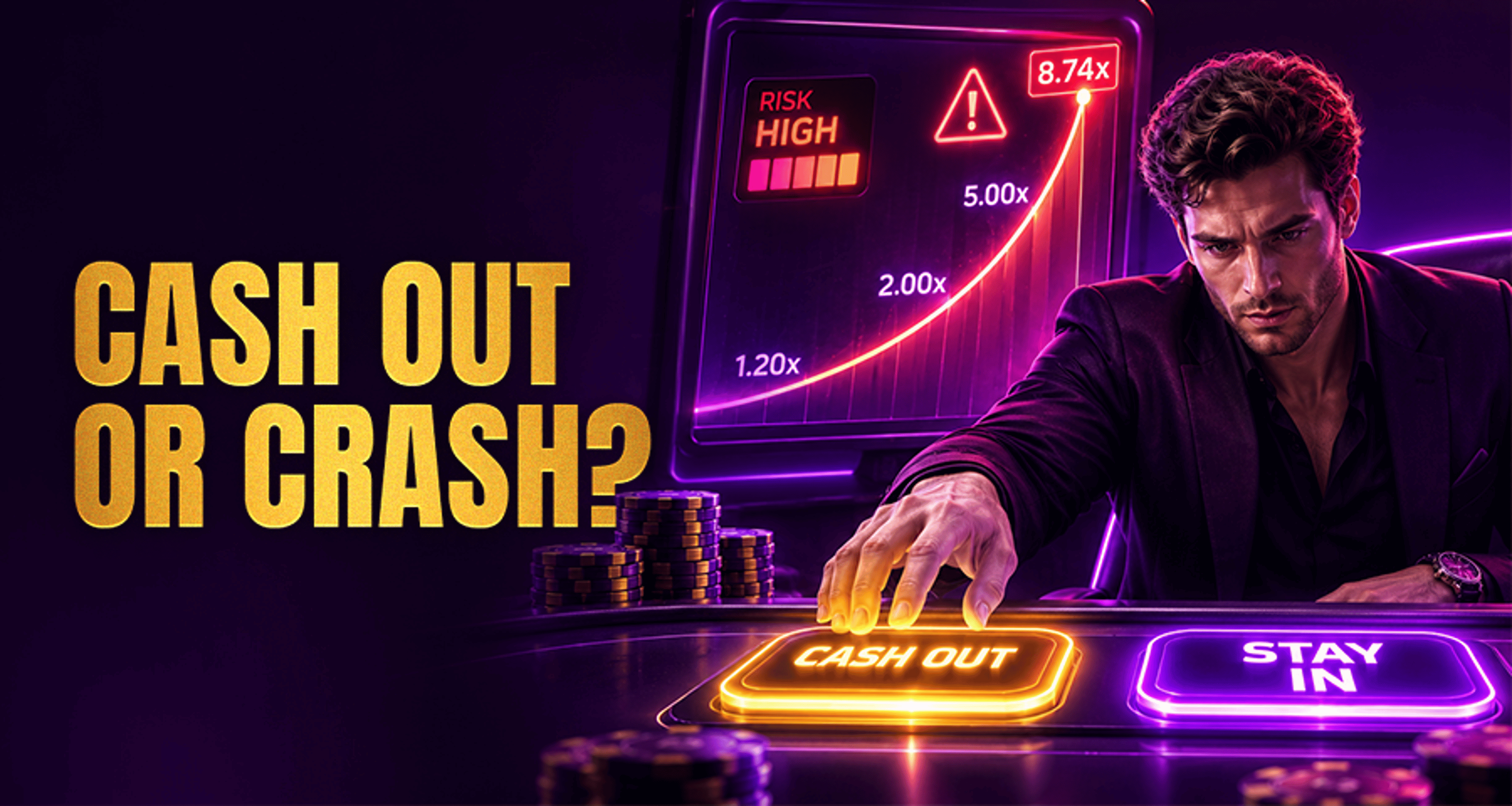
Cash or Crash Live: Risk and Cashout Decisions
Live crash-style game shows create a very specific kind of pressure. The decision is not just whether to take a risk in general.
Live crash-style game shows create a very specific kind of pressure. The decision is not just whether to take a risk in general. It is whether to lock in value now, stay exposed a little longer, or watch a planned exit disappear in real time. That is what makes cash crash live risk cashout decisions so difficult for many players.
In this context, cashout decisions mean choosing when to end your position during a live round rather than riding the uncertainty for as long as possible. In high-volatility live game show formats, that choice often happens fast. You may feel pulled between a modest return that is available now and a bigger outcome that might never arrive.
The key point is simple: there is no cashout formula that guarantees better results. Outcomes stay uncertain, volatility stays high, and the best decision depends on your bankroll, your session plan, and how well you can follow your limits under pressure.
What makes cashout decisions hard in live crash-style game shows?
Cashout timing is difficult because several pressures hit at once:
the round moves quickly
the available value changes in real time
recent wins or losses distort judgment
other players, hosts, or chat energy can create false urgency
you may feel that leaving early means missing out
That last point matters more than many players expect. A lot of poor decisions do not come from lack of knowledge. They come from discomfort. Cashing out can feel like settling for less, while staying in can feel brave or clever, even when it breaks your plan.
This is also where the topic differs from a simple Deal or No Deal-style risk comparison. The real issue here is not a one-time dramatic choice between two visible options. It is the repeated timing decision inside a fast, uncertain live environment, where hesitation, hype, and bankroll pressure all shape the moment.
For a broader view of how these formats fit into the category, it helps to understand current live casino game show trends and player insights.
How to set a cashout plan before you start playing
The strongest cashout decisions usually happen before the round begins. If you wait until the pressure peaks, emotion often takes over.
A practical pre-session plan should include three things:
1. Your target cashout point
Decide in advance what kind of exit fits the session. That does not mean predicting what will happen. It means choosing a point where you are comfortable taking value instead of improvising under pressure.
Your target may be conservative, moderate, or aggressive, but it should be chosen before the round starts.
2. Your maximum acceptable loss
Set a clear amount you can afford to lose for the session. Once that number is reached, the session is over. This matters because players who do not define a loss boundary often start moving their cashout logic after a bad stretch.
3. Your stop conditions
Stop conditions are the signals that tell you to step away even if money remains in the bankroll. Examples include:
making two or three impulsive choices in a short span
increasing stake size to recover losses
abandoning your pre-set exit points
feeling frustrated, rushed, or overly confident
These limits work better when they are written down. Even a short note on your phone can be enough to slow down a bad decision loop.
When taking the cashout makes more sense than staying in
Taking the cashout tends to make more sense when your main goal is control rather than stretch potential. That can apply when:
you are protecting a limited bankroll
you are near your planned session target
you already feel emotional pressure building
the session has become more about relief than judgment
you are playing for shorter, lower-stress decisions
Early cashouts are often misunderstood as weak play. In reality, they may be the better fit for players who value consistency of behavior over the thrill of extended exposure. The point is not to maximize every round. The point is to make decisions that match your risk tolerance.
This is especially important in live environments shaped by presentation, pace, and social energy. If outside influence affects your timing, articles on how streaming influencers affect gambling choices can help you recognize where that pressure comes from.
When holding longer may fit your risk profile
Holding longer may fit your style if you have already accepted wider swings and built your session around that reality. That does not make it smarter by default. It only means the decision may be consistent with your tolerance for volatility.
Longer holds usually make more sense when:
your bankroll is sized for higher variance
you have set firm loss caps in advance
you are not depending on one round to fix the session
you can accept missed cashout opportunities without chasing afterward
The danger is turning a high-risk style into an emotional style. Those are not the same thing. A deliberate aggressive approach still follows rules. An emotional aggressive approach changes targets mid-round and tries to rescue disappointment with even more exposure.
How bankroll limits should shape every live risk decision
Bankroll size changes what a reasonable cashout choice looks like.
A smaller bankroll usually calls for tighter control. That often means lower tolerance for extended exposure, more conservative exits, and shorter sessions. One bad sequence matters more when your margin is thin.
A medium bankroll may allow more flexibility, but it still needs structure. You might give yourself room for a mixed approach, with some earlier exits and some longer holds, while keeping the total session loss cap unchanged.
A larger bankroll does not remove risk. It only changes the amount of volatility you may be able to absorb. Players with more room sometimes become less disciplined because losses feel easier to justify. That can create sloppy decision-making rather than better decision-making.
A simple way to think about it:
Low-risk style: smaller targets, stricter stop-loss rules, quick exits, lower tolerance for emotional swings
Medium-risk style: balanced exits, fixed session caps, moderate comfort with volatility
High-risk style: wider swings accepted, longer holds possible, but only with strict loss limits and strong tilt control
None of these styles is guaranteed best. The better option is the one you can actually follow without breaking your bankroll rules.
Players who want a stronger feel for live-table pacing and session awareness may also find value in reading about the live casino dealer experience for first-time players.
Emotional mistakes that ruin cashout discipline
Most cashout mistakes are emotional before they are mathematical.
Common examples include:
Chasing losses
After a bad result, it is easy to treat the next round as a recovery mission. That mindset pushes players to stay in longer, override limits, or increase risk without a real plan.
Moving targets mid-round
A pre-set exit only works if it stays pre-set. Once you start changing it because the moment feels exciting or frustrating, your decision process is no longer stable.
Following crowd hype
Live game show formats can create a sense that everyone else sees the same opportunity. In reality, crowd noise, host energy, and chat reactions do not improve the odds or make your position safer.
Cashing out from panic alone
Emotion can also push players out too early for the wrong reason. There is nothing wrong with conservative exits, but panic-based exits often lead to regret, which then fuels reckless follow-up decisions.
Ignoring repeated impulsive choices
One impulsive decision can happen to anyone. A pattern is the real warning sign. If you keep breaking your own rules, the problem is no longer the round. It is your session state.
That is why basic live etiquette and self-control matter. The mindset behind smart and respectful live casino play often supports better decision discipline too.
A simple decision checklist for live risk and cashout moments
Before and during play, use a short checklist:
What is my target cashout point for this session or round?
What is the most I am willing to lose today?
If I miss a bigger outcome, can I still accept this exit calmly?
Am I changing my target because of logic or because of emotion?
Have I already made multiple impulsive decisions this session?
Do I need a cooldown before continuing?
If the answers feel unclear, that is often a sign to lower risk or step away.
A cooldown does not need to be dramatic. It can be as simple as ending the session, taking a break, or switching attention elsewhere before returning later. Responsible play is less about one perfect choice and more about preventing a rushed sequence of bad ones.
Final thoughts
Good cashout decisions in live crash-style game shows are not about finding the perfect moment every time. They are about making choices that match your bankroll, your plan, and your emotional state.
The most useful approach is to decide key limits before the session starts, accept that volatility cannot be controlled, and treat repeated impulsive choices as a signal to stop. If you want to explore live casino game show options, do it with a risk-aware mindset built around game familiarity, session caps, and informed play rather than pressure or hype.
FAQ
How do I know when to cash out in a live crash-style game?
The best starting point is to decide your target cashout before the round begins. If you wait until the pressure builds, emotion can easily replace discipline.
Is it better to cash out early or stay in longer?
Neither is always better. Early exits may fit smaller bankrolls or lower-risk goals, while longer holds may suit players who accept more volatility and follow strict limits.
How does bankroll size affect live cashout decisions?
Smaller bankrolls usually require tighter control and less exposure. Larger bankrolls may allow more flexibility, but they still need firm loss caps and stop conditions.
What are the biggest mistakes players make during live risk decisions?
Common mistakes include chasing losses, moving targets mid-round, reacting to crowd hype, and continuing after repeated impulsive decisions.
Can a cashout strategy guarantee better results in live casino game shows?
No. No cashout strategy can guarantee outcomes. These games remain volatile, and any approach should be treated as a way to manage decisions, not to remove uncertainty.