Cloud Gaming in Casinos: Is It the Next Step?
Cloud gaming could reshape online casinos through instant access, cross-device play, and richer experiences. But is it truly the next step, or just another emerging technology trend?
Cloud gaming has already changed how people access video games, but its role in online gambling is still taking shape. That raises a fair question: is cloud gaming the next step for casinos, or is it simply another tech concept being tested around the edges?
The short answer is that cloud gaming could influence how some casino-style platforms deliver games, updates, and cross-device access. But it is not a simple replacement for traditional online casinos, and it does not remove the hard issues that define gambling platforms, including fairness checks, regulation, geolocation, payment controls, and player trust.
This article looks at what cloud gaming means in a casino context, how it differs from standard online casino play, and whether it represents a realistic evolution path or just an emerging idea.
What Does Cloud Gaming Mean in a Casino Context?
In mainstream gaming, cloud gaming means the game runs on remote servers instead of on a local device. The player streams the experience over the internet, while inputs such as taps, clicks, or controller commands are sent back to the server in real time.
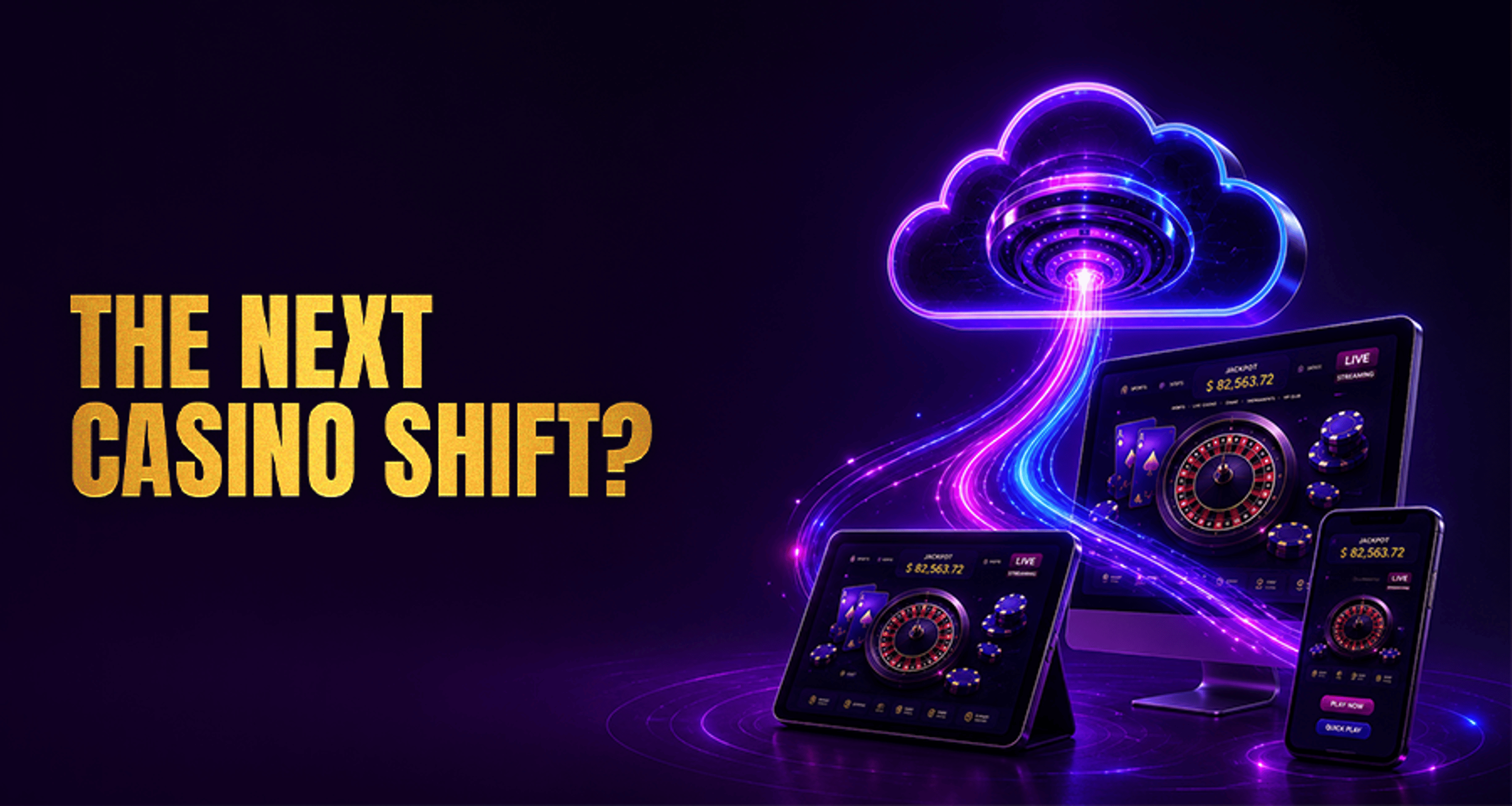
In a casino context, cloud gaming would mean casino-style products or related gaming interfaces are hosted and processed remotely, then streamed to the player’s phone, tablet, laptop, or smart TV. Instead of relying mainly on a native app download or device-side processing, the platform could deliver the experience from cloud infrastructure.
That is different from most traditional online casinos today. Standard online casino platforms usually work through browser-based interfaces, downloadable apps, or lightweight game clients that already run efficiently on modern devices.
In many cases, the graphics, logic, and account systems are optimized enough that full cloud-streaming is not necessary.
So when people talk about cloud gaming casinos next step, they are usually not describing a total reinvention of gambling. They are asking whether streaming-based delivery could create a smoother, more flexible version of the online casino experience.
How Cloud Gaming Could Change Online Casino Access
If cloud-based delivery becomes more practical for casino platforms, the biggest change would likely be access. Players could potentially launch games instantly across multiple devices without worrying as much about hardware limitations, storage space, or version mismatches.
For example, a platform could use cloud infrastructure to support:
Instant play without large downloads
Smoother continuity between mobile and desktop sessions
Faster deployment of interface changes or game updates
Richer visual environments on lower-powered devices
This matters most for casino products that aim to feel more immersive than a standard slot or table game lobby. A cloud-based setup could make it easier to deliver more advanced interfaces, live environments, or hybrid entertainment layers without asking every player to own a high-performance device.
That does not automatically mean the experience becomes better in every case. Many existing online casino products already run well in browsers. In simple games such as blackjack variants or titles explained in guides like What Is Casino War, the practical gain from full streaming may be limited unless the operator is adding something more interactive around the core game.
Potential Benefits of Cloud-Based Casino Experiences
Cloud gaming could offer several real advantages for casino-style platforms, especially where convenience and consistent delivery matter.
Lower device requirements
Because processing happens remotely, users may be able to access more demanding game environments on older phones, entry-level laptops, or less powerful tablets. That could widen access for players who want a more polished experience without upgrading hardware.
Faster updates and easier maintenance
When games are managed centrally in the cloud, operators can roll out fixes, content changes, and interface improvements more quickly. Players do not need to manually update apps as often, and everyone reaches the latest version at roughly the same time.
Cross-device continuity
A cloud-first platform could make it easier for users to begin on one device and continue on another with the same session feel, preferences, and visual setup. That kind of continuity is already important in digital gambling and adjacent formats, including trends discussed in Inside the World of Social Casinos.
More room for experimental formats
Cloud delivery may support casino-adjacent products that blend game-like presentation, social layers, or interactive lobbies. That could be relevant as the industry explores smarter digital experiences, similar to themes raised in AI Agent Casino: How Smart Casinos.
Still, these benefits depend on execution. Cloud gaming is not valuable just because it sounds advanced. It only helps if it improves accessibility, usability, or experience quality without adding new friction.
The Biggest Challenges: Latency, Fairness, and Regulation
This is where the idea becomes more complicated.
Latency sensitivity
Cloud gaming depends on stable, responsive internet connections. In mainstream games, latency can affect timing and control. In casino-style environments, it can also affect player confidence. Even minor delays between actions and on-screen responses may feel frustrating in fast table interactions or live-style formats.
For some simple products, cloud delivery could actually add an unnecessary layer compared with lightweight browser play.
Fairness transparency
Online gambling depends heavily on trust. Players need confidence that outcomes are generated fairly, game logic is verifiable, and results are not being obscured behind a system they cannot inspect or understand.
With cloud-streamed delivery, that transparency challenge can become harder from a perception standpoint. Even if the underlying systems are properly controlled, players may feel more distance from how the game operates when everything is rendered remotely.
That means operators would need especially clear communication around fairness, testing, and game integrity.
Regulatory and licensing complexity
Cloud gaming does not erase the normal compliance demands of gambling. If anything, it can add more technical layers around where processing occurs, how user location is verified, how data moves across systems, and which parties are responsible for different parts of delivery.
That is especially important in gambling, where jurisdiction rules, payment restrictions, and operating approvals often matter as much as product design. A cloud-based model may look elegant on the front end while remaining difficult to structure on the back end.
Infrastructure cost and reliability
Streaming game sessions at scale requires serious infrastructure. Operators would need server capacity, content delivery support, network optimization, and strong uptime standards. If those systems fail or slow down, the player experience suffers immediately.
That makes cloud gaming more expensive and operationally demanding than simply offering efficient browser-based products where the player device handles more of the workload.
Security and data handling concerns
Any platform that centralizes more of its delivery stack in the cloud must think carefully about account protection, session management, payment workflows, and data security. In gambling, even small trust issues can damage adoption.
Is Cloud Gaming Really the Next Step for Casinos?
It may be one possible next step, but not the next step for every casino.
For many operators, the current browser-and-app model already works well. Traditional online casinos can deliver slots, table games, account tools, and promotions with relatively low friction. In that environment, full cloud streaming is not automatically the most efficient upgrade.
Where cloud gaming becomes more interesting is in specific scenarios:
Immersive casino-style hubs with richer graphics
Cross-device entertainment platforms that blend gambling with social or gamified elements
Low-device-access markets where hardware limitations matter more
Centralized content systems that need rapid updates across many endpoints
Even then, cloud gaming should be viewed as an emerging delivery option, not an inevitable industry takeover. The concept has potential, but it also introduces technical and operational tradeoffs that many operators may decide are not worth it yet.
Readers exploring broader casino scale and industry direction may also find context in pieces like How Big Is Big? The World’s Largest Casinos Revealed, which show just how varied casino models can be across the market.
What Players and Operators Should Watch Next
Over the next few years, the most important signals will not be hype terms. They will be practical signs that cloud delivery is solving real problems.
Players should watch for:
Whether cloud-based casino interfaces actually load faster or feel smoother
Whether low-end devices benefit in a noticeable way
Whether account security and session stability remain strong
Whether the streamed experience is easier to trust and understand
Operators should watch for:
Whether infrastructure costs justify the product gains
Whether latency remains manageable across target markets
Whether cloud delivery improves retention through convenience rather than novelty
Whether compliance and technical oversight stay manageable at scale
In other words, the future of this idea depends less on branding and more on Whether cloud systems can support gambling products in a way that feels reliable, transparent, and genuinely useful.
FAQ
What is cloud gaming in online casinos?
Cloud gaming in online casinos refers to a model where casino-style content or interfaces are hosted on remote servers and streamed to the player’s device, rather than relying mainly on local processing or a standard downloaded app.
How is cloud gaming different from standard browser-based casino play?
Standard browser-based casino play usually runs efficiently through web technology on the user’s own device. Cloud gaming shifts more of the processing and delivery to remote infrastructure, which may help with richer experiences but can also introduce latency and infrastructure demands.
Could cloud gaming make casino games run better on low-end devices?
Potentially, yes. If processing happens in the cloud, lower-powered devices may still be able to access more advanced interfaces. However, the quality of the experience would still depend heavily on internet stability and platform design.
What are the risks of cloud gaming for casino platforms?
The main risks include latency issues, fairness perception challenges, regulatory complexity, infrastructure costs, service reliability concerns, and data security pressures.
Is cloud gaming likely to replace traditional online casinos?
It is more realistic to see cloud gaming as a possible evolution path for certain products rather than a full replacement for traditional online casinos.
Conclusion
Cloud gaming could influence the future of digital casinos, especially where instant access, lower device requirements, faster updates, and cross-device continuity matter. But it is not a magic solution, and it does not remove the core demands of gambling platforms around fairness, regulation, trust, and technical reliability.
For now, cloud gaming looks less like a guaranteed next step and more like a promising concept that may fit some casino experiences better than others. If you want to follow how modern casino platforms are evolving, explore HunnyPlay’s Gambling Hub for more trend-focused content and a closer look at where digital casino experiences may go next.