Deal or No Deal Live: Risk vs Reward Explained
Ready to face the Banker? This Deal or No Deal Live risk breakdown pulls back the curtain on Evolution's high-suspense studio, showing you exactly when to settle and when to chase the top 500x briefcase
Deal or No Deal Live sits in a different category from standard table games. It borrows the structure and suspense of a TV game show, then blends that with chance-driven casino mechanics and live-host presentation.
For players comparing live casino formats, the real question is not whether the game is "good" or "bad" for risk, but how its decision points shape the trade-off between taking a safer offer now or chasing a potentially bigger outcome later.
If you are weighing whether this format suits your style, it helps to think in terms of volatility, offer timing, and your comfort with uncertain outcomes.
Deal or No Deal Live is built around tension and reveal moments, so its risk profile feels very different from fast-repeat games. It also fits into the wider rise of live game-show titles covered in Live Casino Game Shows Trends, Top Titles and Player Insights.
How Deal or No Deal Live Works
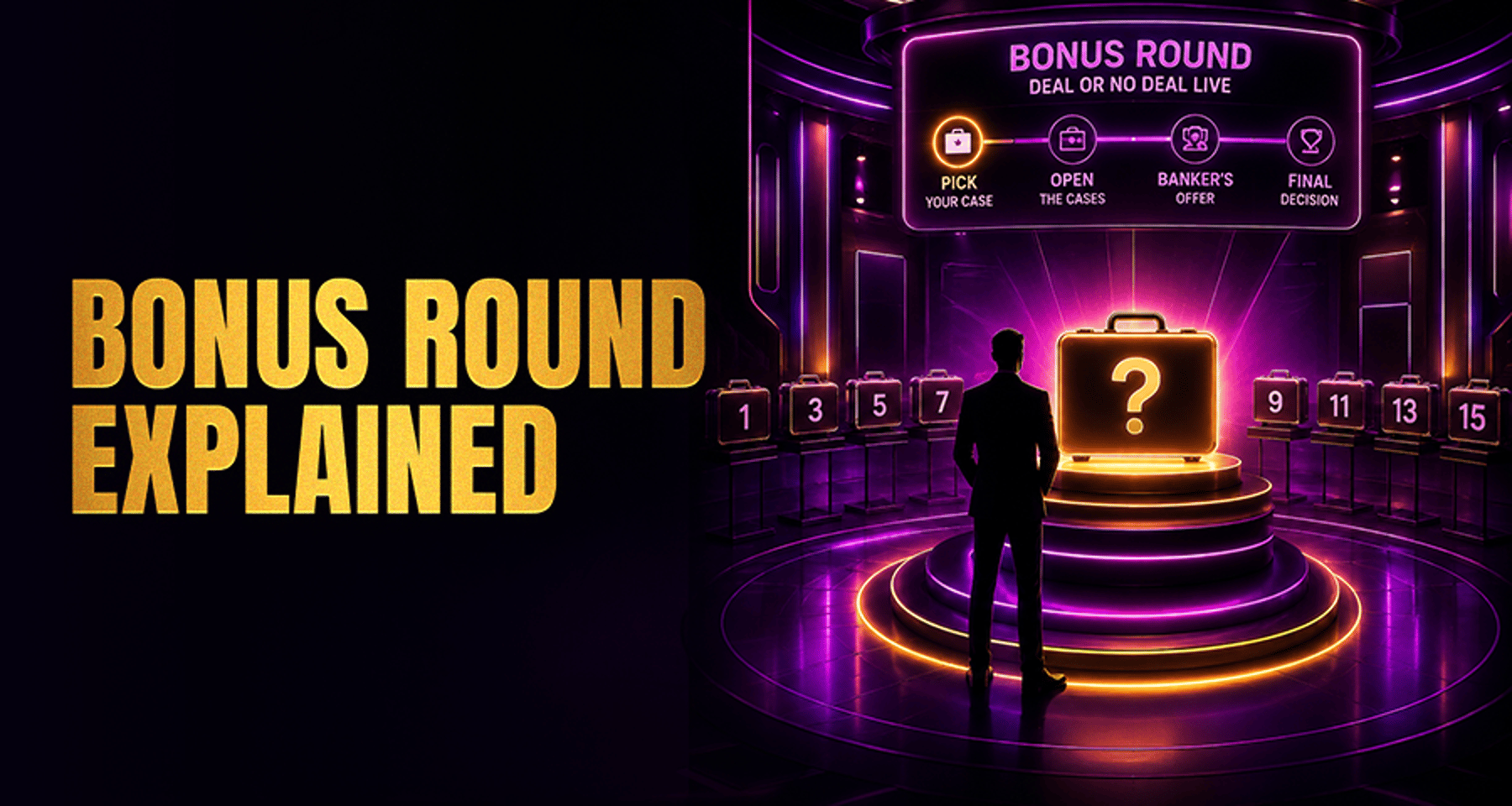
Deal or No Deal Live is a live casino game-show title inspired by the TV format. A host presents the game in a live studio, and players usually qualify for the main bonus-style stage through an initial betting mechanic.
Once in the core feature, the format centers on opening cases, removing possible values from the board, and receiving banker offers at intervals.
Those offers create the key decision moments. Instead of playing a game where every choice directly changes mathematical odds in a predictable way, you are reacting to uncertainty. The remaining unopened cases may still contain top-value outcomes, or they may not. The banker offer reflects that uncertainty, but it does not remove it.
That is why Deal or No Deal Live works best as a comparison choice for players who enjoy suspense-led live formats. It is not purely about fast optimization.
The presentation, pacing, and reveal structure matter just as much as the payout potential. Readers exploring broader live-host formats may also want to compare the overall feel described in the live dealer experience guide.
What Risk Means in Deal or No Deal Live
In Deal or No Deal Live, risk is mainly about what you give up when you reject an offer.
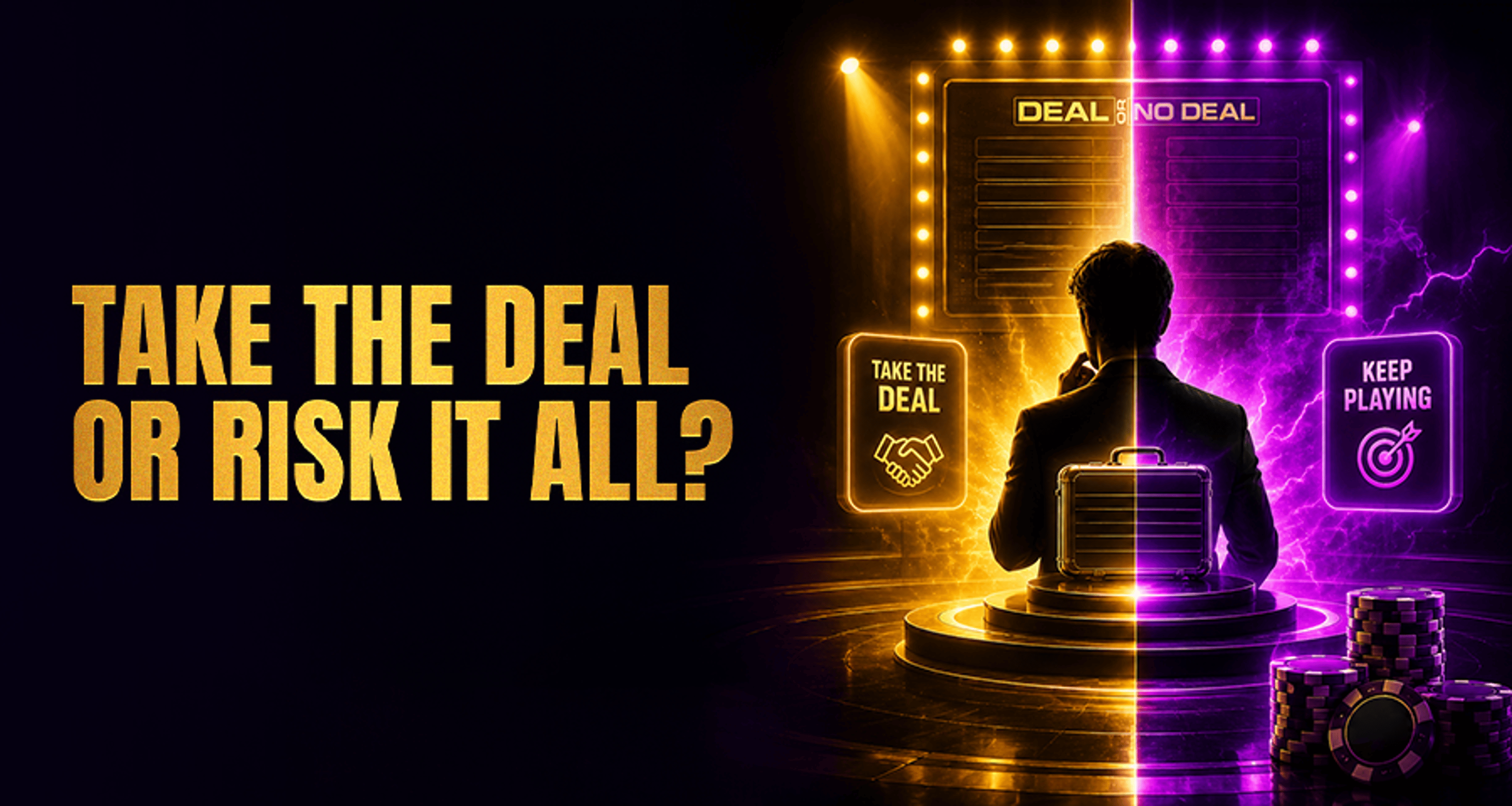
A low-risk choice means accepting a banker offer earlier to lock in a known result rather than continuing through more uncertainty. A higher-risk choice means rejecting that offer and leaving more of your result exposed to what remains in the unopened cases.
That makes risk in this game less about mechanical control and more about tolerance for volatility. You are not eliminating chance. You are choosing whether to reduce uncertainty now or keep it alive for the possibility of a stronger outcome later.
A practical way to frame the game is:
Low risk: take a reasonable early or mid-stage offer and avoid deeper downside swings
Medium risk: pass on weaker offers but accept a later deal once the board still supports a decent return
High risk: reject multiple offers and chase the strongest remaining prize path despite a growing chance of disappointment
This is also why no strategy guarantees profit. Outcomes remain chance-driven, and the entertainment value often comes from staying in the tension longer rather than from any reliable edge.
Early Offer vs Late Offer: Reward Trade-Offs
The clearest risk-versus-reward comparison in Deal or No Deal Live is the decision between accepting an early offer or waiting for later rounds.
Taking an early banker offer
Accepting early usually appeals to more conservative players. You lock in a known amount before the board becomes more polarized. This can reduce the emotional swing of seeing high-value cases disappear later.
Potential advantages include:
less exposure to late-round disappointment
a more controlled session feel
easier alignment with a modest bankroll or short play session
The trade-off is simple: if you deal too early, you may exit before the most rewarding scenarios have a chance to develop.
Holding for later offers
Waiting longer creates the possibility of a larger banker offer or a stronger final outcome, but it also increases payout uncertainty. Once a few bad reveals land at the wrong time, expected upside can fall quickly.
Potential advantages include:
more access to the game's biggest suspense moments
more upside if strong values remain in play
a better fit for players who enjoy aggressive risk/reward decisions
The downside is that later-round play can feel harsher. Passing on a decent offer only to watch the board weaken is part of the format's built-in volatility.
Low-Risk vs High-Risk Player Profiles
Different players will read the same banker offer very differently.
Low-risk profile
A lower-risk player is usually more focused on bankroll comfort, steadier pacing, and minimizing regret. This type of player may prefer to:
set a firm session budget
accept respectable offers rather than chase unlikely top-end results
treat the game as a controlled entertainment spend
This style suits players who want the live game-show atmosphere without stretching every decision to the limit.
High-risk profile
A higher-risk player is typically more comfortable with large swings and may value peak upside over stability. This player may prefer to:
reject middling offers more often
stay in the game for bigger reveal moments
accept that some sessions will end with weaker outcomes after passing safer exits
This style can make the format more exciting, but it also makes the downside more visible. For some players, that thrill is the point. For others, it makes the game feel too volatile.
Medium-risk middle ground
Many players fit somewhere between those two extremes. They may pass on clearly low offers but still take a later deal when it matches their session goal. That middle-ground approach often makes the most sense for comparison readers who want some upside without fully leaning into all-or-nothing decision-making.
Is Deal or No Deal Live Better for Entertainment or Payout Hunting?
For most players, Deal or No Deal Live makes more sense as an entertainment-led live casino choice than as a payout-hunting tool.
That does not mean rewards are irrelevant. It means the format is designed around suspense, studio presentation, and emotional decision points. The appeal is tied to how it feels to play, not just what a spreadsheet view of outcomes might suggest.
If your main goal is measured, repeatable risk management, other casino formats may feel more straightforward. Deal or No Deal Live is better suited to players who enjoy theatrical pacing and are comfortable making decisions under uncertainty.
Social and presentation factors can also shape how people judge these games, much like the broader habits discussed in How Streaming Influencers Affect Gambling Choices.
Deal or No Deal Live Risk vs Reward Compared at a Glance
Factor | Lower-Risk Approach | Higher-Risk Approach |
|---|---|---|
Banker offers | Accept earlier reasonable offers | Reject more offers to chase bigger outcomes |
Volatility | Lower emotional and payout swings | Higher swings and less certainty |
Session goal | Controlled entertainment | Bigger suspense and upside potential |
Bankroll comfort | Better for tighter limits | Better for players comfortable with downside |
Pace preference | Quicker resolution | Longer tension-filled progression |
Likely experience | Less regret from overextending | More dramatic highs and lows |
When comparing whether the game fits your style, focus on four practical points:
Bankroll comfort: Are you okay with turning down a known result?
Session goals: Do you want steady entertainment or a more dramatic sweat?
Pace: Do you enjoy waiting through multiple rounds and offers?
Downside tolerance: Will a missed deal feel exciting or frustrating?
Those questions matter more than trying to force the game into a simple "best strategy" mindset.
FAQ
Is Deal or No Deal Live a high-risk casino game?
It can be, depending on how long you stay in and how often you reject banker offers. The game naturally carries payout uncertainty, and later decisions usually create more volatility than earlier exits.
Should you accept early offers in Deal or No Deal Live?
Early offers may suit players who prefer lower risk, tighter bankroll control, or shorter sessions. They reduce uncertainty, but they also limit the chance of reaching stronger later-round outcomes.
Can strategy reduce risk in Deal or No Deal Live?
Strategy can shape how much uncertainty you accept, but it cannot remove chance from the game. You can choose a more conservative or aggressive path, but no decision system guarantees profit.
What is the difference between safe and aggressive play in Deal or No Deal Live?
Safer play usually means accepting decent offers earlier and avoiding deeper volatility. Aggressive play means rejecting more offers to pursue larger potential rewards, while accepting a higher chance of finishing with less.
How does Deal or No Deal Live compare with roulette-style risk vs reward choices?
Roulette-style decisions are often clearer and faster, with more direct bet-to-outcome relationships. Deal or No Deal Live is more suspense-driven, with risk centered on whether to accept or reject banker offers as uncertainty unfolds.
Final Take
Deal or No Deal Live is best understood as a chance-led live game-show experience where risk comes from decision timing, not from any guaranteed strategic edge. Taking early offers can support a more conservative session, while waiting for later rounds can increase both excitement and downside exposure.
For readers comparing live casino options, the best fit depends on whether you prefer controlled outcomes or high-tension reveal moments. If you are choosing based on play style, look for live casino games that match your comfort with volatility rather than assuming bigger risk automatically means better value.