Licensed vs Unlicensed Casinos: What Players Should Know?
Licensed unlicensed casinos players should compare more than badges and promotions. Licensing can affect transparency, verification, and dispute processes, making it an important factor when evaluating a casino.
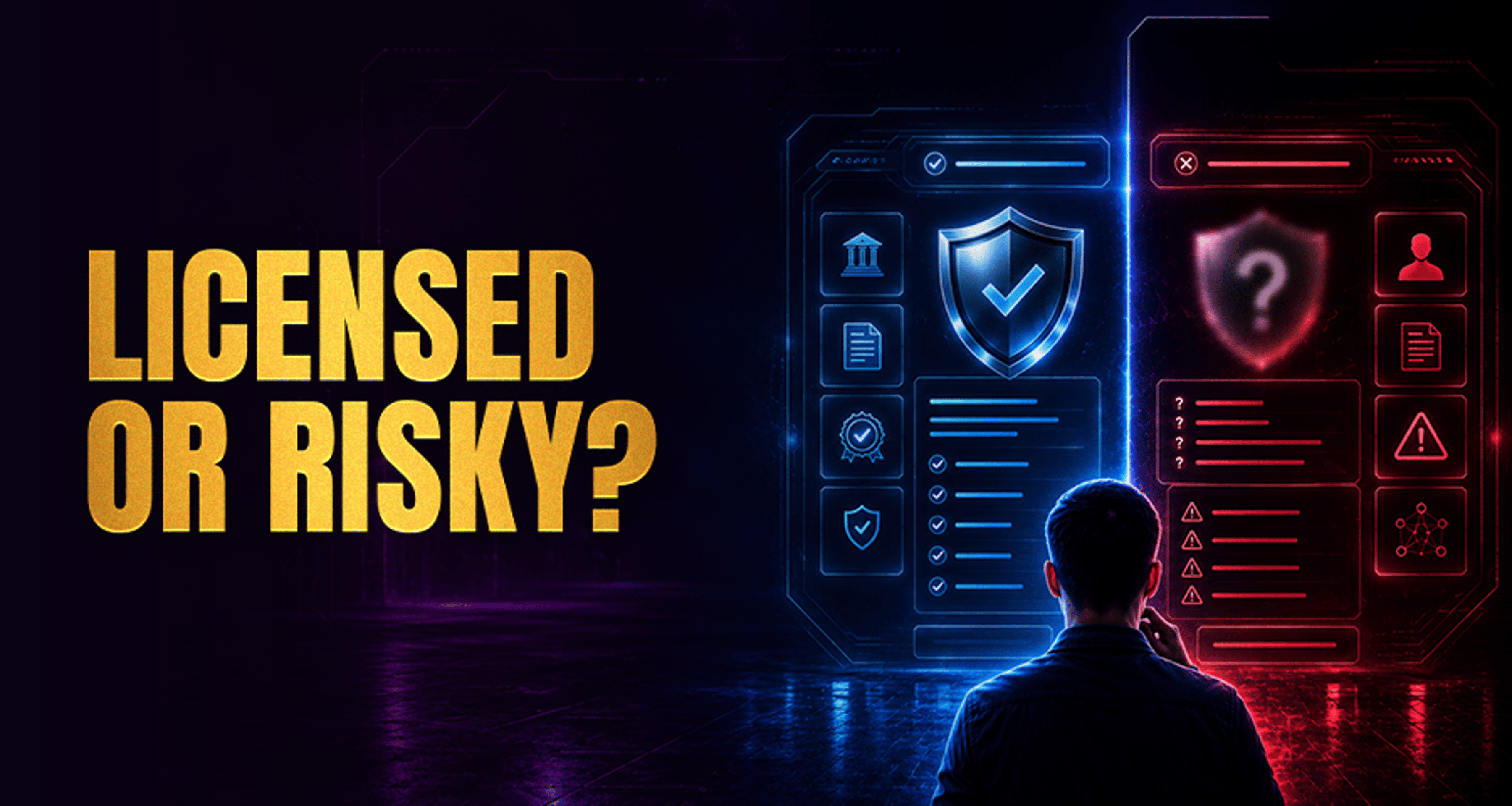
When comparing licensed vs unlicensed casinos, the real difference is not the badge in the footer. It is whether players can verify who runs the site, what standards apply, and what options exist if a dispute happens.
That distinction matters because licensed status can reduce player risk when the license is real, current, and relevant to the market being targeted. If those pieces are missing, a “licensed” label may not mean much in practice.
Important: Gambling laws, licensing standards, and player protections vary by country and region. A valid license in one jurisdiction may be limited, irrelevant, or not intended for players somewhere else.
Licensed vs Unlicensed Casinos at a Glance
Factor | Licensed Casino | Unlicensed Casino |
|---|---|---|
License claim | Specific and checkable | Missing, vague, expired, or unsupported |
Operator transparency | Usually provides company and legal details | Often hides or blurs ownership |
Complaint path | May offer formal escalation routes | Usually leaves players with support only |
Market clarity | More likely to explain where services are offered | Often unclear about who the site is targeting |
Verification | Easier to cross-check details | Harder to confirm basic facts |
Starting risk | Lower starting risk, but not risk-free | Higher starting risk from the outset |
What Is a Licensed Casino?
A licensed casino is an online gambling site that claims to operate under approval from a gambling regulator or licensing authority. In practice, that usually means the site provides legal pages, company details, terms, and some published framework for how it operates.
But a license claim alone is not enough. Players should still check whether the operator name is consistent, whether the license details are specific, and whether the stated jurisdiction makes sense for the audience the casino is trying to reach.
If you want a broader framework for evaluating trust, it helps to review casino reputation and trust indicators.
What Is an Unlicensed Casino?
An unlicensed casino offers gambling services without a credible, verifiable license claim for the players it is trying to attract. Sometimes there is no licensing information at all. In other cases, the site uses a badge, seal, or short legal line that does not stand up to basic checking.
The biggest issue is accountability. If something goes wrong with verification, withdrawals, or account restrictions, players may have no practical route beyond the casino’s own support team.
When Licensed Status Materially Changes Player Risk
This is the most useful comparison outcome for players: licensed status matters most when it improves accountability and verifiability.
A licensed casino can reduce risk when it gives players:
A real operator name that matches across legal pages
A named regulator or licensing authority
Clear terms on identity checks, restricted countries, and withdrawals
Some path for complaints or escalation beyond frontline support
By contrast, the risk stays high when a casino—licensed or not—cannot be meaningfully checked.
So the practical issue is not just “licensed vs unlicensed.” It is whether the site gives players enough reliable information to evaluate before signing up or depositing.
Jurisdiction Matters More Than Many Players Realize
A license is not universally meaningful in every market. A casino may hold a license that is valid in one jurisdiction but still fail to explain whether that framework clearly applies to players elsewhere.
For example, a site may show a real regulatory claim, but provide no clear explanation of whether it accepts players from your country under that licensing setup. That does not automatically prove the casino is unsafe, but it does create market-fit risk.
If the operator is unclear about where its licensing position applies, players should treat that as a caution point rather than a minor detail.
How Players Should Read Different License Situations
Not every license claim means the same thing. This quick table helps separate stronger signals from weaker ones.
Situation | What It May Mean | Why It Matters to Players |
|---|---|---|
Valid and relevant license | The operator appears to disclose a real, current framework tied to its target market | Lower starting risk because the claim is easier to verify |
Valid but irrelevant jurisdiction | The license may exist, but the site does not clearly connect it to your market | Protection or complaint options may not apply in practice |
Badge-only claim | The casino shows a seal or logo without specific operator or licensing details | Players are being asked to trust branding instead of evidence |
Unverifiable disclosure | The site names an authority but gives no company match, reference, or traceable details | Hard to confirm whether the claim belongs to that operator |
Inactive or outdated status | The site points to a claim that appears suspended, expired, or no longer current | A major warning sign because the trust signal may no longer be valid |
How to Tell if an Online Casino Is Legit in 2 Minutes
If you are asking how to tell if an online casino is legit, a fast review often shows whether the trust case is strong or weak.
1. Check the footer and legal pages
Look for the operator name, jurisdiction, and licensing details. Then compare those details across the terms, privacy policy, and contact page.
2. Look for a real regulator or authority reference
A stronger disclosure usually includes a named authority, a legal entity, and supporting details such as a registration reference or clearly attributable license information—not just a badge.
3. Check whether the operator identity is consistent
If the footer names one company but the terms page names another, that mismatch matters.
4. Review withdrawal and verification terms
Clear policies on identity checks, restricted regions, account limits, and withdrawals are often more useful than promotional copy.
5. See whether there is a complaint or escalation path
If the only option is a generic support email, the trust baseline is weaker.
This same verification mindset also helps when protecting your crypto gambling account, spotting crypto casino scam warning signs, and understanding the green flags of a trustworthy casino.
What to Look for in a Regulator or Operator Disclosure
Without making assumptions about any one casino, players should pay attention to a few concrete disclosure details:
The operator’s legal name and whether it matches across key pages
The jurisdiction named in the footer or legal section
Whether the site explains where services are offered or restricted
Whether licensing language is specific enough to verify, rather than purely decorative
Whether the casino provides a complaint, dispute, or escalation channel beyond generic support
These details do not guarantee trustworthiness on their own, but they make it much easier to separate a checkable claim from a marketing-only claim.
Concrete Verification Examples
Here are a few simple scenarios that show why verification matters:
Example 1: Missing reference details
A casino says it is licensed, but the footer only names an authority without linking that claim to a clear operator identity or other supporting detail. That is not proof of wrongdoing, but it gives players very little to verify.
Example 2: Mismatched operator name
The site footer lists one company, while the terms page lists another legal entity. Even if one of them is legitimate, the inconsistency weakens trust and calls for extra caution.
Example 3: Inactive or outdated status
A casino points to a regulatory claim, but the status appears inactive, suspended, expired, or no longer current. That is a much stronger warning sign than a vague marketing statement.
Green Flags vs Red Flags
A better comparison is not just licensed or unlicensed. It is strong claim vs weak claim.
Signal Type | Green Flag | Red Flag |
|---|---|---|
License details | Named authority with specific supporting details | Badge only or generic statement |
Company identity | Same operator name across key pages | Different names across legal and support pages |
Jurisdiction fit | Clear explanation of where the claim applies | No clear connection to the market being targeted |
Complaint route | Visible escalation or dispute information | No route beyond frontline support |
Status check | Current and traceable | Broken, outdated, or inactive reference |
Best For, Risk Level, and When to Avoid
Casino Type | Best For | Risk Level | When to Avoid |
|---|---|---|---|
Licensed casino with clear, current details | Players who want a safer starting point and more checkable information | Moderate to lower, depending on the full review | Avoid if terms, operator identity, or market fit still look unclear |
Unlicensed or weak-claim casino | Players willing to accept much higher uncertainty | High | Avoid when legal pages, ownership, and complaint options are vague or missing |
Why Licensing Still Matters
Licensing matters because it can improve the amount and quality of information available to players before and after signup.
It often makes operator details easier to cross-check
It may provide a clearer complaint or escalation route
It usually gives players more structured terms around verification and withdrawals
That said, a license is a starting point, not a final verdict. For another angle on trust signals, see how real casino trust is built through operator credibility.
When a Licensed Casino Still Fails Trust Checks
A casino can claim to be licensed and still raise serious concerns. Players should slow down or walk away if they find:
Conflicting company details across pages
Unclear withdrawal or verification rules
Vague answers about restricted markets
Licensing language that is hard to trace
No meaningful complaint route beyond support
Final Takeaway
Licensed vs unlicensed casinos: what players should know comes down to one practical question: can the casino’s trust claims actually be verified?
For most players, a licensed casino is the better starting point because it usually offers more transparency and more checkable information. But licensed status only materially reduces risk when the disclosure is current, specific, and relevant to the player’s market.
If those pieces are missing, the safer move is caution—regardless of what badge appears on the page.