What Happens Behind the Scenes When You Click “Spin”?
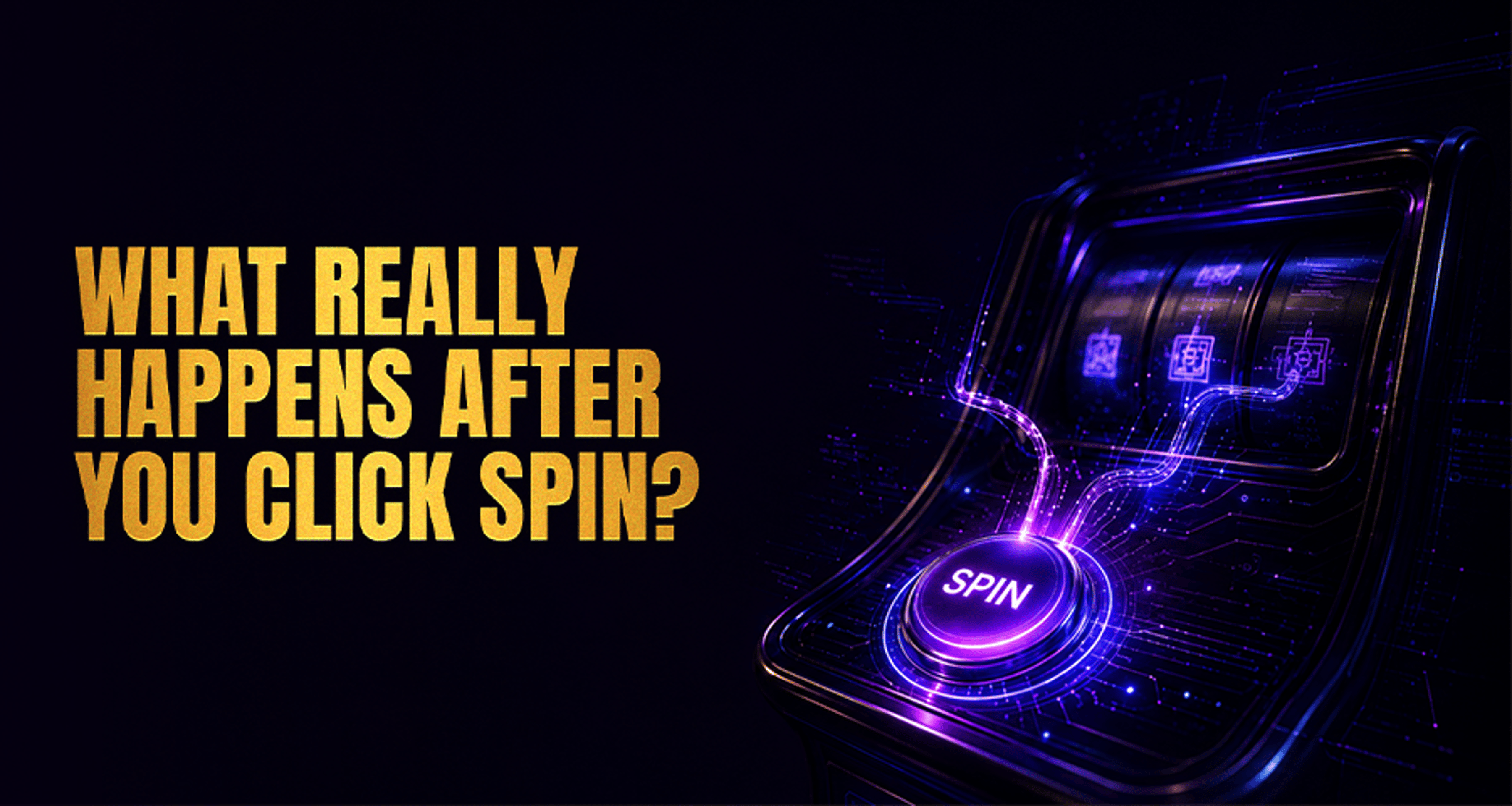
What happens behind the scenes when you click Spin is more than a reel animation. The game processes your request, determines the outcome, updates your balance, and records the round before the spin fully ends.
When you click Spin, the reels move immediately, but the visible motion is only part of the story. Behind the screen, a short technical sequence usually takes place: your input is captured, the game sends a request, the backend processes the round, the result comes back, the reels display it, your balance updates, and the round is recorded.
The key idea is simple: the spinning animation is presentation, while the outcome is typically determined by game logic before the visual sequence finishes.
What Your Tap or Click Triggers First
The process starts the moment you press Spin.
On the front end, the game interface registers your input, reads your selected stake, checks that your session is still active, and packages that information into a spin request. That request is then sent to the backend systems responsible for processing the round.
The front end is the part you see and interact with. It handles buttons, reels, sounds, and animation timing. It usually does not decide the result itself.
A Plain-English Map of the Systems Involved
To understand what happens behind the scenes when you click Spin, it helps to separate the main systems involved:
Frontend game UI: the visible interface, including reels, buttons, and balance display
Backend game server: receives the request, checks round conditions, and coordinates the response
RNG or game logic layer: determines the result according to the game’s rules
Wallet or account system: records the bet, applies any payout, and updates the player balance
That separation matters because the result logic and the visual reveal are doing different jobs. The same kind of distinction appears in other tracking-focused explainers, such as Real-Time Gambling Monitoring: Are Your Bets Tracked?.
How the Game Server Processes a Spin Request
Once the request leaves the game screen, the backend begins the round-processing sequence.
A common flow looks like this:
Receive the spin request from the game client.
Validate the session and round state to confirm the action can proceed.
Confirm the stake details attached to the request.
Pass the request into the game logic that determines the round outcome.
Receive the completed result from that logic layer.
Return the result to the game client so the front end can display it.
From the player's side, this often feels instant. Behind the scenes, it is a tightly coordinated chain of checks, processing, and response handling.
When the Random Outcome Is Decided
This is usually the part players are most curious about.
In many online slot setups, the outcome is determined during backend processing before the reels stop spinning on screen. That means the symbols you watch land are normally revealing a result that already exists rather than creating one in real time.
So if you have ever wondered whether pressing faster, slower, or at a particular moment changes the result, the important distinction is that the round outcome is generally tied to the processed request, not to the later animation.
The Full Step-by-Step Sequence
Here is the round flow in one clear sequence:
Input: You tap or click Spin.
Request: The game client sends the spin request to the backend.
Processing: The backend validates the action and routes it through the game logic.
Outcome: The result is determined and returned to the client.
Display: The reels animate and reveal that already processed result.
Balance Update: The bet and any payout are applied to your account or wallet record.
History Logging: The round details are stored in session and transaction records.
That is the practical answer to what happens behind the scenes when you click Spin: one visible action triggers several hidden system events that complete the round.
Why the Reels Keep Spinning After the Result Exists
If the result is already known, the reels still need to present it in a way that feels natural.
Animation adds pacing, makes symbol stops easier to follow, and helps the round feel smooth rather than abrupt. The backend handles the decision; the front end handles the reveal.
This is also why two games can feel very different to play even if their underlying round flow is broadly similar. If you want a related look at how presentation shapes the player experience, Casino Game Style Guide: Find Your Perfect Match is a useful companion read.
How Your Balance and Bet Record Update
Once the result is processed, the account side of the round has to catch up.
That usually includes:
Recording the bet amount
Applying any payout tied to the result
Updating the visible balance
Linking the transaction to the round record
Depending on the platform, this may happen through a wallet, ledger, or account-balance service rather than inside the game screen itself.
From the player perspective, it looks like one seamless update. Technically, it is a linked set of actions across different systems.
What Gets Logged Behind the Scenes
A completed spin usually leaves behind a traceable record.
That record may include:
Round or transaction ID
Timestamp
Game identifier
Bet amount
Outcome data
Payout amount
Session reference
Retry or error markers if something interrupted the flow
These records help support account history, balance reconciliation, and issue review when something goes wrong. They also help explain how betting activity can be tracked across multiple systems, which is part of what articles like Real-Time Gambling Monitoring: Are Your Bets Tracked? explore in more detail.
Fairness and Integrity Controls in Plain English
Players often want to know what keeps this process consistent and traceable.
Without making broad claims about any specific operator or game, common controls may include:
Separating outcome processing from reel animation
Keeping transaction records that connect the bet, result, and balance change
Validating session state before a round is accepted
Using duplicate-prevention checks so the same action is less likely to be processed twice
Applying error handling or reconciliation steps if a response is delayed, interrupted, or needs to be restored from records
These controls do not guarantee any player result, and they do not mean every platform uses the same implementation. They simply show why a slot round is usually handled as a structured system event rather than a visual effect alone.
Why Timing, Latency, and Animations Matter
Even fast systems still have timing to manage.
Requests need to travel, results need to come back, and the interface has to stay responsive while that happens. Animation helps absorb that delay so the round feels smooth instead of broken or confusing.
That is one reason online slots can feel immediate even though several systems may be coordinating in the background at once.
Why This Topic Is Different From Jackpot Math
This topic is about spin flow, not jackpot mechanics.
The focus here is what happens between the click, the backend result, the visual reveal, and the recorded balance change. That is different from articles about jackpot pools, contribution mechanics, or trigger conditions.
If you want to keep exploring how casino systems and player-facing formats differ across games, you can also browse related HunnyPlay educational content like Outside Bets Roulette: Best Low Risk Betting Guide for contrast with games that present outcomes in a very different way.
FAQs
Is a slot result decided before the reels stop spinning?
In many online slot setups, yes. The backend processing often determines the result before the animation fully finishes on screen.
Does clicking faster or slower affect the result?
Not in any reliable way. If the result is determined when the request is processed, the later reel animation does not create a repeatable advantage.
What systems communicate when you press Spin?
The frontend game interface, backend game server, game logic or RNG layer, and the wallet or account system may all be involved in a single round.
Why do online slots still animate if the result is already set?
Because animation is part of presentation. It makes the round easier to follow and helps the experience feel paced and smooth.
How is my bet and payout recorded after a spin?
The backend records the wager, applies any payout, updates the balance, and stores the round in transaction or session history.
Is this the same as how jackpot outcomes are determined?
Not exactly. This article explains standard spin processing, while jackpot articles focus on separate trigger and contribution mechanics.
Final Thoughts
Clicking Spin feels simple, but the round behind it is a coordinated process across multiple systems. Your input starts the request, the backend processes the result, the front end presents it, the balance updates, and the round history is stored.
That hidden flow is what makes an online slot feel quick and seamless while still relying on structured technical steps underneath.
For readers who enjoy this kind of plain-English operator insight, HunnyPlay’s related educational articles offer more ways to explore how casino games work beyond the surface.